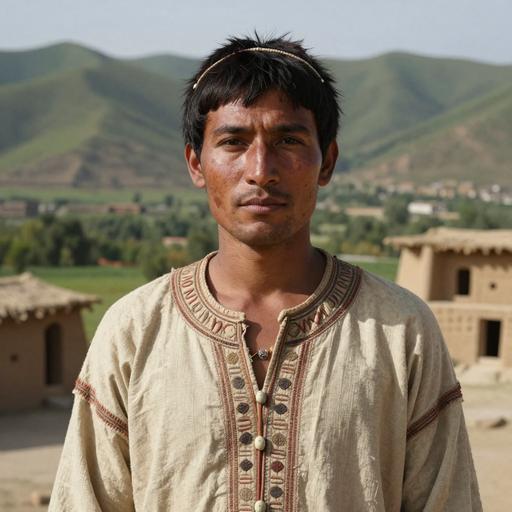
部门背景
mtDNA 谱系分支 M30C1 的历史背景
Origins and Evolution
mtDNA haplogroup M30C1 is a downstream branch of M30C, itself a South Asian offshoot of macro-haplogroup M. Based on the phylogenetic position of M30C1 beneath M30C and the estimated age of its parent clade, M30C1 most plausibly arose in South Asia during the early to mid-Holocene (roughly ~6 kya), after the initial diversification of M-lineages on the subcontinent. The branching pattern and limited geographic spread suggest a local origin followed by persistence and limited regional expansions rather than a wide, rapid diaspora.
Subclades
As a named subclade (M30C1), this lineage is itself a terminal or moderately derived branch within M30C. Published and database-driven phylogenies for South Asian mtDNA show that M30C has a small number of internal branches; M30C1 represents one of the detectable sublineages that has been sampled in modern populations and in a small number of ancient individuals. Where deeper internal structure exists beneath M30C1 it is typically represented by rare private mutations observed in isolated tribal or regional populations. Continued mitogenome sequencing may reveal further internal diversity and younger subclades derived from M30C1.
Geographical Distribution
M30C1 is concentrated in South Asia, with highest frequencies and diversity found across the Indian subcontinent (including India, Sri Lanka, Pakistan, Bangladesh and Nepal). It appears in both tribal and caste groups, indicating long-term local presence and integration across social strata. Outside South Asia the haplogroup occurs at low frequencies in neighboring regions (sporadic occurrences in Central Asia and parts of Southeast Asia), on Indian Ocean rim islands at very low levels, and in modern diaspora populations in Europe and the Americas due to recent migrations. To date, M30C1 has also been identified in a small number of archaeological individuals (three samples in the referenced database), providing direct ancient-DNA support for its prehistoric presence in the region.
Historical and Cultural Significance
Because M30C1 likely arose in the post-glacial Holocene, its history overlaps with key cultural transitions in South Asia: the spread and local development of Neolithic food production, regional population continuity, and later Bronze/Iron Age social transformations. The distribution of M30C1 across tribal and caste groups suggests long-term continuity and assimilation rather than association with a single recent migrating cultural complex. In archaeological contexts M30C1 is not presently a hallmark of any one large pan-regional culture (for example, it is not uniquely tied to Indus urban centers) but its presence in both ancient and modern samples attests to enduring maternal lineage continuity in South Asia.
Conclusion
M30C1 is best understood as a regionally restricted, moderately young maternal lineage that arose within the South Asian M30C clade in the early to mid-Holocene and has since persisted at low to moderate frequencies across diverse South Asian populations. Its limited external spread reflects localized demographic processes and gene flow rather than wide prehistoric dispersals, and ongoing mitogenome sampling—especially ancient DNA from South Asia—will refine its internal structure, age estimates, and historical associations.
关键点
- Origins and Evolution
- Subclades
- Geographical Distribution
- Historical and Cultural Significance
- Conclusion