部门背景
mtDNA 谱系分支 T2G1B 的历史背景
Origins and Evolution
T2G1B is a subclade nested within mtDNA haplogroup T2G1, itself part of T2G and the broader macro-haplogroup T. Given the known phylogeography of T2G1, T2G1B most plausibly arose in the Near East/Anatolia during or shortly after the Neolithic spread of agriculture. The estimated time depth for T2G1B is on the order of a few thousand years younger than its parent clade (T2G1 ~7 kya), compatible with a local diversification event in the early to mid-Holocene (~5–6 kya).
Mitochondrial phylogenies based on complete mitogenomes place T2G1B as a derived branch with few diagnostic substitutions separating it from sibling lineages; its rare frequency and limited sampling in modern and ancient databases mean that age estimates have wider confidence intervals than for common haplogroups.
Subclades (if applicable)
At present T2G1B appears to be a terminal or near-terminal branch in published phylogenies and public databases, represented by a small number of modern mitogenomes and very few ancient instances. If deeper sampling uncovers additional internal structure, those lineages would be described as T2G1B1, T2G1B2, etc. For now, the substructure is minimal and most analyses treat T2G1B as a low-diversity clade derived from T2G1.
Geographical Distribution
T2G1B is detected at low to very low frequencies across a geographically broad but sparse distribution that mirrors the spread of Neolithic and post-Neolithic gene flow from the Near East into neighboring regions. Contemporary occurrences and secure haplotype matches have been reported in:
- Anatolia and the broader Near East (reflecting origin and local persistence)
- Southern, Central and Eastern Europe at scattered low frequencies (likely Neolithic and later dispersal)
- The Caucasus region (low frequencies)
- North Africa in isolated occurrences (low frequency)
- Some Jewish and diaspora communities where Near Eastern maternal lineages have been documented
Ancient DNA evidence for T2G1B is currently limited; a very small number of archaeological genomes show T2G1/T2G1-derived lineages associated with Neolithic or later contexts, but T2G1B specifically remains rare in published ancient datasets.
Historical and Cultural Significance
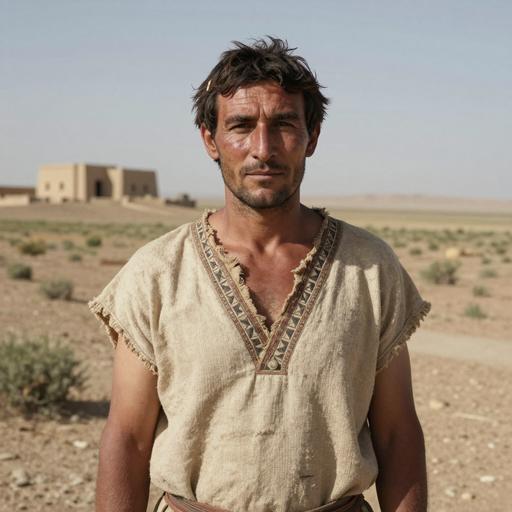
Because of its phylogenetic position and geographic pattern, T2G1B is best interpreted as a marker of maternal ancestry tied to Neolithic farmer expansions from Anatolia and adjacent Near Eastern regions, followed by continued low-level gene flow and localized persistence. It is not a hallmark of any single pan-regional late prehistoric migration (unlike very common haplogroups), but rather reflects the patchy survival of Near Eastern maternal lineages in diverse populations.
In some Jewish communities and other groups with historical Near Eastern connections, the presence of T2G1B (or closely related T2G1 lineages) reinforces documented maternal links to the eastern Mediterranean. Its rarity makes it useful in fine-scale maternal lineage studies and in tracing specific maternal genealogies where it occurs.
Conclusion
T2G1B is a rare, diagnostically derived branch of T2G1 whose distribution and time depth point to an origin in the Near East/Anatolia during or shortly after the Neolithic transition. Its low-frequency, scattered presence across Europe, the Caucasus, North Africa and some Jewish populations is consistent with demographic processes associated with early farming expansions and subsequent regional movements. Continued mitogenome sequencing—especially of under-sampled regions and ancient remains—will clarify its internal diversity, exact age, and finer-scale migration history.
关键点
- Origins and Evolution
- Subclades (if applicable)
- Geographical Distribution
- Historical and Cultural Significance
- Conclusion