部门背景
mtDNA 谱系分支 U4A1P 的历史背景
Origins and Evolution
mtDNA haplogroup U4A1P is a downstream branch of U4A1, itself a subclade of the broader haplogroup U4, which is associated with post‑glacial recolonization of northern Eurasia. Based on the phylogenetic position beneath U4A1 (which likely formed around the Late Pleistocene to Early Holocene, ~12 kya), U4A1P most plausibly arose in northern Eurasia during the Early Holocene (we estimate ~9 kya). Its derivation from U4A1 ties it to maternal lineages common among Mesolithic hunter‑gatherer groups and populations that expanded or persisted in high‑latitude environments after the Last Glacial Maximum.
Subclades (if applicable)
U4A1P is a relatively narrowly defined terminal or near‑terminal subclade within U4A1 known from only a small number of modern and ancient samples. Because it is rare, its internal substructure is limited or not well resolved in public datasets; additional mitogenomes from northern Eurasia and Siberia would be required to robustly define any further subclades. U4A1P should be treated as a locality‑informative lineage within the broader U4A1/U4 phylogeny rather than a widely branched clade.
Geographical Distribution
U4A1P is found primarily in populations of northern and eastern Europe and at lower frequencies in parts of Siberia and Central Asia. Modern occurrences concentrate among Scandinavian, Finnish and Russian groups and among some indigenous north Eurasian communities (for example Nenets and Evenks), with sparse detections in the Altai region and isolated low‑frequency reports from the Caucasus and South Asia. The haplogroup has also been identified in a small number of ancient DNA samples (two reported in the referenced database), supporting continuity of this maternal lineage in northern Eurasia from the Holocene onward.
Historical and Cultural Significance
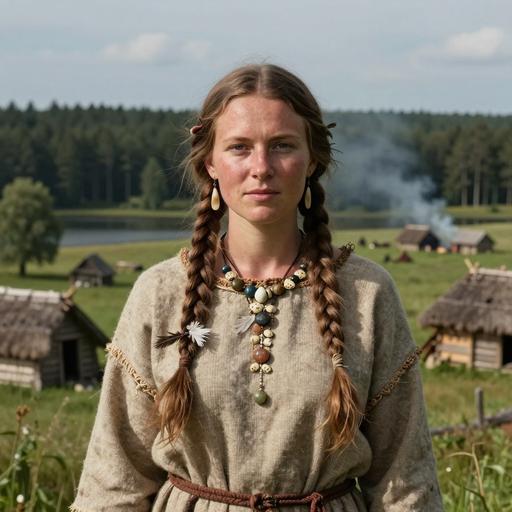
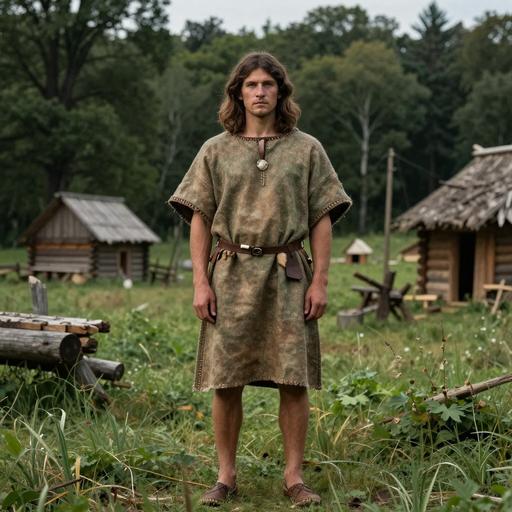
Because U4 lineages are strongly associated with Mesolithic hunter‑gatherer populations of northern and eastern Europe, U4A1P is useful for tracing maternal contributions from those forager groups into later prehistoric and modern populations. Its presence in northern Eurasia is consistent with post‑glacial recolonization routes along forest‑tundra and riverine corridors. While not diagnostic of any single archaeological culture, U4A1P and related U4 subclades appear in contexts spanning the Mesolithic through the Bronze Age, indicating persistence of hunter‑gatherer maternal ancestry alongside influxes of Neolithic farmers and later steppe‑derived groups.
Conclusion
U4A1P is a low‑frequency, geographically focused mtDNA lineage that refines the picture provided by U4A1 and U4 more broadly: it represents a maternal legacy of post‑glacial northern Eurasian populations. As a rare subclade, it has high value for fine‑scale phylogeographic studies of northern and eastern Europe and adjoining parts of Siberia and Central Asia, but fuller understanding will require more high‑coverage mitogenomes from both modern and ancient individuals to resolve its internal structure and migration history.
关键点
- Origins and Evolution
- Subclades (if applicable)
- Geographical Distribution
- Historical and Cultural Significance
- Conclusion