部门背景
mtDNA 谱系分支 U4A7 的历史背景
Origins and Evolution
mtDNA haplogroup U4A7 is a downstream branch of the U4A lineage, itself part of haplogroup U4 — a mitochondrial clade strongly associated with European Mesolithic hunter-gatherers and post-glacial recolonization of northern and eastern Europe. Given the parent clade's Late Pleistocene/Early Holocene time depth (U4A ~20 kya) and the fact that U4A7 is a more derived subclade with only limited representation in present-day and ancient samples, a conservative estimate places the origin of U4A7 in the late Neolithic to early Bronze Age (roughly around 6 kya). This timing is consistent with a pattern in which deep Mesolithic maternal lineages continued to diversify locally in northern Eurasia during the Holocene.
Subclades
As a relatively fine-scale subclade, U4A7 does not currently have well-characterized named downstream subclades in the public literature; its internal diversity appears limited based on presently available data. The scarcity of both modern and ancient observations suggests either a recent origin followed by limited expansion or survival in small, regionally restricted groups. Future mitogenome sequencing and ancient DNA sampling may reveal additional substructure beneath U4A7.
Geographical Distribution
U4A7 is detected primarily at low to moderate frequencies in northern and eastern Europe and appears sporadically in north Asian (Siberian) and some Central Asian contexts. Modern carriers are most frequently reported among populations with strong continuity to post-glacial and Mesolithic peoples of the forest and tundra zones (for example, some Scandinavian, Finnish and Russian groups) and among several indigenous Siberian populations. Isolated low-frequency occurrences in the Caucasus and South Asia have been reported, likely reflecting rare long-distance maternal lineages or historical gene flow.
Although only a single ancient DNA sample carrying U4A7 is recorded in the dataset referenced here, that archaeological identification supports continuity of U4-derived maternal lineages across northern Eurasia from the Mesolithic into later prehistoric periods. The limited ancient record makes broad geographic or chronological generalizations tentative.
Historical and Cultural Significance
U4 and its subclades (including U4A7) are most commonly interpreted within population genetics as markers of long-standing, often pre-Neolithic maternal ancestry in northern Eurasia. While U4A7 itself is not currently identified as a signature marker of major migration events such as the Bronze Age steppe expansions, its presence in northern and eastern Europe and in some Siberian groups is consistent with a pattern of local continuity and regional diversification of maternal lines through the Late Mesolithic, Neolithic, and later periods.
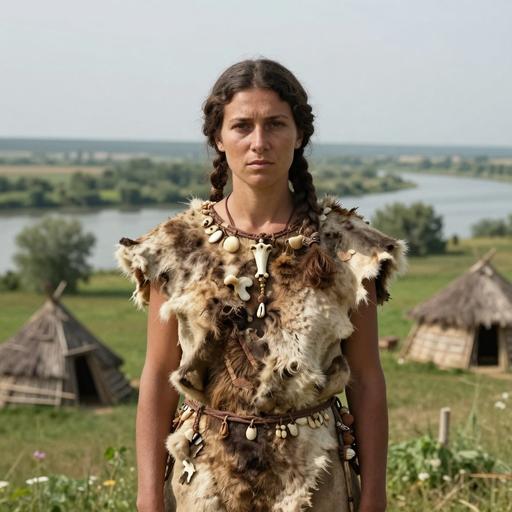
Possible cultural associations for U4A7 carriers include northern Mesolithic/Neolithic forager communities and their successors in the forest and tundra zones (for example, Comb Ceramic and other north European Neolithic contexts), and later contact with steppe populations. However, because U4A7 appears rare, its cultural associations are best described as localized and continuous rather than as drivers of continent-scale demographic replacements.
Conclusion
U4A7 represents a relatively rare, regionally focused branch of the U4 maternal lineage that likely arose in northern Eurasia during the Holocene. Its distribution today — concentrated in parts of northern and eastern Europe with occurrences in Siberia and beyond — and its scant ancient representation point to a history of local persistence and limited spread. Additional full mitogenome sequencing and targeted ancient DNA sampling across Northern Eurasia would improve resolution of its age, substructure, and past demographic dynamics.
关键点
- Origins and Evolution
- Subclades
- Geographical Distribution
- Historical and Cultural Significance
- Conclusion