部门背景
mtDNA 谱系分支 U5A1B2 的历史背景
Origins and Evolution
U5A1B2 is a downstream branch of U5A1B, itself a subclade of the broader and very ancient haplogroup U5. Haplogroup U5 is widely recognized in population genetics as one of the principal maternal lineages of post-glacial European hunter-gatherers. Based on its phylogenetic position within U5A1B and comparative age estimates for neighboring subclades, U5A1B2 most likely formed during the late Paleolithic to early Mesolithic (on the order of ~11 kya), coincident with or shortly after the Last Glacial Maximum (LGM) and the subsequent northward recolonization of Europe.
The emergence of U5A1B2 therefore fits the broader model in which multiple U5 sublineages diversified among refugial and expanding hunter-gatherer groups in Northern and Eastern Europe as climates warmed and new territories became habitable.
Subclades (if applicable)
As of current population and ancient-DNA sampling, U5A1B2 is a terminal or near-terminal subclade with very limited further branching reported. It is best regarded as a low-frequency, geographically localized lineage within the U5A1B branch. Because it is identified in only a small number of modern and ancient samples, deeper substructure (further subclades) may exist but is currently undersampled; targeted mitogenome sequencing of additional individuals in Northern and Eastern Europe could reveal further splits.
Geographical Distribution
U5A1B2 shows its highest relative affinity to northern and northeastern Europe, reflecting the distribution of its parent clade U5A1 and the demographic legacy of Mesolithic hunter-gatherers in these regions. Modern occurrences are concentrated in Scandinavia and parts of the Baltic and northwestern Russia, with lower-frequency detections in central/western Europe and sporadically in the Caucasus, parts of Central Asia and North Africa. Ancient DNA identification of U5A1B2 in archaeological contexts (two samples in the referenced database) supports continuity in northern European contexts from the Mesolithic into later periods, although overall frequencies declined in many regions after the Neolithic farming expansions.
Historical and Cultural Significance
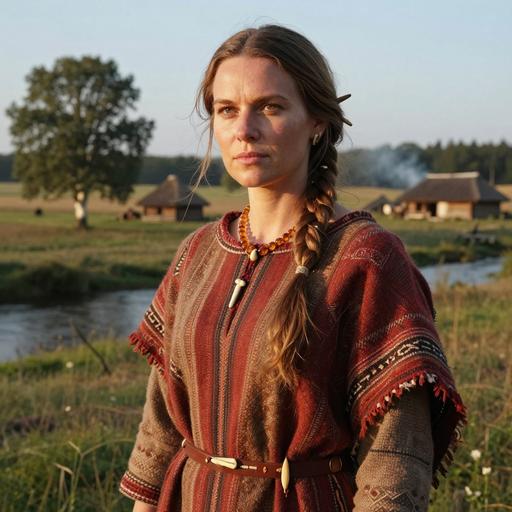
Because U5A1B2 descends from a lineage strongly associated with Mesolithic hunter-gatherer populations, it is informative for studies of post-glacial recolonization routes, regional continuity, and admixture dynamics between hunter-gatherers and incoming Neolithic farmers. The haplogroup's persistence in indigenous groups such as the Saami, and its detection in northern archaeological samples, suggest local continuity in some high-latitude zones where farmer expansions were less demographically overwhelming. U5A1B2 therefore acts as a marker—albeit a rare one—of the maternal genetic substrate that characterized pre-Neolithic Northern Europe.
Conclusion
U5A1B2 is a relatively rare, geographically focused mtDNA lineage that reflects the deep Mesolithic maternal heritage of Northern and Eastern Europe. Its identification in both modern populations (notably among Saami and other northern Europeans) and a small number of ancient samples highlights continuity from post-glacial hunter-gatherer groups, while its low overall frequency demonstrates the impact of later demographic shifts (Neolithic and subsequent migrations) on European maternal diversity. Expanded mitogenome sampling in northern Eurasia will clarify its finer phylogeny and historical dynamics.
关键点
- Origins and Evolution
- Subclades (if applicable)
- Geographical Distribution
- Historical and Cultural Significance
- Conclusion