部门背景
mtDNA 谱系分支 U5A2D3 的历史背景
Origins and Evolution
mtDNA haplogroup U5A2D3 is a subclade of U5A2D, itself a descendant of the broader U5A branch. U5 lineages are among the oldest European maternal lineages and are strongly associated with Mesolithic hunter‑gatherer populations. U5A2D appears to have diversified in Northern/Eastern Europe after the Last Glacial Maximum; U5A2D3 likely arose later still, during the late Bronze Age or early Iron Age timeframe (a few thousand years ago), as a localized northern/eastern European offshoot. Its emergence reflects continued local diversification of hunter‑gatherer–derived maternal lineages in northern environments even after the arrival of Neolithic farmers.
Subclades (if applicable)
At present, U5A2D3 is described as a terminal subclade within U5A2D in available public phylogenies and ancient DNA reports. There are limited reported downstream branches of U5A2D3 in the literature and databases, which means either the clade is relatively young and geographically constrained or that more high‑resolution mitogenomes and ancient samples are needed to reveal finer internal structure. Future sequencing of complete mitogenomes and additional ancient samples from Fennoscandia, the Baltic and adjacent regions may identify further subbranches.
Geographical Distribution
U5A2D3 shows a strongly northern and northeastern European distribution. Modern and ancient sample evidence places its highest frequencies in Fennoscandia and nearby areas of Finland, northern Sweden and northwest Russia, with measurable presence in the Baltic region. Lower frequencies are seen in broader Scandinavia and parts of central and western Europe, reflecting post‑Mesolithic mobility and later demographic events. Occasional isolated occurrences in the Caucasus, Central Asia or North Africa are most likely the result of historical long‑distance gene flow or recent migration rather than a primary distribution.
Historical and Cultural Significance
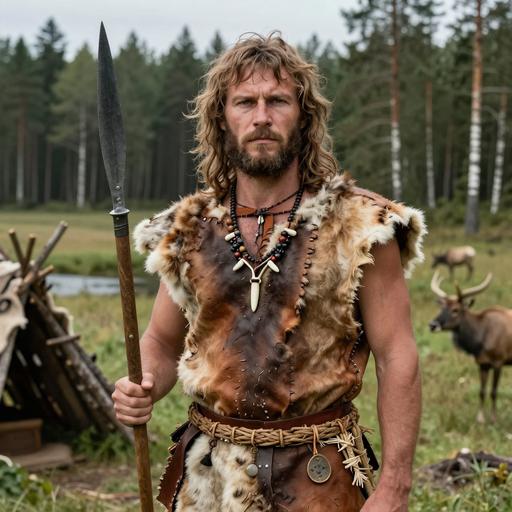
U5 lineages in general are markers of deep European hunter‑gatherer ancestry; U5A2D3, as a localized descendant, contributes to maternal continuity between Mesolithic/Neolithic northern populations and later historic groups. The clade's persistence into ethnographic groups such as the Saami and other northern communities highlights continuity of maternal lineages in high‑latitude refugia and areas of reduced incoming female gene flow. While not tied to a single archaeological culture exclusively, U5A2D3 fits the broader pattern of hunter‑gatherer‑derived mitochondrial diversity that survived alongside Neolithic farmer expansions and later Bronze and Iron Age movements.
Conclusion
U5A2D3 is a geographically focused mtDNA lineage that exemplifies post‑glacial and post‑Neolithic diversification of maternal ancestry in northern and northeastern Europe. It is best interpreted as a northern European offshoot of the U5A2D branch, notable for its association with populations that retain elevated proportions of Mesolithic hunter‑gatherer maternal ancestry. Greater sampling of modern complete mitogenomes and additional ancient DNA will clarify the clade's internal structure, antiquity and precise historical trajectories.
关键点
- Origins and Evolution
- Subclades (if applicable)
- Geographical Distribution
- Historical and Cultural Significance
- Conclusion