部门背景
mtDNA 谱系分支 U5B2A5 的历史背景
Origins and Evolution
Haplogroup U5B2A5 sits within the broader mtDNA haplogroup U5, one of the oldest maternal lineages associated with European hunter-gatherers. U5 itself likely arose during the Upper Paleolithic and expanded across Europe during and after the Last Glacial Maximum. The U5B branch and its subdivisions (including U5B2 and U5B2A) reflect post-glacial diversification in Europe. U5B2A5 is a downstream subclade of U5B2A (via the intermediate clade U5B2AA), and based on its phylogenetic position it most plausibly formed after the major postglacial re-expansions, probably in the later Neolithic to Bronze Age timeframe (a few thousand years ago), though direct ancient-DNA evidence for this specific subclade remains limited.
Subclades
U5B2A5 is currently described as an intermediate/terminal lineage in the Phylotree-defined structure. At present it appears to be a relatively narrow, low-frequency branch; additional sequencing and population sampling are required to determine whether U5B2A5 contains further distinct daughter subclades or whether some reported instances represent private mutations or pedigree-level variants. As with many fine-scale mtDNA subclades, future studies may expand or refine its internal structure.
Geographical Distribution
Modern and ancient DNA sampling indicate that the U5B and U5B2 groups are concentrated in Europe, with higher representation in northern, northeastern and parts of central Europe. By reasonable inference from the parent U5B2A distribution and limited reported occurrences, U5B2A5 is most likely to be found at low frequencies in:
- Northern Europe (Scandinavia)
- Baltic region (Latvia, Lithuania, Estonia)
- Northeastern Europe and NW Russia
- Central Europe (Poland, Germany)
- Sporadically in the British Isles and other parts of western Europe
Because it is a rare subclade, its geographical signal is patchy and sample-dependent; apparent concentrations can change as more mitogenomes are published.
Historical and Cultural Significance
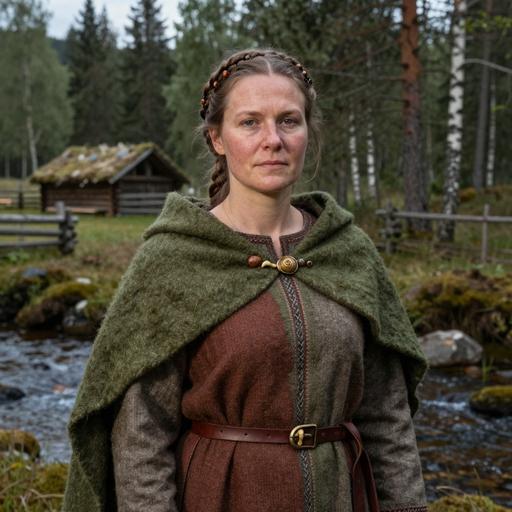
Haplogroup U5 and many of its subclades are archetypal markers of European Mesolithic hunter-gatherers, and U5 lineages persisted through the Neolithic and later periods often at reduced frequencies as farming populations expanded. U5B2A5 as a fine-scale derivative most likely reflects localized maternal continuity or limited founder events during the Neolithic–Bronze Age transition and later demographic processes (mobility associated with Corded Ware/Bell Beaker or regional continuity). In archaeological-genetic terms, U5B2A5 would be interpreted as a lineage that documents long-term maternal presence in parts of Europe, rather than a marker of large continent-wide migrations.
Conclusion
U5B2A5 is a low-frequency, regionally distributed mtDNA subclade descended from the ancient U5 lineage that typifies European prehistory. Its precise time and place of origin remain tentative until expanded ancient and modern mitogenome sampling clarifies its phylogeography and internal diversity. For now it is best regarded as a useful fine-scale marker of maternal continuity in northern and central Europe that will benefit from targeted sequencing in under-sampled populations and archaeological contexts.
关键点
- Origins and Evolution
- Subclades
- Geographical Distribution
- Historical and Cultural Significance
- Conclusion