部门背景
mtDNA 谱系分支 U5B2E 的历史背景
Origins and Evolution
mtDNA haplogroup U5B2E sits within the broader U5b2 branch of the U5 maternal lineage, one of the oldest and most characteristic mitochondrial haplogroups of European hunter-gatherers. Based on the phylogenetic position of U5b2 and published age estimates for related lineages, U5B2E most likely diversified in Western or Northern Europe during the Late Glacial to early Mesolithic (roughly around 11 kya, allowing for uncertainty in coalescence estimates). The parent clade U5b2 is itself nested within U5b, a deep European lineage that expanded with or shortly after the end of the Last Glacial Maximum among re-colonizing hunter-gatherer groups.
The available ancient DNA evidence for U5B2E is limited (three identified archaeological samples in the referenced database), which suggests either a genuinely low historical frequency or under-sampling in published datasets. This scarcity of ancient occurrences makes precise phylogeographic reconstruction tentative, but the lineage's placement within U5b2 and its modern occurrences point to a long-term presence in northwest Europe with later sporadic dispersal.
Subclades (if applicable)
At present U5B2E appears to be a relatively terminal/low-diversity subclade within U5b2 in published datasets. Few or no well-differentiated downstream subclades have been robustly described in the literature for U5B2E, which may reflect either a recent origin relative to deeper U5 branches, limited sampling, or that surviving diversity is geographically restricted. Future dense mitogenome sequencing in northern and western Europe (including indigenous groups such as the Saami) could reveal additional internal structure.
Geographical Distribution
Modern distribution: U5B2E is primarily observed at low to moderate frequencies in parts of Western and Northern Europe, particularly in regions with continuity from Mesolithic hunter-gatherer populations; it is also reported sporadically in Central and Eastern Europe. Small numbers of occurrences have been recorded outside Europe (e.g., North Africa, Anatolia/Caucasus), likely reflecting historical gene flow and long-distance contacts rather than primary origin.
Ancient distribution: The three ancient samples carrying U5B2E in the referenced database indicate it was present in archaeological contexts, consistent with a Mesolithic to post-Mesolithic survival of this maternal lineage in Europe. The patchy ancient record emphasizes the lineage's relative rarity and the need for larger ancient mitogenome datasets to clarify its prehistoric distribution.
Historical and Cultural Significance
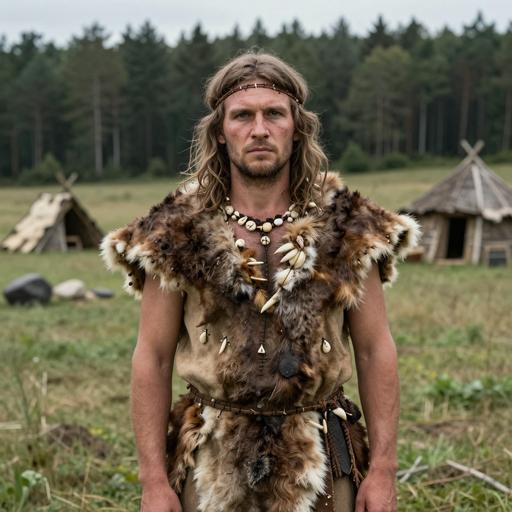
U5 lineages, including U5b2 and its subclades, are strongly associated with Mesolithic hunter-gatherer populations across much of Europe. The presence of U5B2E in modern northern and western populations is consistent with genetic continuity from these hunter-gatherer groups into later periods, albeit often at reduced frequency following the arrival and expansion of Neolithic farming populations carrying other mitochondrial types (for example, haplogroup H, J, K).
While U5B2E is not a hallmark marker of later pan-European cultural complexes (such as Yamnaya or widespread Neolithic farmer groups), U5 lineages more generally do appear intermittently in a range of archaeological cultures — sometimes as remnant hunter-gatherer maternal lines incorporated into expanding farming or pastoralist groups (e.g., sporadic occurrences in Bell Beaker or Bronze Age contexts). The occasional modern presence of U5B2E among indigenous northern groups (including the Saami in published reports of related U5 subclades) highlights its role in localized maternal continuity.
Conclusion
U5B2E is a low-frequency, regionally focused mitochondrial lineage derived from the ancient U5b2 branch. Its evolutionary history is tied to Europe's postglacial hunter-gatherer populations, with persistence into historic and modern times in parts of northern and western Europe. Ongoing mitogenome sequencing of both ancient remains and under-sampled modern populations will be required to refine the age estimates, subclade structure, and fine-scale geographic patterning of U5B2E.
(Note: estimates and geographic inferences above are drawn from the haplogroup's phylogenetic position within U5b2 and from patterns observed for related U5 subclades in published population-genetic and ancient DNA studies; the referenced database contains three ancient U5B2E samples.)
关键点
- Origins and Evolution
- Subclades (if applicable)
- Geographical Distribution
- Historical and Cultural Significance
- Conclusion