部门背景
Y-DNA 谱系分支 I1A1B1A1 的历史背景
Origins and Evolution
Y-DNA haplogroup I1A1B1A1 is a subclade of I1, one of the major paternal lineages of northern Europe. Because it sits well downstream of the broader I1 trunk, it likely arose from a relatively recent founder event within the deeper post-glacial northern European paternal substrate, rather than representing an ancient basal lineage on its own. The most plausible geographic setting for its origin is Scandinavia or nearby northern European regions, where I1 diversification was strongly shaped by local demographic expansions, drift, and repeated bottlenecks.
In phylogenetic terms, this lineage belongs to the broader cluster of Y-DNA lineages associated with Mesolithic continuity in northern Europe, later modified by Neolithic, Bronze Age, and Iron Age demographic changes. While the exact age of I1A1B1A1 depends on the resolution of available sequencing data and the completeness of the tree, a reasonable estimate places its origin in the Holocene, after the end of the last Ice Age and during the period when northern European populations were expanding and differentiating.
Subclades
As an intermediate-to-recent subclade, I1A1B1A1 may contain very limited branching or may be defined primarily by one or a few diagnostic SNPs. In many cases, the historical significance of such a lineage is not that it was widespread across all of Europe, but that it preserves evidence of localized descent from a successful paternal ancestor whose descendants expanded in a restricted geographic area.
Its parental context suggests affinity with other I1-derived northern European lines, some of which show stronger concentrations in Scandinavia, the Baltic zone, northern Germany, and the British Isles. More derived branches may correspond to clan-level or regional founder effects that later spread through migration, military service, trade, or colonial-era diaspora.
Geographical Distribution
I1A1B1A1 is expected to occur at low to moderate frequencies within populations where I1 is otherwise common, especially in Scandinavia, Germanic-speaking regions, and parts of north-central and eastern Europe. Its presence in the British Isles and the Baltic region is also plausible, reflecting historical gene flow from northern Europe into surrounding areas.
The lineage may be detected in:
- Scandinavians, especially Swedish, Norwegian, and Danish populations
- Northern and Central Germans, as well as Dutch and Austrian samples
- British and Irish populations, particularly in lineages with northern European paternal ancestry
- Baltic and East Slavic populations through historical northern European admixture
- Diaspora populations in the Americas, Australia, and elsewhere due to recent migration
Because it is a downstream subclade, its frequency is likely low overall, with stronger signals in founder-rich or well-sampled populations rather than broad continental ubiquity.
Historical and Cultural Significance
The broader I1 lineage is often discussed in relation to post-glacial European hunter-gatherers, later Neolithic-to-Bronze Age transformations, and historic expansions of northern European groups. For I1A1B1A1, the most meaningful historical interpretation is as a marker of localized paternal continuity and founder expansion within that broader northern European context.
Potential cultural associations are best treated as broad correlations rather than direct one-to-one assignments. The lineage may be found among populations shaped by:
- Nordic Bronze Age and Iron Age demographic structures
- Corded Ware–related and later north-central European population movements
- Germanic expansion during the Iron Age and early medieval periods
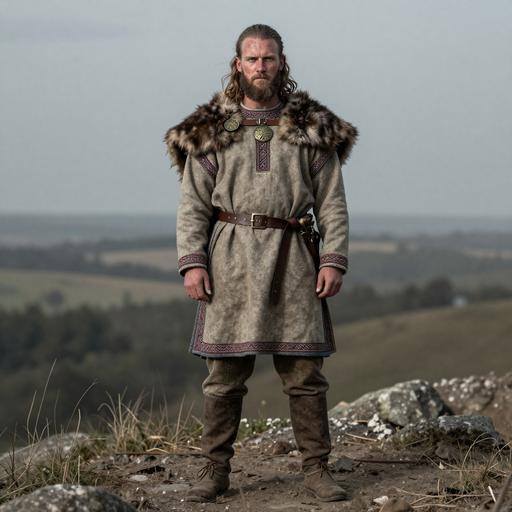
- Viking Age dispersals from Scandinavia into the North Atlantic, the British Isles, and parts of continental Europe
In modern genetic genealogy, a lineage such as I1A1B1A1 is often useful for tracing deep paternal clustering within families and regional populations, especially when supported by Big Y or equivalent high-resolution sequencing. Its significance lies less in being ancient and widespread than in documenting the fine-scale branching history of northern European male descent.
Conclusion
Y-DNA haplogroup I1A1B1A1 is a relatively derived northern European paternal lineage within the I1 clade, most likely formed through a localized founder event in or near Scandinavia. It reflects the complex demographic history of post-glacial Europe, where hunter-gatherer ancestry, later farming and steppe-era population shifts, and historic migrations together shaped the paternal landscape of northern and western Europe.
关键点
- Origins and Evolution
- Subclades
- Geographical Distribution
- Historical and Cultural Significance
- Conclusion