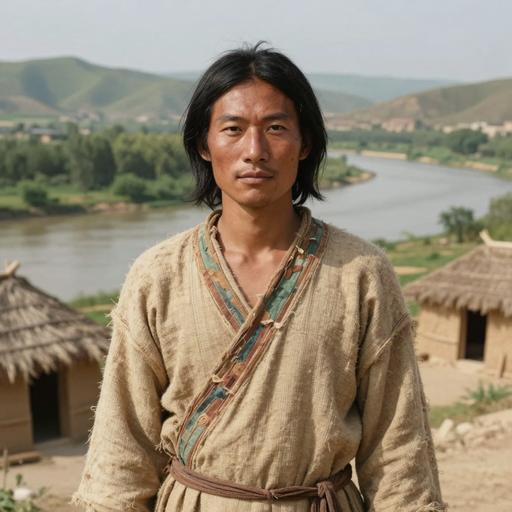
部门背景
Y-DNA 谱系分支 O1B1 的历史背景
Origins and Evolution
Y-DNA haplogroup O1B1 is an intermediate subclade within the larger O1B branch of haplogroup O, one of the major paternal lineages in East Asia. As a downstream lineage of O1B, it likely emerged in East Asia during the late Upper Paleolithic or early Holocene, with subsequent diversification in populations ancestral to modern speakers of several East and Southeast Asian language families.
Because haplogroup O lineages are strongly associated with population expansions in East Asia, O1B1 is best interpreted as part of a broader pattern of regional continuity plus later demographic growth. Its age is not as ancient as the deepest O basal branches, but it still represents a substantial time depth consistent with long-term structure in southern East Asia before the spread of agriculture and later ethnolinguistic expansions.
Subclades
As an intermediate clade, O1B1 connects the broader O1B trunk to more specific downstream branches. The exact internal phylogeny may vary by reference panel and marker resolution, but its position indicates that it is a meaningful lineage for tracing paternal ancestry within East Asian populations. In population datasets, downstream O1B1 lineages are typically embedded within regional clades that show geographic clustering in southern China, Vietnam, Taiwan, and mainland Southeast Asia.
Geographical Distribution
O1B1 is found primarily in East Asia and Southeast Asia, with the highest likelihood of occurrence in populations from southern Han Chinese and neighboring groups. It is also observed across Vietnamese, Thai/Tai-Kadai-speaking, Austroasiatic-speaking, and Austronesian-speaking populations, especially where historical gene flow from southern East Asian source populations has been strong.
The lineage can also appear at lower frequencies in Korean, Japanese, and Tibeto-Burman-speaking populations, reflecting historical migration, admixture, and the wide dispersal of East Asian paternal lineages over time. In Island Southeast Asia, its presence is consistent with the broader demographic history of Austronesian expansion from Taiwan and surrounding coastal regions.
Historical and Cultural Significance
Haplogroup O1B1 is most informative in the context of the prehistory of East and Southeast Asia, where paternal lineages expanded alongside shifting subsistence systems, including early agriculture, wet-rice cultivation, and broader regional interaction networks. While no single archaeological culture can be assigned exclusively to this lineage, it is plausibly associated with the demographic processes that shaped Neolithic southern China and the later spread of populations into mainland and island Southeast Asia.
In cultural terms, the lineage is relevant to studies of Sino-Tibetan, Tai-Kadai, Austroasiatic, and Austronesian population history, where Y-chromosome variation helps reconstruct male-mediated dispersals, founder effects, and regional replacement or admixture events. Its distribution also highlights the importance of southern East Asia as a major source region for paternal diversity in Asia.
Conclusion
O1B1 is a significant East Asian Y-DNA subclade that captures an intermediate stage in the diversification of haplogroup O1B. Its broad but regionally patterned distribution suggests an origin in East Asia followed by later expansions into mainland and island Southeast Asia, making it a useful marker for studying prehistoric population structure and the paternal history of East Asian peoples.
关键点
- Origins and Evolution
- Subclades
- Geographical Distribution
- Historical and Cultural Significance
- Conclusion