部门背景
Y-DNA 谱系分支 R1A1A1B 的历史背景
Origins and Evolution
Y-DNA haplogroup R1A1A1B is a downstream subclade of R1a1a1, part of the broader R1a paternal lineage that expanded widely across Eurasia during the late Neolithic and Bronze Age. Its deeper ancestry is usually linked to steppe populations associated with the post-Yamnaya world and later steppe-derived cultural horizons, when paternal lineages experienced strong founder effects and rapid dispersals across Eastern Europe, Central Asia, and South Asia.
Because R1A1A1B is a relatively specific branch within a much broader and highly successful lineage, its distribution is shaped more by later regional expansions than by a single simple migration event. In genetic genealogy, such intermediate clades often reflect the branching of a lineage after its main geographic spread, followed by local growth in multiple descendant populations.
Subclades
As an intermediate Y-DNA clade, R1A1A1B may contain additional downstream branches that are unevenly represented across modern populations. In practice, the exact substructure can vary depending on the phylogenetic system used and on newly discovered SNPs, but the lineage should be understood as part of the broader R1a-Z93 / R1a-M417-related eastern expansions and/or their sister networks within the Eurasian R1a tree.
Geographical Distribution
The distribution of R1A1A1B is expected to be concentrated in Eastern Europe, the Baltic region, Central Asia, and South Asia, with additional occurrences in Scandinavia, the Caucasus, and parts of West Asia. Its presence in multiple macro-regions reflects the well-documented spread of R1a lineages through prehistoric steppe mobility, later historical migrations, and founder effects in ethnolinguistically diverse populations.
In Europe, this kind of lineage is often most frequent among populations with substantial Slavic and Baltic paternal ancestry. In Asia, it is especially relevant among populations with Indo-Iranian historical connections, including many groups in Central and South Asia. Lower-frequency occurrences in Siberia, the Caucasus, and the Near East are consistent with long-distance gene flow and regional contact networks.
Historical and Cultural Significance
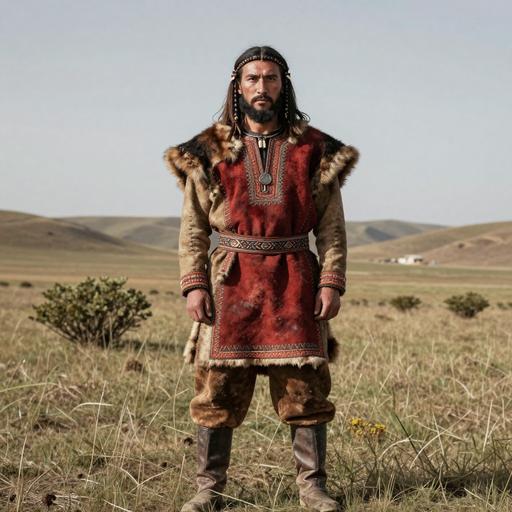
The broader R1a family is strongly associated with the prehistoric steppe ancestry that spread across Eurasia during the Bronze Age. While no single archaeological culture can be assigned exclusively to R1A1A1B, the lineage is conceptually connected to populations involved in or descending from Corded Ware, Sintashta, Andronovo, and related steppe-horizon societies, as well as later historically documented expansions among Slavic, Baltic, and Indo-Iranian groups.
This haplogroup is significant in population genetics because it illustrates how paternal lineages can become widespread through a combination of migration, elite dominance, language spread, and serial founder effects. Its present-day distribution is a genetic record of major prehistoric and historic demographic processes that shaped much of Eurasia.
Conclusion
R1A1A1B is best understood as a Bronze Age-derived subclade within the highly successful Eurasian R1a paternal lineage. Although the precise origin and downstream branching structure depend on the latest phylogenetic resolution, its broad pattern points to a steppe-associated lineage that later diversified across Eastern Europe, Central Asia, and parts of South Asia.
Its importance lies not only in its age or rarity, but in what it reveals about the deep structure of Eurasian paternal history: repeated expansions from the steppe, long-range mobility, and the formation of regionally distinctive Y-DNA profiles over the last several millennia.
关键点
- Origins and Evolution
- Subclades
- Geographical Distribution
- Historical and Cultural Significance
- Conclusion