Alalakh (Tell Atchana) — Middle–Late Bronze

下载的 PDF 是图像副本。如需可选中文本及更好的辅助技术支持,请使用打印功能。

跳转到主内容
文明焦点

Alalakh (Tell Atchana) — Middle–Late Bronze

A genetic and archaeological portrait of Hatay's urban kingdom, 2000–1200 BCE

2000 CE - 1200 BCE
Hatay, Turkey (Tell Atchana / Alalakh)

剧情

Archaeogenetic and archaeological evidence from Tell Atchana (Alalakh), Hatay, Turkey (2000–1200 BCE) reveals a cosmopolitan Bronze Age city. Eleven ancient genomes show predominantly Near Eastern Y-lineages and diverse maternal ancestries, reflecting trade, mobility, and local continuity in the Anatolia–Levant corridor.

Time Period

2000–1200 BCE

Region

Hatay, Turkey (Tell Atchana / Alalakh)

Common Y-DNA

J (4), LT (1), E (1), T (1)

Common mtDNA

K (2), H92 (1), X2d (1), R1a (1), K1a (1)

时间线

2000 BCE

Urban consolidation at Tell Atchana

Archaeological evidence suggests Tell Atchana develops as a regional center with palace structures, craft production, and long-distance exchange.

Origins & Emergence

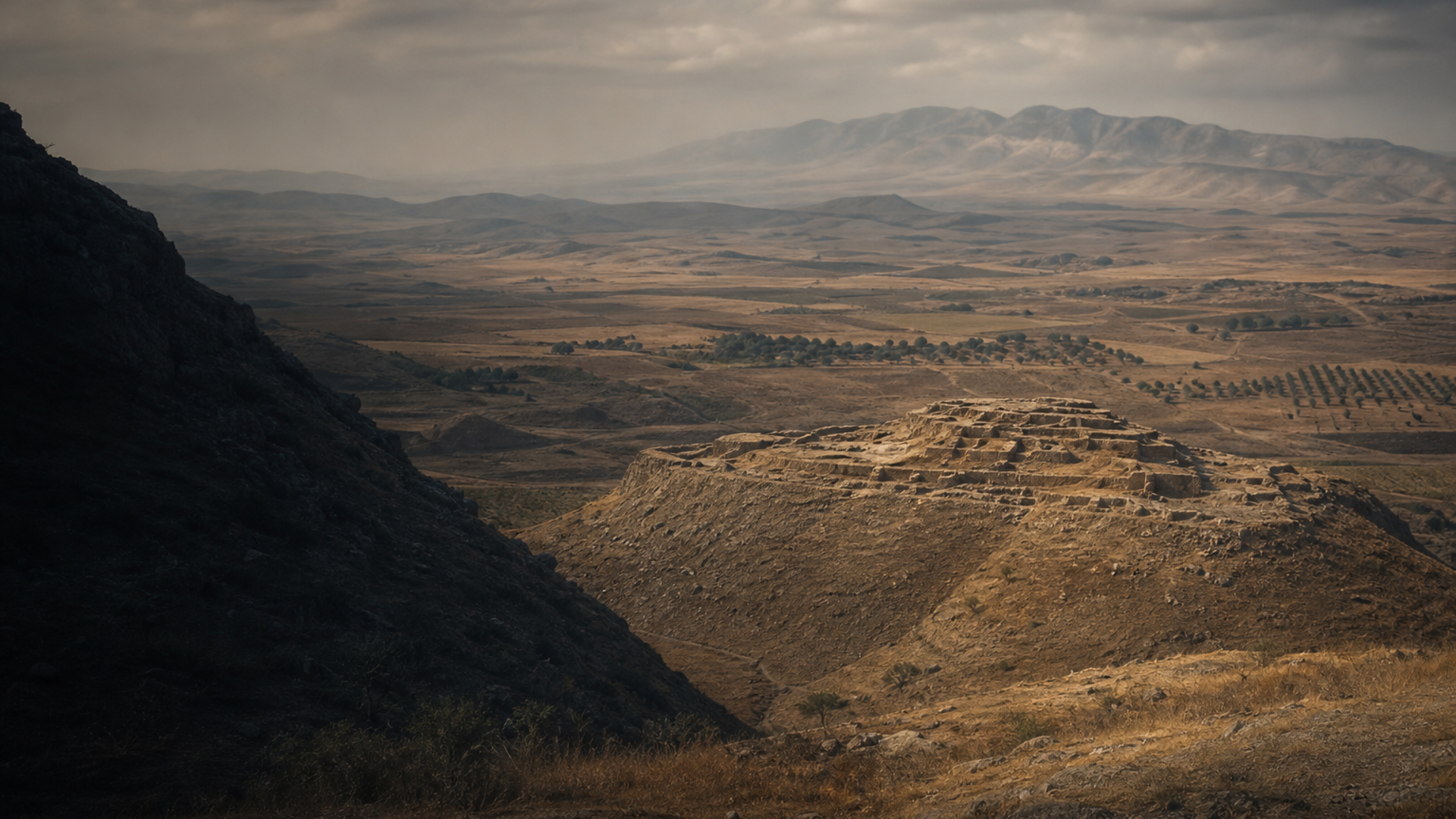
Tell Atchana (ancient Alalakh) rises from the fertile plain of the Orontes like a memory cast in mudbrick and baked clay. Archaeological sequences at the tell show continuous occupation through the Middle and Late Bronze Age, with palace architecture, administrative archives and imported luxury goods attesting to a regional capital linked to the wider eastern Mediterranean.

Material culture — including cuneiform tablets, seals, and imported ceramics — indicates active exchange with Anatolia, the Levant, and northern Mesopotamia between ~2000 and 1200 BCE. The famous Idrimi inscription, found at Alalakh, anchors the site in a network of local dynastic rule during the second millennium BCE and provides a rare textual window onto political life.

Archaeological data indicates that the city's rise was not the product of a single invading group but of long-term regional development: local farming economies, craft specialization, and elite patronage combined to produce an urban center. Isotopic and osteological studies (where available) complement the material record by suggesting mobility of individuals and seasonal connections to surrounding landscapes. Limited evidence suggests episodic destruction layers in the later Bronze Age, consistent with broader regional instability during the 13th–12th centuries BCE.

  • Continuous occupation at Tell Atchana from Middle to Late Bronze Age
  • Palatial architecture and cuneiform archives indicate a regional capital
  • Material links to Anatolia, Levant, and Mesopotamia

Daily Life & Society

Life in Bronze Age Alalakh was a choreography of craft, commerce, and ritual beneath sun-scorched roofs. Households combined agriculture and specialized crafts: pottery workshops, metallurgy, and textile production left durable traces in the form of kilns, slag, loom weights, and tool assemblages. Streets and courtyards funneled social life — markets, family rites, and seasonal festivals — while elite compounds concentrated administrative functions and displays of wealth.

Burials and funerary goods recovered from tombs around the tell show social differentiation: some graves contained rich offerings and finely made objects, while others were more modest, suggesting a stratified society with elites tied to palace administration. Dietary signals from bones and botanical remains point to a mixed cereal-and-legume agriculture supplemented by sheep, goat and cattle herding; imported foods and exotic items testify to long-distance trade.

Archaeological context suggests a city in which local traditions blended with external fashions. Craftspeople at Alalakh reused motifs and techniques from neighboring regions, producing a material culture that is both distinctly local and unmistakably cosmopolitan.

  • Evidence for specialized crafts: pottery, metallurgy, textiles
  • Burials indicate social stratification and ritual diversity

Genetic Profile

Genomic data from 11 individuals dated to c. 2000–1200 BCE offers a window into the biological landscape of Tell Atchana. Y-chromosome results are dominated by haplogroup J (4/11), a lineage strongly associated with the Near East; additional paternal lineages include LT (1), E (1) and T (1). These Y-haplogroups align with expectations for an Anatolian–Levantine population, reflecting deep regional continuity and possible ties to neighboring maritime and inland networks.

Mitochondrial diversity among the 11 samples shows multiple maternal lineages: K (2), K1a (1), X2d (1), and an H92 designation (1). One reported mtDNA label is R1a (1), a haplogroup typically associated with the Y-chromosome record — this anomaly may reflect a laboratory annotation issue or rare mitochondrial nomenclature and should be treated cautiously. Overall, the mtDNA evidence suggests varied maternal origins and gene flow into the city.

Population-level interpretation: the genetic signal is broadly consistent with a local Anatolian–Levantine gene pool, punctuated by diversity that could reflect incoming individuals or long-distance marriages. With a sample size of 11, conclusions are informative but provisional: larger datasets and direct comparisons with contemporaneous coastal and inland sites are needed to resolve finer-scale demographic processes.

  • Predominant paternal lineages: J (4/11), with LT, E, T also present
  • Maternal diversity dominated by K lineages; one mtDNA label (R1a) requires caution

Legacy & Modern Connections

The human story of Tell Atchana is braided into the long genetic and cultural history of Anatolia and the Levant. Archaeological continuity and genetic affinities point toward enduring population elements that contributed to the later demographic makeup of southern Turkey and adjacent regions. The prevalence of Near Eastern Y-lineages and diverse maternal ancestries echoes patterns found across Bronze Age coastal and inland sites.

For modern communities, the signal is complex: present-day populations of Hatay and western Syria carry layers of ancestry accumulated over millennia, so direct lines from Bronze Age Alalakh cannot be read in isolation. Ancient DNA provides snapshots that, when combined with archaeology, illuminate migration, marriage networks, and local resilience. Future sampling with larger numbers and better geographic coverage will refine links between ancient Alalakh and living genetic landscapes.

  • Genetic patterns reflect lasting Anatolian–Levantine roots in the region
  • Modern connections are plausible but require larger datasets to confirm

AI 助手

AI 助手 由DNAGENICS公司制作

解锁此特性
Ask questions about the Alalakh (Tell Atchana) — Middle–Late Bronze culture. Our AI assistant can explain genetic findings, historical context, archaeological evidence, and modern connections.
AI 样本分析

Alalakh (Tell Atchana) — Middle–Late Bronze 文化是人类历史中值得了解的一章……

遗传分析揭示了与早期种群的联系,同时显示了独特的适应和文化创新的证据。 古代DNA样本提供了对迁徙模式、社会结构以及古代种群之间的生物关系的深刻见解。

这是人工智能分析的预览。 解锁全AI 助手, 以探索关于:

  • 遗传组成和祖先
  • 移徙模式和起源
  • 日常生活和文化习俗
  • 现代遗传遗产
使用优惠码 可减免 30% • 11月15日 到期




