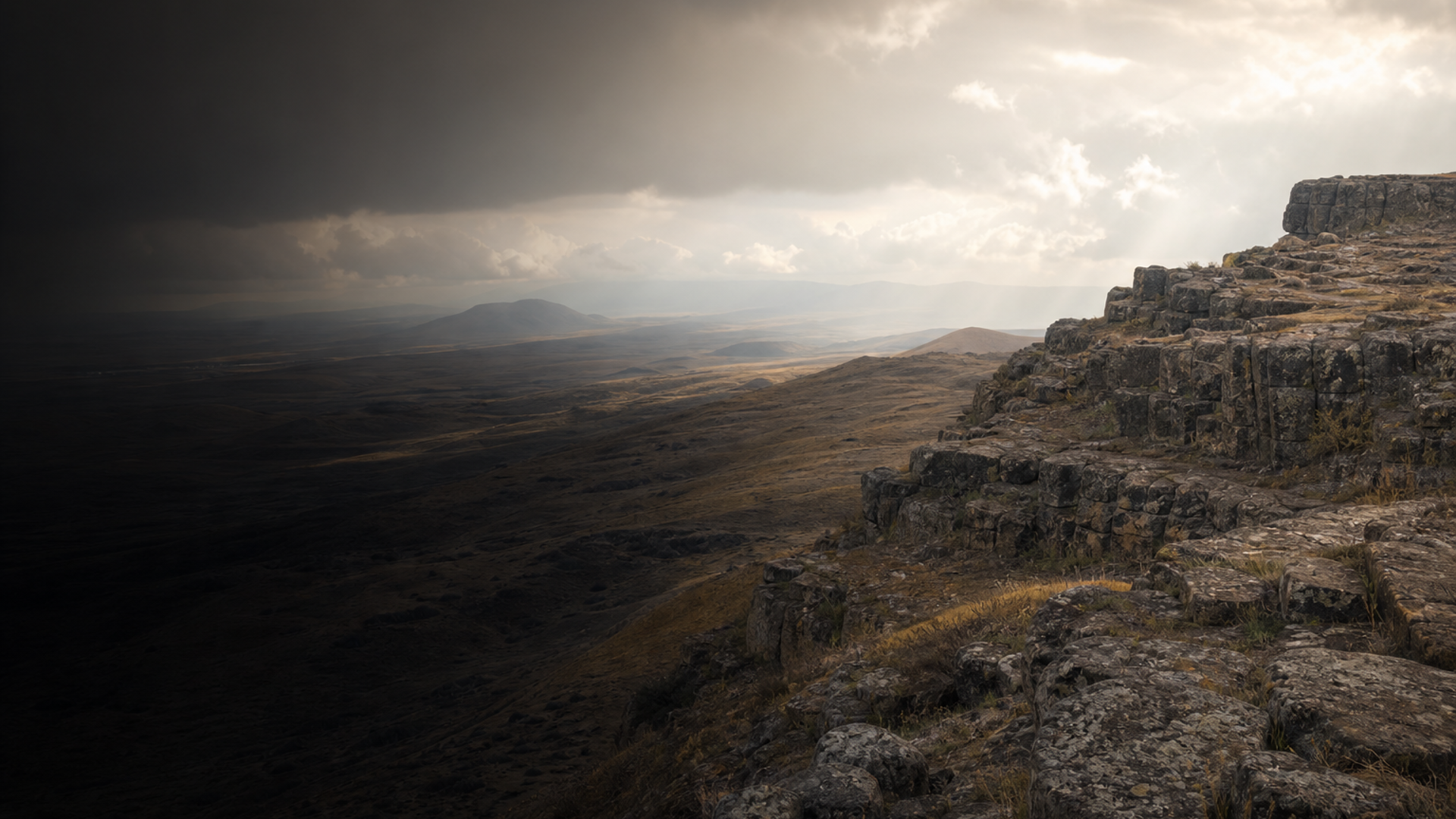
Beniamin Hellenistic Moment

下载的 PDF 是图像副本。如需可选中文本及更好的辅助技术支持,请使用打印功能。

Beniamin Hellenistic Moment

揭开一个失落的文明

正在加载考古记录……

正在收集古代记录

跳转到主内容
Beniamin Hellenistic Moment
文明焦点

Beniamin Hellenistic Moment

A lone genome from Shirak Province illuminates Hellenistic Armenia's human landscape, cautiously.

156 CE - 1 BCE
Armenia (Shirak Province)
滚动开始
Chapter I

剧情

了解 Beniamin Hellenistic Moment 文化

A single Hellenistic-period individual (156–1 BCE) from Beniamin, Shirak Province, Armenia. Archaeology links local traditions to broader Hellenistic contacts; genetics are preliminary but suggest continuity with Armenian highland populations. Limited sample size requires cautious interpretation.

Time Period

156–1 BCE

Region

Armenia (Shirak Province)

Common Y-DNA

No Y-DNA reported (single sample)

Common mtDNA

No mtDNA reported (single sample)

Chapter II

时间线

这种文化历史上的关键时刻

331 BCE

Alexander's Campaigns Reach the Region

Alexander's conquests open the Armenian highland to Hellenistic cultural influence and networks of exchange (contextual backdrop).

189 BCE

Rise of the Artaxiad Dynasty

Local Armenian authorities consolidate power and patronize Hellenistic arts and administration across the highland.

1 BCE

Terminal sample date

End of the dated range (1 BCE) for the Beniamin individual; marks the close of this particular Hellenistic snapshot.

Chapter III

Origins & Emergence

The single Beniamin individual lived during the late Hellenistic era on the Armenian highland, a landscape shaped by millennia of local kingdoms and new Mediterranean contacts. Archaeological data from Shirak Province and nearby sites indicate a palimpsest of Iron Age Armenian material culture overlain by Hellenistic motifs — local pottery and burial forms persist even as imported goods and Greco-Macedonian artistic influences appear in some contexts.

Limited evidence suggests that communities in this part of the Armenian plateau maintained strong regional continuity in settlement and subsistence while participating in broader exchange networks after Alexander’s campaigns and under emergent Armenian dynasties such as the Artaxiads (c. 189 BCE onward). The Beniamin burial sits within this complex dialogue: archaeologically it speaks of a local identity negotiating Hellenistic styles rather than wholesale replacement.

Because the dataset here is a single genome, origin narratives must remain tentative. Archaeology indicates long-term occupation of the highland and cultural blending; the genetic signal from Beniamin can be read as one voice in a chorus that likely includes deep local ancestry with intermittent gene flow from neighboring regions.

  • Late Hellenistic individual from Beniamin, Shirak Province (156–1 BCE)
  • Archaeological context shows local continuity with Hellenistic influences
  • Single sample limits broad statements about population origins
Chapter IV

Daily Life & Society

The human story in Hellenistic-era Beniamin is painted from fragments: domestic architecture, funerary practice, and artifacts recovered in Shirak suggest a rural community tied to highland pastoralism, small-scale agriculture, and regional trade. Ceramic assemblages often combine local forms with imported wares, implying seasonal or episodic contact with market networks that linked the Armenian plateau to the Black Sea and the eastern Mediterranean.

Material culture — tools, loom weights, storage vessels — points to households organized around mixed farming and animal husbandry. Funerary rites in the region show continuity with earlier Armenian traditions, while some tomb goods reflect fashionable Hellenistic tastes. Social life would have been embedded in kin networks and local elite patronage, with occasional interaction with military and administrative centers tied to Armenian dynastic authorities.

Archaeogenetic sampling from a burial offers a rare, intimate glimpse into the individual scale of that life, but it cannot reconstruct social structure alone. When combined with archaeological patterns, even one genome helps anchor hypotheses about mobility, marriage networks, and the everyday movements of people in a Hellenistic world.

  • Household economy: mixed farming and pastoralism with regional trade ties
  • Burial customs show continuity with local tradition amid Hellenistic influences
Chapter V

Genetic Profile

The genetic evidence from Beniamin is limited to one sampled individual dated between 156 and 1 BCE. Archaeogenomic analysis of single specimens can provide high-resolution insight into that person’s ancestry, but cannot on its own define the genetic landscape of Shirak Province or Hellenistic Armenia.

Preliminary results indicate that this individual’s genome fits within the broader patterns seen across the Armenian highland and adjacent regions in other published ancient datasets: a substantial component of local highland ancestry with layers of admixture that reflect interactions across western Asia. However, with only one genome, it is impossible to measure population-level frequencies, sex-biased migration, or the prevalence of specific Y- or mitochondrial haplogroups in the local community. Any haplogroup assignment or admixture proportion should be treated as an individual-level observation rather than a population summary.

Future sampling from contemporaneous burials in Shirak and across Hellenistic Armenia will be necessary to test whether the Beniamin genome represents typical local ancestry, a migrant individual, or part of a more complex mosaic. Until then, conclusions remain provisional and framed by archaeological context.

  • Single genome provides individual-level ancestry data but not population rates
  • Preliminary signal consistent with continuity on the Armenian highland with admixture from neighboring regions
Chapter VI

Legacy & Modern Connections

The Beniamin individual contributes a cautious thread to the long narrative of human continuity on the Armenian plateau. Archaeologically, the Hellenistic period here is one of cultural layering rather than replacement; genetically, early results from this individual suggest continuity with older highland populations while reflecting the web of contacts characteristic of the Hellenistic world.

For modern genetic ancestry interpretation, the single sample offers a snapshot that may overlap with components present in later and contemporary populations of the Caucasus. But given the solitary nature of the data point, it should be used only to illustrate possible connections and not to assert direct descent. Ongoing and expanded ancient DNA sampling across Armenia will clarify how much of the ancient highland signature persists into the present and how Hellenistic-era movements reshaped local genetics over time.

  • Suggests continuity of highland ancestry across the Armenian plateau
  • Single-sample caution: informative as a case study, not a population summary
AI 电源

AI 助手

就 Beniamin Hellenistic Moment 文化提问

AI 助手 由DNAGENICS公司制作

解锁此特性
Ask questions about the Beniamin Hellenistic Moment culture. Our AI assistant can explain genetic findings, historical context, archaeological evidence, and modern connections.
AI 样本分析

Beniamin Hellenistic Moment 文化是人类历史中值得了解的一章……

遗传分析揭示了与早期种群的联系,同时显示了独特的适应和文化创新的证据。 古代DNA样本提供了对迁徙模式、社会结构以及古代种群之间的生物关系的深刻见解。

这是人工智能分析的预览。 解锁全AI 助手, 以探索关于:

  • 遗传组成和祖先
  • 移徙模式和起源
  • 日常生活和文化习俗
  • 现代遗传遗产

探索更古老的文化

揭开古代世界文明的故事

使用优惠码 可减免 35% • 11月12日 到期