Echoes of Bulgaria's Early Iron Age

下载的 PDF 是图像副本。如需可选中文本及更好的辅助技术支持,请使用打印功能。

Echoes of Bulgaria's Early Iron Age

揭开一个失落的文明

正在加载考古记录……

正在收集古代记录

跳转到主内容
Echoes of Bulgaria's Early Iron Age
文明焦点

Echoes of Bulgaria's Early Iron Age

Human stories at Rhodope foothills revealed through pottery, graves and ancient DNA.

1100 CE - 500 BCE
Bulgaria (Eastern Rhodopes, Haskovo, Kardzhali)
滚动开始
Chapter I

剧情

了解 Echoes of Bulgaria's Early Iron Age 文化

Archaeological and genetic evidence from 16 Early Iron Age individuals (1100–500 BCE) in southern Bulgaria (Kapitan Andreevo, Stambolovo, Diamandovo, Svilengrad) suggest a local population shaped by Balkan farmer ancestry, lingering hunter‑gatherer lineages, and incoming influences—interpreted cautiously due to geographic limits.

Time Period

1100–500 BCE

Region

Bulgaria (Eastern Rhodopes, Haskovo, Kardzhali)

Common Y-DNA

Not reported / limited data in this set

Common mtDNA

H (6), U (3), K (2), H+ (1), J1c (1)

Chapter II

时间线

这种文化历史上的关键时刻

1100 BCE

Early Iron Age horizon appears locally

Settlement reorganization and changing burial practices mark the region around Kapitan Andreevo and the eastern Rhodopes.

Chapter III

Origins & Emergence

The Early Iron Age horizon in southern Bulgaria unfolds across a landscape of low mountains and river corridors where older Bronze Age communities gave way to new social configurations between roughly 1100 and 500 BCE. Archaeological data indicates settlement reorganization and changing funerary practices at sites such as Kapitan Andreevo (South), Stambolovo (Eastern Rhodopes), Diamandovo (Kardzhali) and Svilengrad (Haskovo). Material culture — pottery styles, metalwork and burial architecture — shows both local continuity with Late Bronze Age traditions and new elements that reflect wider contacts across the Balkans.

Limited evidence suggests interaction with neighboring Thracian groups to the east and with communities along the Aegean and Danubian corridors. This period is cinematic: fortified positions, vibrant artisanry and shifting trade networks that moved metals, crafted goods and ideas. Genetically, Early Iron Age communities in the Balkans are best viewed as palimpsests—layers of Neolithic farmer ancestry, Mesolithic hunter‑gatherer remnants, and mobility from steppe‑derived groups—although the precise balance varies by site and individual. Archaeological context and ancient DNA together provide a multidimensional portrait, but coverage remains regionally focused and interpretive caution is required.

  • Local continuity from Late Bronze Age traditions with new cultural influences
  • Sites: Kapitan Andreevo, Stambolovo, Diamandovo, Svilengrad
  • Evidence for regional interaction across the Balkans and Aegean fringes
Chapter IV

Daily Life & Society

Daily life in the Early Iron Age Balkans played out in rugged valleys and cultivated terraces. Archaeological remains — house plans, pottery shards, metal tools and burial assemblages — sketch a world of mixed subsistence: cereal agriculture and stock herding supplemented by hunting, foraging and local craft production. Iron and bronze objects appear alongside organic technologies, signaling both continuity and technological change.

Burial contexts from the region suggest social differentiation: richly furnished graves contrast with more modest interments, implying varied access to metal goods and perhaps emergent hierarchies. Craft specialization, visible in fine portable objects and evidence for metalworking debris at some sites, points to workshop activity and exchanges of prestige items over distance. Ceramic styles and ornamentation display local aesthetics even as they incorporate motifs from neighboring cultural spheres.

Archaeological data indicates that mobility—seasonal movement, exogamous marriage networks and long‑distance exchange—was a routine part of life. Material culture conveys a people rooted in place but connected to wider corridors of movement; ancient DNA adds a second layer, revealing biological connections that mirror these archaeological links.

  • Mixed economy: agriculture, herding, hunting and craft production
  • Burial variability suggests social differentiation and long‑distance exchange
Chapter V

Genetic Profile

Sixteen individuals from southern Bulgaria (1100–500 BCE) provide a preliminary genetic window into Early Iron Age populations of the region. Among these, 13 yielded assignable mitochondrial haplogroups: H (6), U (3), K (2), H+ (1) and J1c (1). The predominance of haplogroup H among maternal lineages is consistent with broad Eurasian European continuity from the Neolithic onward; K and J1c are often associated with Neolithic farmer expansions, while U lineages can reflect older hunter‑gatherer ancestry persisting in the gene pool.

Y‑chromosome data for this dataset are not reported or are limited, so paternal lineage patterns remain unresolved here. Nonetheless, broader ancient DNA studies across the Balkans show that Early Iron Age populations frequently carry mixed ancestries: Anatolian‑Neolithic farmer heritage, Western hunter‑gatherer legacy, and varying proportions of steppe‑related input associated with Bronze Age migrations. Archaeological evidence of cultural change in Kapitan Andreevo, Stambolovo, Diamandovo and Svilengrad is therefore plausibly echoed by a genetic tapestry of continuity plus incoming elements.

Interpretation should be cautious: geographic sampling is focused in southern Bulgaria and the sample size, while larger than many initial studies, remains limited for capturing fine‑scale structure. Further Y‑DNA results and broader regional sampling are needed to clarify male‑line dynamics, migration routes and social practices affecting gene flow such as marriage patterns and mobility.

  • Maternal haplogroups indicate predominance of European lineages (H), with Neolithic (K, J1c) and hunter‑gatherer (U) signals
  • Y‑DNA not well represented in this set; autosomal patterns likely reflect farmer‑hunter‑gatherer‑steppe admixture
Chapter VI

Legacy & Modern Connections

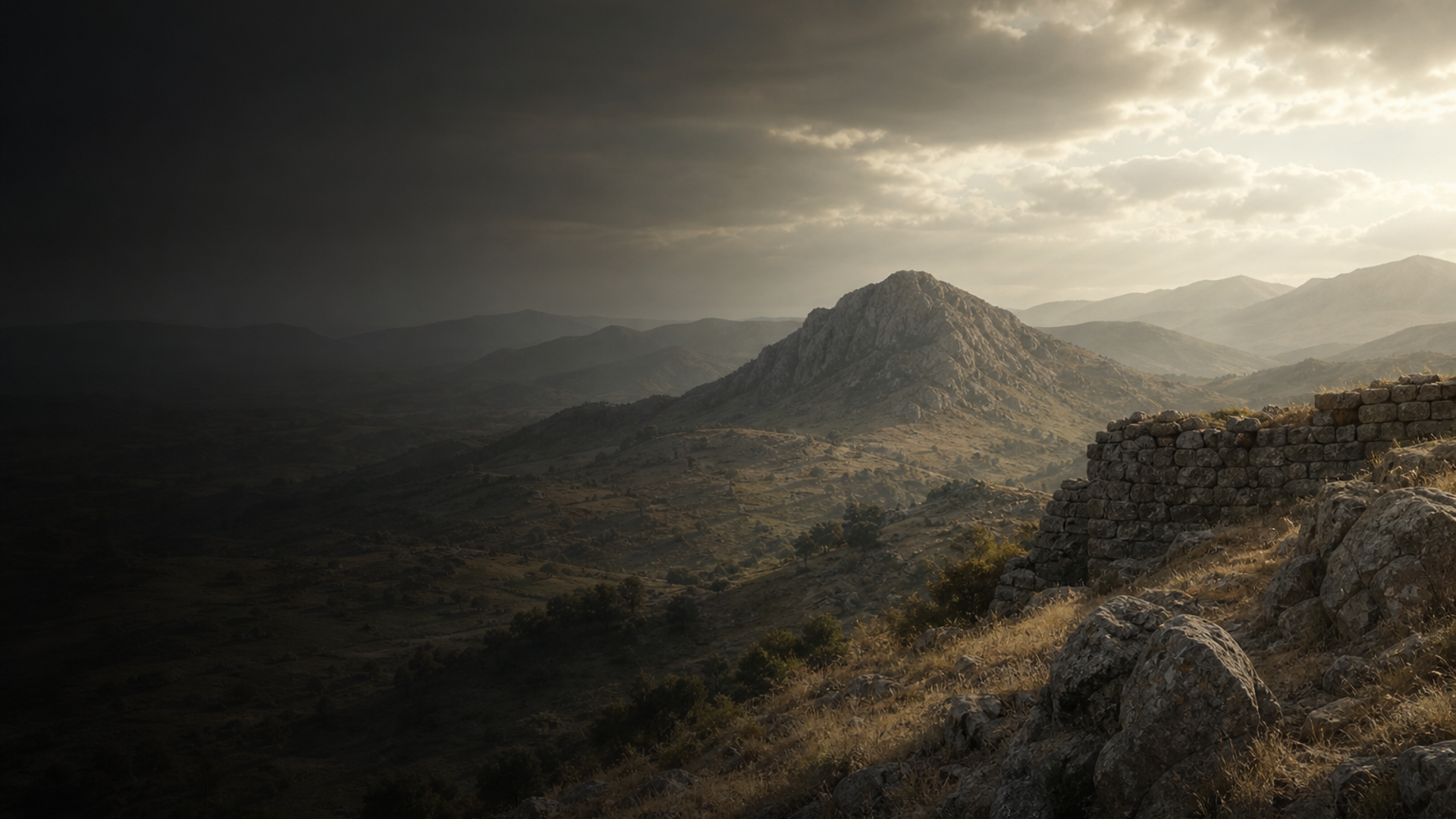
The human stories recovered from the Rhodopes leave a complex legacy. Genetic threads seen in these Early Iron Age individuals—Neolithic farmer markers, surviving hunter‑gatherer lineages and traces of later mobility—are components in the broader ancestry of modern Southeastern Europe. Archaeological continuity in settlement locations and craft traditions underscores long‑term occupation of the landscape.

However, continuity is partial and layered: centuries of migration, cultural turnover and population movement after 500 BCE mean that direct one‑to‑one links between these ancient individuals and any single modern group are not straightforward. Ancient DNA helps quantify ancestral contributions and demonstrates that many modern Bulgarians carry mixtures of the same deep ancestries identified in the Early Iron Age, but patterns of local continuity vary by region. In short, these remains are both ancestors and actors in a long tapestry of human change—threads that connect past and present without reducing either to a simple story.

  • Components of Early Iron Age ancestry persist in modern Balkan gene pools but in complex mixtures
  • Archaeological and genetic data together reveal long‑term occupation and repeated interactions
AI 电源

AI 助手

就 Echoes of Bulgaria's Early Iron Age 文化提问

AI 助手 由DNAGENICS公司制作

解锁此特性
Ask questions about the Echoes of Bulgaria's Early Iron Age culture. Our AI assistant can explain genetic findings, historical context, archaeological evidence, and modern connections.
AI 样本分析

Echoes of Bulgaria's Early Iron Age 文化是人类历史中值得了解的一章……

遗传分析揭示了与早期种群的联系,同时显示了独特的适应和文化创新的证据。 古代DNA样本提供了对迁徙模式、社会结构以及古代种群之间的生物关系的深刻见解。

这是人工智能分析的预览。 解锁全AI 助手, 以探索关于:

  • 遗传组成和祖先
  • 移徙模式和起源
  • 日常生活和文化习俗
  • 现代遗传遗产

探索更古老的文化

揭开古代世界文明的故事

使用优惠码 可减免 35% • 11月12日 到期




