Echoes of the West Liao River

下载的 PDF 是图像副本。如需可选中文本及更好的辅助技术支持,请使用打印功能。

Echoes of the West Liao River

揭开一个失落的文明

正在加载考古记录……

正在收集古代记录

跳转到主内容
Echoes of the West Liao River
文明焦点

Echoes of the West Liao River

Bronze Age communities of Inner Mongolia revealed through archaeology and ancient DNA

1050 CE - 350 BCE
Inner Mongolia, China (Longtoushan, Hexigten, Chifeng)
滚动开始
Chapter I

剧情

了解 Echoes of the West Liao River 文化

Archaeological and genetic glimpses from Longtoushan (Inner Mongolia) illuminate small Bronze Age communities (1050–350 BCE). Limited ancient DNA (3 samples) shows northern East Asian maternal lineages (D, B) and Y-haplogroups NO and C, offering tentative links to regional Bronze Age networks.

Time Period

1050–350 BCE

Region

Inner Mongolia, China (Longtoushan, Hexigten, Chifeng)

Common Y-DNA

NO (1), C (1) — based on 3 samples

Common mtDNA

D (2), B (1) — based on 3 samples

Chapter II

时间线

这种文化历史上的关键时刻

1000 BCE

Community occupation around Longtoushan

Archaeological layers and burials at Longtoushan indicate settled activity and local bronze-age traditions around 1000 BCE.

Chapter III

Origins & Emergence

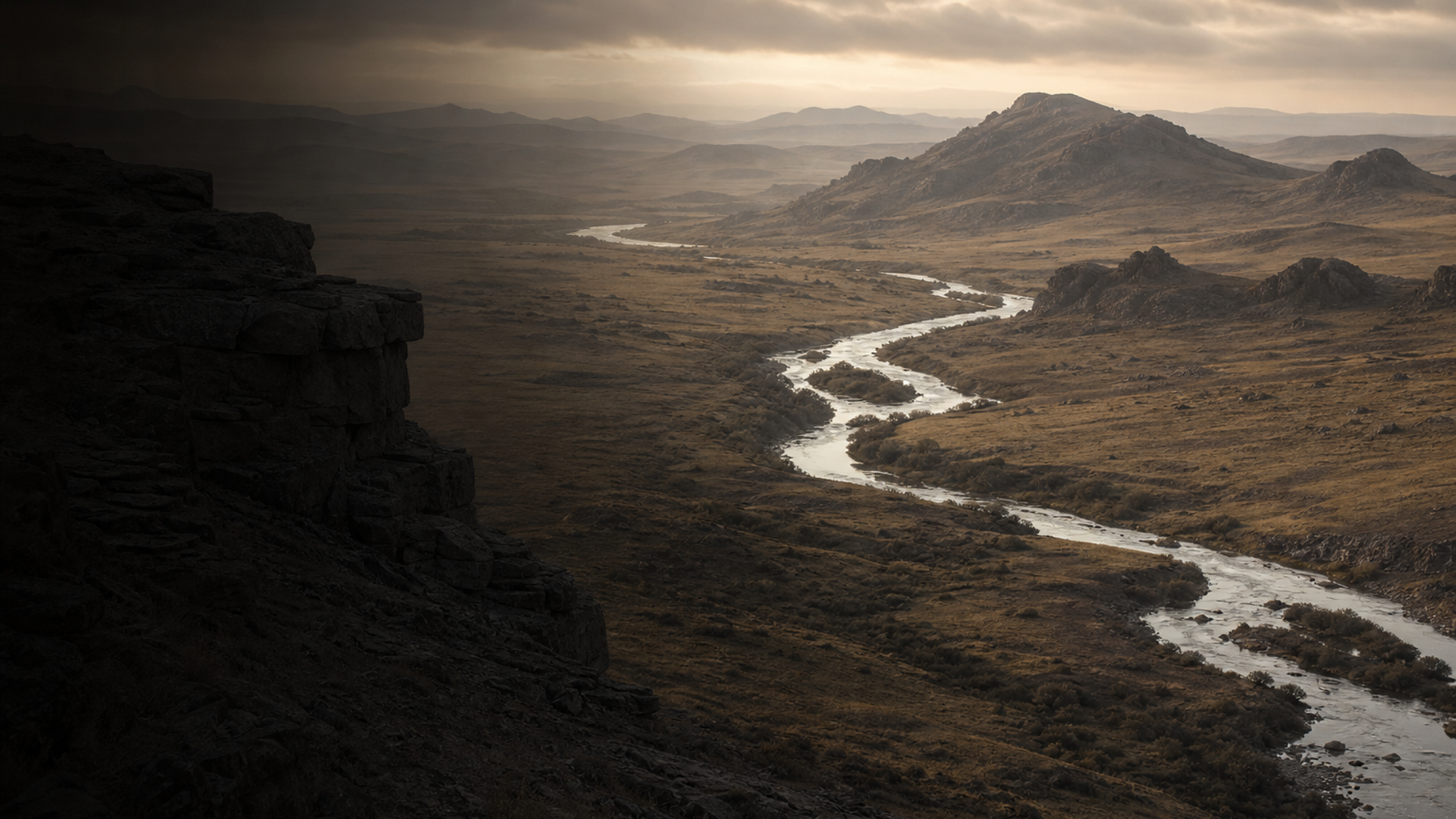
The China_WLR_BA communities at Longtoushan occupy the late Bronze Age margins of the West Liao River basin, a landscape of riverine terraces and rolling grasslands in what is today Inner Mongolia. Archaeological data indicates occupation in the period roughly 1050–350 BCE, a time when local traditions interacted with wider Bronze Age networks across northeastern China and the Mongolian steppe. Materials recovered from the Longtoushan site and nearby Hexigten and Chifeng areas show a blend of local ceramic styles, bronze items, and burial practices that reflect regional continuities rather than sudden replacement.

Limited ancient DNA from three individuals offers a preliminary genetic window into these communities. While sample size is small, the recorded maternal haplogroups (D and B) are common in northern and northeastern East Asia, and the presence of Y-haplogroups NO and C aligns with paternal lineages found in northern China and adjacent regions. These genetic markers are consistent with a population rooted in northern East Asian ancestries, living within a cultural mosaic shaped by mobility, exchange, and local innovation.

Because the dataset is very limited, conclusions about origins, migrations, or population turnover remain tentative. Further sampling across more sites and time slices is essential to move from evocative glimpses to robust historical narratives.

  • Situated in the West Liao River basin (Longtoushan, Hexigten, Chifeng)
  • Occupational horizon c. 1050–350 BCE; regional Bronze Age context
  • Preliminary DNA indicates northern East Asian ancestries but sample size is small
Chapter IV

Daily Life & Society

Archaeological evidence from the West Liao River Bronze Age paints a picture of resilient, adaptable communities making seasonal use of rivers, fields, and pastures. Excavations at Longtoushan and surrounding sites reveal domestic structures, hearths, pottery fragments, and small-scale metalwork that suggest mixed subsistence strategies: dryland millet cultivation complemented by animal herding and hunting. Archaeological data indicates that communities organized around family compounds and small hamlets rather than large urban centers.

Burial contexts provide a cinematic yet restrained window into social life: graves with personal ornaments, utilitarian objects, and occasional bronze items imply differential access to prestige goods, but not extreme social stratification visible at some contemporaneous states. Craft specialization appears on a local scale — pottery types and metalworking debris cluster at specific loci within sites, indicating household-level production and exchange networks that connected valleys and steppe corridors.

Environmental records and faunal remains suggest a landscape in flux, where climatic variability could influence mobility, crop yields, and herd management. Such pressures would have shaped seasonal rhythms, social alliances, and long-distance contacts, producing a lived world of pragmatic innovation punctuated by ritual and commemoration.

  • Mixed economy: millet agriculture plus herding and hunting
  • Household-scale craft production and localized exchange
Chapter V

Genetic Profile

The genetic dataset for China_WLR_BA is small (n = 3) and therefore highly provisional. All three samples come from Longtoushan area contexts dated between 1050 and 350 BCE. Maternal lineages are dominated by haplogroups D (two individuals) and B (one individual), both of which are widespread across northern and eastern Asia in ancient and modern populations. These mtDNA signals point to continuity of northern East Asian maternal ancestries in this region during the late Bronze Age.

On the paternal side, observed Y-chromosome markers include haplogroups NO (one individual) and C (one individual). Haplogroup NO has deep roots across East and Southeast Asia, while haplogroup C is often associated with northern Eurasian and Mongolic-speaking groups in prehistoric contexts. Together, these paternal lineages are consistent with the broader genetic landscape of northern China and adjacent steppe zones.

Because only three genomes are available, any inference about population structure, sex-biased migration, or admixture must be framed as tentative. The current picture suggests local continuity with ties to wider northeastern Asian gene pools rather than wholesale replacement. Expanding sample numbers and integrating genome-wide analyses will be necessary to test hypotheses about mobility, marriage networks, and interaction with neighboring Bronze Age cultures.

  • mtDNA: D (2), B (1) — indicative of northern East Asian maternal ancestry
  • Y-DNA: NO (1), C (1) — suggests links to regional paternal lineages; conclusions are preliminary
Chapter VI

Legacy & Modern Connections

The human traces at Longtoushan speak to long-term threads in the genetic and cultural tapestry of northeastern China. Archaeological continuity in material culture and the presence of common northern East Asian haplogroups suggest that elements of these Bronze Age communities contributed to the ancestral substratum of later populations in the region. However, direct lines to any single modern group cannot be asserted from three samples alone.

For museums and public audiences, the real power of these finds is evocative: they connect living people to landscapes where generations practiced agriculture, herded animals, forged bronze, and buried their dead with objects that mattered. Each additional ancient genome will sharpen this picture, turning cinematic glimpses into a layered history of migration, adaptation, and continuity across the West Liao River basin.
  • Suggests genetic continuity with later northern East Asian populations, but evidence is preliminary
  • Cultural and biological ties highlight long-term habitation of the West Liao River landscape
AI 电源

AI 助手

就 Echoes of the West Liao River 文化提问

AI 助手 由DNAGENICS公司制作

解锁此特性
Ask questions about the Echoes of the West Liao River culture. Our AI assistant can explain genetic findings, historical context, archaeological evidence, and modern connections.

AI 样本分析

Echoes of the West Liao River 文化是人类历史中值得了解的一章……

遗传分析揭示了与早期种群的联系,同时显示了独特的适应和文化创新的证据。 古代DNA样本提供了对迁徙模式、社会结构以及古代种群之间的生物关系的深刻见解。

这是人工智能分析的预览。 解锁全AI 助手, 以探索关于:

  • 遗传组成和祖先
  • 移徙模式和起源
  • 日常生活和文化习俗
  • 现代遗传遗产

探索更古老的文化

揭开古代世界文明的故事

使用优惠码 可减免 35% • 11月12日 到期




