Eleuthera Ceramic World

下载的 PDF 是图像副本。如需可选中文本及更好的辅助技术支持,请使用打印功能。

Eleuthera Ceramic World

揭开一个失落的文明

正在加载考古记录……

正在收集古代记录

跳转到主内容
Eleuthera Ceramic World
文明焦点

Eleuthera Ceramic World

Island life and lineage on Eleuthera, 500–1500 CE

500 CE - 1500 CE
Eleuthera Island, Bahamas
滚动开始
Chapter I

剧情

了解 Eleuthera Ceramic World 文化

Archaeological and genetic evidence from Eleuthera Island (Preacher's Cave, Garden Cave, Blue Hole) reveals a Ceramic-period island society (500–1500 CE). Ancient DNA links indigenous Caribbean maternal haplogroups (C, B2 series) and Y-haplogroup Q to migration routes from northern South America.

Time Period

500–1500 CE

Region

Eleuthera Island, Bahamas

Common Y-DNA

Q (observed, 3/14)

Common mtDNA

C, B2, C1b, C1d (dominant maternal lineages)

Chapter II

时间线

这种文化历史上的关键时刻

500 CE

Onset of Ceramic occupations

Radiocarbon-dated deposits and pottery appear on Eleuthera, marking Ceramic-period settlements and island-wide cultural links.

1000 CE

Intensified coastal settlement

Middens and cave deposits indicate sustained marine exploitation and community activity around Preacher's Cave and Blue Hole.

1492 CE

Proximity to contact era

Late Ceramic occupations on Eleuthera approach the historical contact period; archaeological and genetic continuity faces impending disruption.

Chapter III

Origins & Emergence

From the slow hush of mangrove and reef, the Ceramic communities of Eleuthera emerge in the archaeological record around 500 CE. Ceramic-period material culture across the northern Bahamas shows stylistic and technological affinities with Saladoid-derived traditions that likely moved northward from the Greater Antilles and northern South America. On Eleuthera, sites such as Preacher's Cave, Garden Cave, and the Blue Hole preserve stratified deposits of decorated pottery, shell middens, and hearths that mark repeated seasonal and permanent occupation.

Archaeological data indicates that the spread of pottery, new food-processing techniques, and boat technologies transformed island lifeways after 500 CE. Ceramic styles and tempering practices—visible on sherd assemblages excavated in caves and coastal middens—provide a cultural thread connecting Eleuthera to broader Caribbean exchange networks. Limited radiocarbon dates from charcoal and faunal remains anchor occupation phases between roughly 500 CE and 1500 CE, though local settlement intensity likely varied with climatic events and sea-level change.

While material links to mainland South America and the Greater Antilles are clear, the precise routes and timing of migrations remain under discussion. Genetic evidence (see Genetics section) offers an independent line of inquiry that complements the archaeological picture and helps trace maternal and paternal ancestries of island populations.

  • Ceramic tradition appears on Eleuthera by ~500 CE
  • Sites: Preacher's Cave, Garden Cave, Blue Hole preserve pottery and middens
  • Material culture suggests links to Saladoid-derived networks from South America
Chapter IV

Daily Life & Society

Life on Eleuthera during the Ceramic period would have been shaped by the sea: fishing, conch and shellfish gathering, and small-scale horticulture provided staples. Archaeological excavation of middens at Preacher's Cave and coastal spits reveals abundant marine shell, fish bone, and occasional domesticated or managed plants—evidence of mixed foraging and garden cultivation adapted to karstic soils and thin soils on limestone islands.

Ceramics provided cooking, storage, and ceremonial functions; decorated sherds recovered in caves suggest both daily use and symbolic expression. Caves like Preacher's Cave and Garden Cave likely served multiple roles: protection from storms, storage, ritual places, and burial locales. Shell tools, ground stone, and bone artifacts found in stratified contexts point to a technology tuned to island resources.

Social life would have been organized at small community scales, with mobility along coastlines and inter-island voyaging connecting Eleuthera to New Providence, the Exumas, and beyond. Exchange networks carried pottery styles, stone resources, and possibly people. Archaeological signs of continuity into later centuries show cultural persistence up to the contact era, though the disruptions of the late first millennium CE (climatic shifts, shifting trade patterns) introduced change.

  • Economy focused on marine resources, supplemented by horticulture
  • Caves functioned as living, storage, and ritual spaces
Chapter V

Genetic Profile

Fourteen ancient individuals from Eleuthera (sites: Preacher's Cave, Garden Cave, Blue Hole) yield a consistent genetic signal of Indigenous Caribbean ancestry. Maternal lineages are dominated by Native American mtDNA haplogroups: C (including C1b and C1d variants) and B2. These maternal markers are widespread among pre-contact Caribbean and mainland South American populations and are consistent with a northward dispersal of people and maternal lineages into the Bahamas.

On the paternal side, Y-haplogroup Q appears in multiple individuals (observed in 3 samples). Haplogroup Q is a principal Native American paternal lineage, supporting archaeological interpretations of population movement from the mainland into the Caribbean archipelago. Together, mtDNA and Y-DNA patterns corroborate an origin broadly connected to northern South America and the Greater Antilles, likely tied to Saladoid-related expansion.

Caveats: the dataset contains 14 samples—robust enough to identify prevalent haplogroups but limited for resolving fine-scale substructure, sex-biased migration, or temporal shifts across the full 1000-year span. Ancient genomic autosomal data, when available, will better resolve ancestry proportions, affinities to mainland groups, and demographic events such as bottlenecks, founder effects, or admixture. For now, the genetic portrait supports archaeological models of Caribbean peopling while leaving open details of timing and micro-regional diversity.
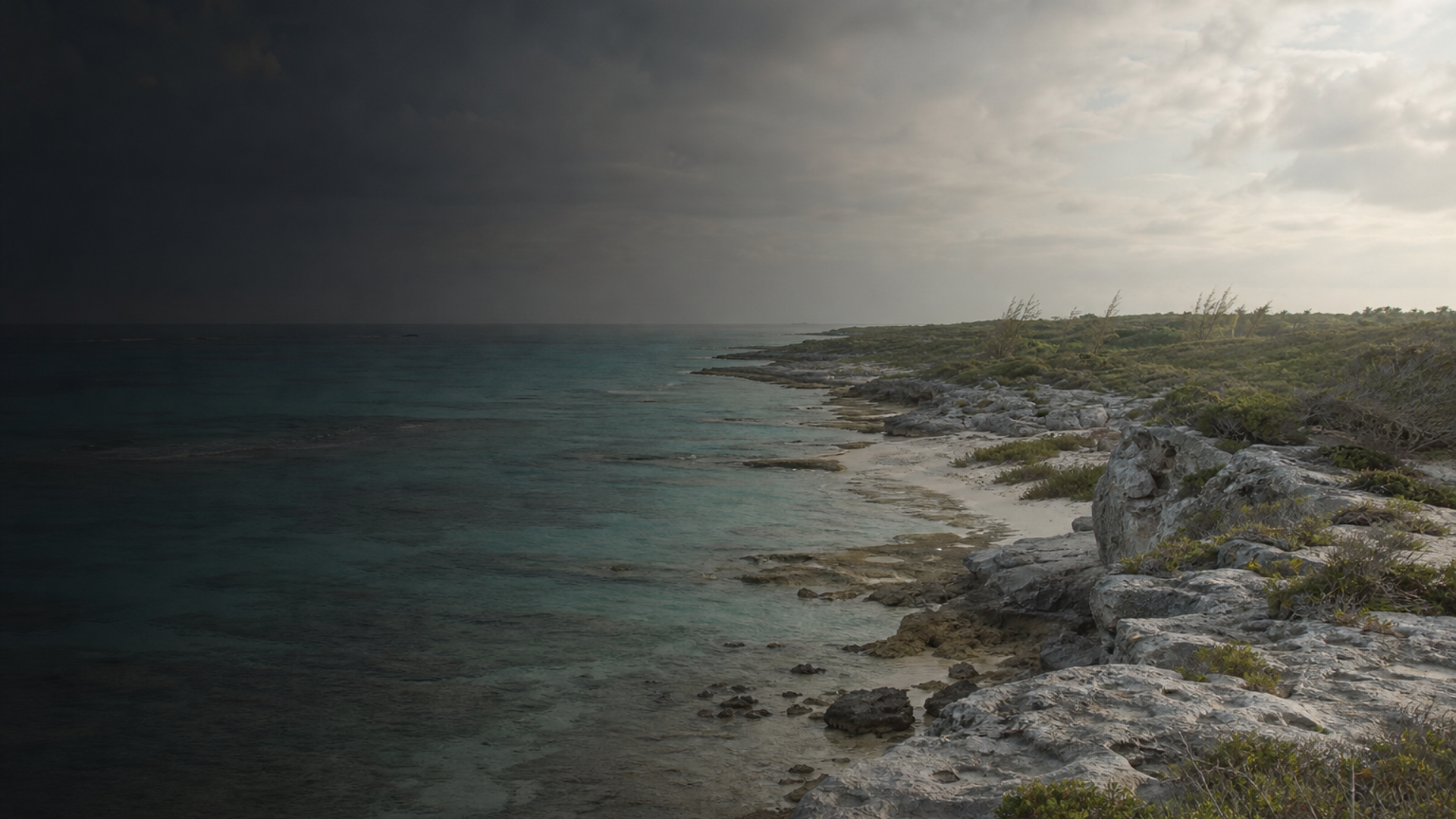

  • Maternal haplogroups dominated by C and B2 lineages
  • Paternal lineages include Y-haplogroup Q (3/14), consistent with Native American ancestry
Chapter VI

Legacy & Modern Connections

The genetic and archaeological echoes from Eleuthera bind past islanders to present-day Caribbean identities. mtDNA lineages like C1b and B2 persist in indigenous-descended communities across the Americas, and the presence of Y-haplogroup Q links Eleuthera's ancient men to wider Native American paternal lineages.

Archaeological remains—decorated pottery fragments, shell middens, and cave features—compose a tactile memory of island lifeways: deep knowledge of seas, seasonal movement, and material creativity. These remnants, paired with ancient DNA, help reconstruct migration pathways and cultural connections between the Bahamas, the Greater Antilles, and northern South America. While European contact and later historical events transformed the demography of the region, the biological and cultural contributions of Ceramic-period peoples remain a foundational layer in Caribbean history.

Conservation of coastal sites and further ancient DNA sampling across islands will sharpen our understanding of continuity, diversity, and the precise relationships between ancient islanders and modern communities.

  • Ancient lineages link Eleuthera to broader Native American ancestry
  • Archaeology + aDNA illuminate migration routes and island lifeways
AI 电源

AI 助手

就 Eleuthera Ceramic World 文化提问

AI 助手 由DNAGENICS公司制作

解锁此特性
Ask questions about the Eleuthera Ceramic World culture. Our AI assistant can explain genetic findings, historical context, archaeological evidence, and modern connections.
AI 样本分析

Eleuthera Ceramic World 文化是人类历史中值得了解的一章……

遗传分析揭示了与早期种群的联系,同时显示了独特的适应和文化创新的证据。 古代DNA样本提供了对迁徙模式、社会结构以及古代种群之间的生物关系的深刻见解。

这是人工智能分析的预览。 解锁全AI 助手, 以探索关于:

  • 遗传组成和祖先
  • 移徙模式和起源
  • 日常生活和文化习俗
  • 现代遗传遗产

探索更古老的文化

揭开古代世界文明的故事

使用优惠码 可减免 35% • 11月12日 到期




