Hellenistic Anatolia: Coastal to Interior

下载的 PDF 是图像副本。如需可选中文本及更好的辅助技术支持,请使用打印功能。

Hellenistic Anatolia: Coastal to Interior

揭开一个失落的文明

正在加载考古记录……

正在收集古代记录

跳转到主内容
Hellenistic Anatolia: Coastal to Interior
文明焦点

Hellenistic Anatolia: Coastal to Interior

Genetic echoes from Halikarnassos to Gordion reveal Anatolia’s layered populations

512 CE - 30 BCE
Anatolia (modern Turkey)
滚动开始
Chapter I

剧情

了解 Hellenistic Anatolia: Coastal to Interior 文化

A synthesis of archaeological and genetic data (18 samples, 512–30 BCE) from sites across modern Turkey showing a mosaic of Anatolian, eastern Mediterranean, and local maternal lineages during the Hellenistic era.

Time Period

512–30 BCE

Region

Anatolia (modern Turkey)

Common Y-DNA

No dominant Y‑DNA signal; limited or unresolved

Common mtDNA

W, HV, U, K, H5 (observed in mtDNA assignments)

Chapter II

时间线

这种文化历史上的关键时刻

334 BCE

Alexander’s Anatolian Campaigns

Alexander's armies move into Anatolia, opening new political and cultural connections across Aegean and inland sites.

323 BCE

Death of Alexander and Hellenistic Fragmentation

Alexander’s death leads to successor kingdoms, creating regional powers and new settlement policies in Anatolia.

30 BCE

End of the Hellenistic Period

The Hellenistic era closes as Rome becomes dominant in the eastern Mediterranean, reshaping Anatolian political landscapes.

Chapter III

Origins & Emergence

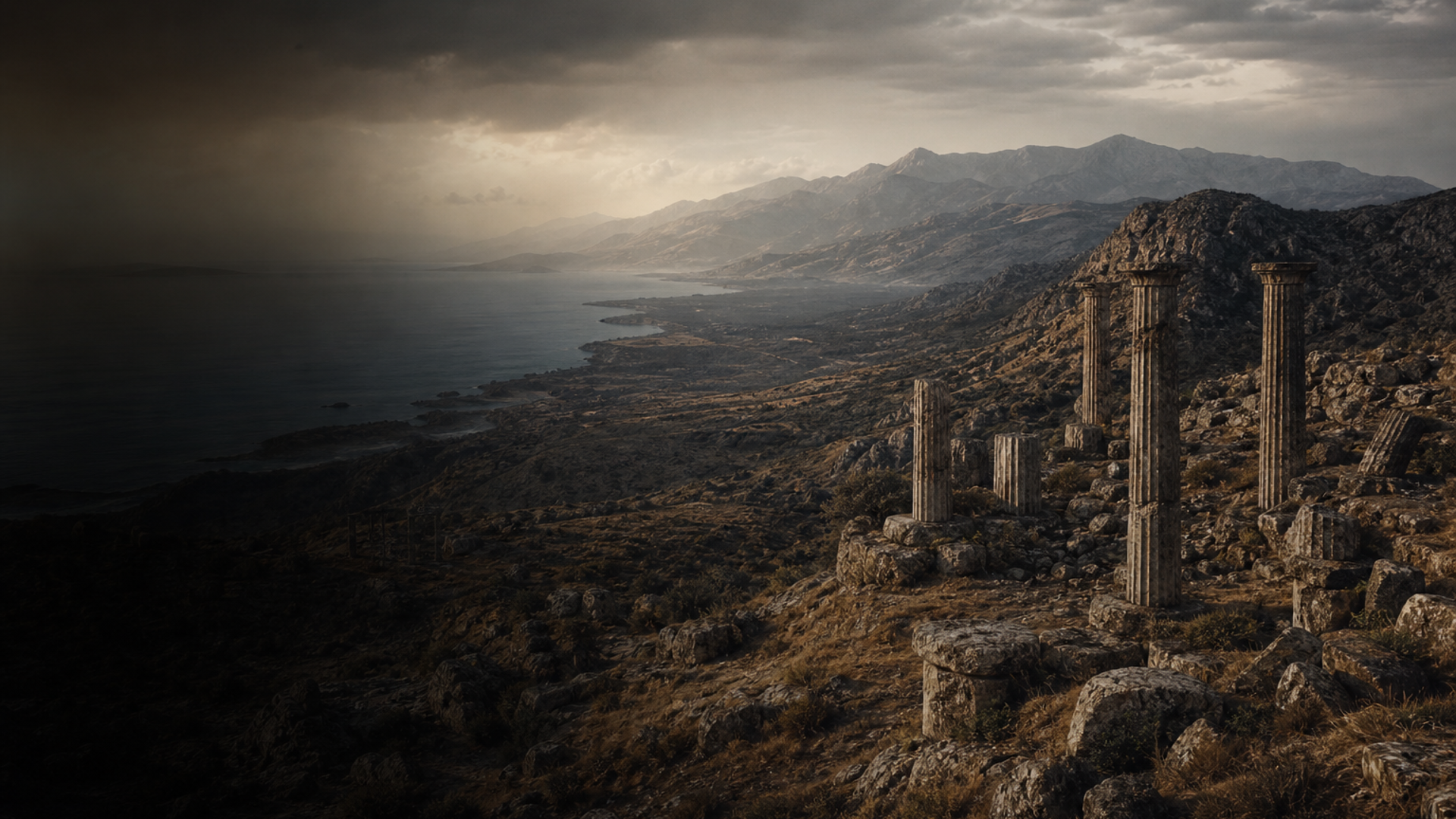
The Hellenistic period in Anatolia unfolded as a dramatic overlay on a long-lived landscape of Bronze and Iron Age polities. After Alexander’s campaigns (beginning in 334 BCE) the fabric of coastal cities, inland strongholds and rural settlements was rewoven by new political frameworks, mercantile networks, and artistic influences. Archaeological signatures — Greek-style architecture and inscriptions in coastal Halikarnassos (Bodrum), continued occupancy layers at inland Gordion (Ankara), and mixed material cultures at Kalehöyük — indicate both cultural adoption and local persistence.

Across the Black Sea littoral (sites in Samsun, Tekkeköy) and the southeastern uplands near Aktaş Mevki (Mardin), pottery styles, burial customs and coinage attest to intensified connections with the wider eastern Mediterranean and Aegean worlds. These interactions were rarely unidirectional: local Anatolian traditions continued in domestic ceramics, funerary rites, and settlement patterns, creating a palimpsest rather than a rupture.

Archaeological data indicates that the Hellenistic cultural horizon in Anatolia was regionally varied — coastal Greek-speaking enclaves, hybridized market towns, and resilient rural hinterlands. Limited evidence suggests that migration and elite movement (soldiers, administrators, merchants) were important vectors for cultural change, but the scale and demographic impact of those movements require genetic and broader archaeological corroboration.

  • Alexander’s conquests restructured political landscapes but did not erase local traditions
  • Coastal cities show stronger Aegean/Greek material influence than many inland sites
  • Archaeological evidence points to both mobility and local continuity
Chapter IV

Daily Life & Society

Life in Hellenistic Anatolia ranged from bustling harbors to agricultural plains and fortified hilltop towns. In Halikarnassos and other Aegean ports, amphorae, imported tablewares and street grids reflect active maritime trade and cosmopolitan marketplaces. Inland at Gordion and Kalehöyük, households balanced subsistence farming with craft production: metallurgy, textile manufacture and local pottery remained central to everyday economies.

Burial practices reveal social nuance. Some tombs and grave goods adopt Greek forms — painted ceramics, inhumations with grave offerings — while others preserve Anatolian traditions, including local mortuary assemblages and regional stone-cut tombs. In the Black Sea coastal settlements of Samsun (Tekkeköy, Mahmatlı) material culture shows trade-connected lifeways that bridged maritime and inland economies.

Literacy and administration were unevenly distributed: Greek language and epigraphy are prominent in civic centers, whereas rural inscriptions and local scripts persist in certain regions. This patchwork implies social networks that integrated merchants, soldiers, local elites and peasant communities. Mobility associated with trade, military service, and administrative postings likely produced mixed local communities — a pattern that ancient DNA can help elucidate by revealing individual ancestries and degrees of biological continuity.

  • Harbors and inland towns supported complementary economies of trade and agriculture
  • Burial and material culture show a blend of Greek and local Anatolian practices
Chapter V

Genetic Profile

This assemblage comprises 18 individuals dated between 512 and 30 BCE from sites including Halikarnassos (Bodrum), Gordion (Ankara), Kalehöyük, multiple Black Sea locations near Samsun (Tekkeköy, Mahmatlı), and Aktaş Mevki (Mardin). Mitochondrial haplogroups were assigned for nine individuals and include W (2), HV (2), U (2), K (2) and H5 (1). These maternal lineages are commonly found across Europe and western Asia and suggest a mixture of local Anatolian and eastern Mediterranean maternal ancestries.

No clear, dominant Y‑chromosome haplogroup is reported in the available summary, so conclusions about male-mediated movements (for example, migrant Macedonian soldiers or administrators) remain tentative. Archaeogenetic studies across Anatolia often reveal continuity with earlier Neolithic-derived ancestries combined with later inflows from surrounding regions; the present dataset is consistent with such a mosaic but is too small to resolve fine-scale structure.

Because only a subset of individuals has mtDNA assignments (9 of 18) and Y‑DNA data are limited or unresolved, interpretations must remain cautious. Genome-wide data or larger samples would better quantify admixture proportions, test for sex-biased migration, and clarify whether observed maternal lineages track local continuity or reflect incoming maritime populations. For now, genetic evidence complements archaeological signs of cultural mixing, pointing to a region of overlapping ancestries rather than a single immigrant population.

  • 18 individuals sampled; mtDNA assigned for 9: W(2), HV(2), U(2), K(2), H5(1)
  • Y‑DNA coverage limited or inconclusive — sex-biased migration questions remain open
Chapter VI

Legacy & Modern Connections

The Hellenistic communities of Anatolia contributed enduring cultural and genetic threads to the region’s tapestry. Archaeologically, they left urban plans, artistic motifs, and administrative practices that shaped subsequent Roman and Byzantine developments. Genetically, the mix of maternal haplogroups observed among sampled individuals reflects lineages that continue to circulate in modern populations of the eastern Mediterranean and Anatolia.

However, continuity should not be overstated: centuries of migrations — Roman, Byzantine, Seljuk, Ottoman — layered additional contributions onto the gene pool. The modest sample size and partial genetic coverage (notably limited Y‑chromosome data) mean that direct lines of descent from any individual site to modern groups are suggestive rather than proven. Still, when paired with stratified archaeological contexts from Halikarnassos, Gordion and other sites, ancient DNA helps illuminate how everyday families and mobile individuals shaped the genetic contours of modern Turkey.

  • Material culture and urban systems influenced later Roman and Byzantine Anatolia
  • Genetic signals show continuity of common maternal lineages, but full demographic history is complex and multi-layered
AI 电源

AI 助手

就 Hellenistic Anatolia: Coastal to Interior 文化提问

AI 助手 由DNAGENICS公司制作

解锁此特性
Ask questions about the Hellenistic Anatolia: Coastal to Interior culture. Our AI assistant can explain genetic findings, historical context, archaeological evidence, and modern connections.
AI 样本分析

Hellenistic Anatolia: Coastal to Interior 文化是人类历史中值得了解的一章……

遗传分析揭示了与早期种群的联系,同时显示了独特的适应和文化创新的证据。 古代DNA样本提供了对迁徙模式、社会结构以及古代种群之间的生物关系的深刻见解。

这是人工智能分析的预览。 解锁全AI 助手, 以探索关于:

  • 遗传组成和祖先
  • 移徙模式和起源
  • 日常生活和文化习俗
  • 现代遗传遗产

探索更古老的文化

揭开古代世界文明的故事

使用优惠码 可减免 35% • 11月12日 到期




