Hetian Historical Horizon

下载的 PDF 是图像副本。如需可选中文本及更好的辅助技术支持,请使用打印功能。

Hetian Historical Horizon

揭开一个失落的文明

正在加载考古记录……

正在收集古代记录

跳转到主内容
Hetian Historical Horizon
文明焦点

Hetian Historical Horizon

Human stories from Luopu County (1–400 CE) where east and west meet

1 CE - 400 CE
Xinjiang, China (Hetian, Luopu County)
滚动开始
Chapter I

剧情

了解 Hetian Historical Horizon 文化

Archaeological and ancient DNA evidence from Hetian (Luopu County), Xinjiang (1–400 CE) reveals a small, diverse community. Limited samples (n=9) suggest primarily East Asian paternal ancestry (Y‑DNA O) alongside maternal lineages that include West Eurasian U haplogroups, hinting at local connections to broader Silk Road interactions.

Time Period

1–400 CE

Region

Xinjiang, China (Hetian, Luopu County)

Common Y-DNA

O (n=3)

Common mtDNA

U (n=3), M3, H, J, T

Chapter II

时间线

这种文化历史上的关键时刻

1 CE

Earliest sampled burials

The lowermost dated remains in the Luopu County series fall near 1 CE, representing the early Historical Period horizon.

400 CE

Latest sampled horizon

The upper bound of the sampled chronology reaches about 400 CE, marking the end of the analyzed temporal window.

Chapter III

Origins & Emergence

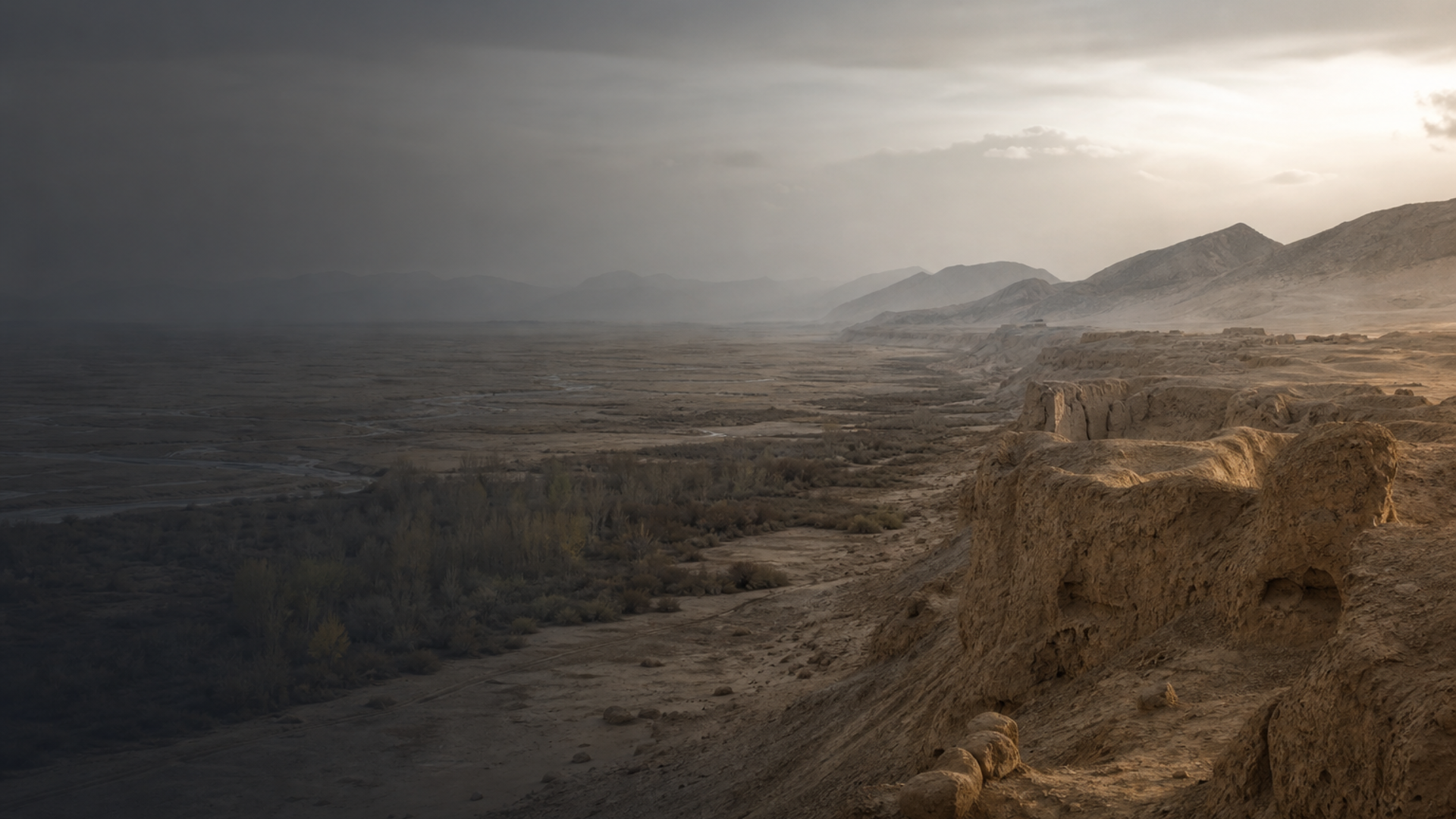
Nestled on the southern rim of the Tarim Basin, Hetian (Hotan) and Luopu County occupy a liminal landscape where mountain passes funnel people, goods and ideas. Archaeological data indicates the human remains sampled from burial contexts dated between 1 and 400 CE reflect communities living during the early Historical Period of Xinjiang. The material record in the region — funerary deposits, occasional textiles, and locally produced ceramics noted in site reports — portrays small settlements tied to long‑distance exchange.

Genetically, these Hetian historical individuals are part of a dynamic frontier. Limited evidence from nine successfully sequenced individuals suggests a tapestry of ancestries: paternal lineages dominated by haplogroup O (typical of East Asia) alongside maternal lineages that include haplogroup U, more often associated with West Eurasian gene pools. This pattern is consistent with archaeological models of frontier communities shaped by local continuity and episodic contact along early Silk Road routes. Because the sample count is small, the picture of emergence remains provisional; ongoing excavations and larger aDNA datasets will be necessary to resolve demographic trajectories and the timing of admixture events.

  • Samples dated between 1–400 CE from Luopu County, Hetian
  • Burial contexts indicate small, connected communities
  • Preliminary genetic signals point to mixed regional ancestries
Chapter IV

Daily Life & Society

Archaeological traces from Hetian in this period suggest lives framed by oasis agriculture, pastoral movement and trade. While preservation varies, excavated burials and surface finds imply a subsistence economy that combined irrigated farming in riverine oases with herding on adjacent slopes. Lightweight goods and occasional nonlocal objects found in the area point to participation in networks that funneled commodities between Central, South and East Asia.

Social organization likely revolved around family compounds and seasonal mobility. Funerary architecture and burial assemblages (where reported) show variability in grave goods and treatment, which may reflect differences in wealth, craft specialization or origin. Textile fragments and woven goods documented in nearby Hetian contexts emphasize the role of local artisanship; ceramic types suggest both local manufacture and imported wares. These material cues, paired with the genetic heterogeneity observed, evoke a community shaped by everyday practices and intermittent influxes of outsiders—traders, travelers, or migrants—whose presence left subtle traces in both material culture and genes.

  • Oasis agriculture plus pastoral activities likely sustained communities
  • Material culture indicates local craft and participation in wider trade
Chapter V

Genetic Profile

Ancient DNA from nine Hetian historical individuals provides a tantalizing, but preliminary, window into population dynamics at the southern edge of the Tarim Basin. Y‑chromosome haplogroup O appears in three male samples, a lineage commonly associated with East Asian populations and consistent with local paternal continuity. Mitochondrial diversity is greater: three individuals carry mtDNA U (a lineage often found in West Eurasian and steppe‑associated populations), and single occurrences of M3, H, J and T are reported. This combination—East Asian paternal signals with mixed maternal lineages—suggests asymmetrical admixture or sex‑biased gene flow, a pattern documented in many frontier and trade corridor contexts.

Caveats are important: with fewer than 10 samples, observed frequencies may not reflect the broader population. Limited coverage and possible preservation biases can distort haplogroup representation. Nevertheless, these genetic traces align with archaeological expectations for a Silk Road‑adjacent community: local East Asian roots with maternal inputs potentially from western or northern connections. Future sampling from contemporaneous sites across Hetian and neighboring oases will be necessary to test hypotheses about migration directionality, timing of admixture, and the social mechanisms—marriage, mobility, or trade—that produced the genetic mosaic.

  • Y‑DNA O prevalent among male samples (n=3), indicating East Asian paternal ancestry
  • mtDNA shows mixed maternal origins (U, M3, H, J, T); small sample size makes conclusions tentative
Chapter VI

Legacy & Modern Connections

The Hetian historical individuals capture a moment when the Tarim Basin functioned as both a crossroads and a crucible. Archaeologically and genetically, the region records interactions that would accumulate over centuries into the complex ethnic and cultural tapestry of modern Xinjiang. Haplogroup U among maternally inherited lineages points to connections that extend beyond East Asia, while Y‑DNA O ties these people to broader East Asian demographic histories. Together, they echo a long‑running theme in frontier zones: continuity punctuated by contact.

Because the dataset is small, linking these ancient genomes directly to any single modern population would be premature. However, the pattern of mixed ancestry is consistent with the idea that historic movements along the Silk Roads left enduring genetic and cultural imprints. As more ancient DNA and archaeological contexts are integrated, the Hetian samples will help map the pathways through which people, genes and ideas flowed across Eurasia during the early centuries CE.

  • Signals of East Asian paternal ancestry with mixed maternal inputs reflect Silk Road connectivity
  • Small sample count means links to modern populations remain speculative
AI 电源

AI 助手

就 Hetian Historical Horizon 文化提问

AI 助手 由DNAGENICS公司制作

解锁此特性
Ask questions about the Hetian Historical Horizon culture. Our AI assistant can explain genetic findings, historical context, archaeological evidence, and modern connections.
AI 样本分析

Hetian Historical Horizon 文化是人类历史中值得了解的一章……

遗传分析揭示了与早期种群的联系,同时显示了独特的适应和文化创新的证据。 古代DNA样本提供了对迁徙模式、社会结构以及古代种群之间的生物关系的深刻见解。

这是人工智能分析的预览。 解锁全AI 助手, 以探索关于:

  • 遗传组成和祖先
  • 移徙模式和起源
  • 日常生活和文化习俗
  • 现代遗传遗产

探索更古老的文化

揭开古代世界文明的故事

使用优惠码 可减免 35% • 11月12日 到期