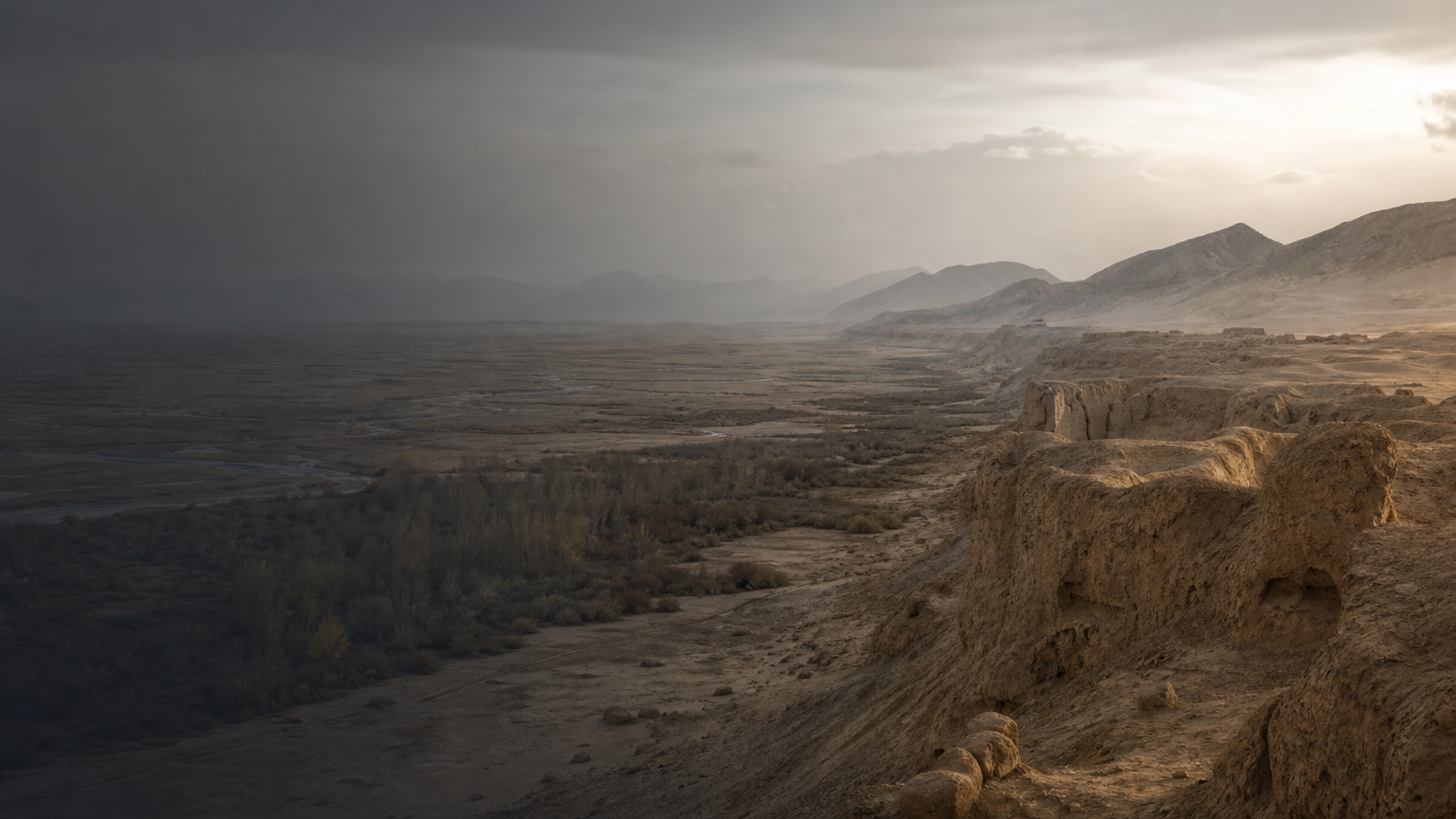
Ancient DNA from nine Hetian historical individuals provides a tantalizing, but preliminary, window into population dynamics at the southern edge of the Tarim Basin. Y‑chromosome haplogroup O appears in three male samples, a lineage commonly associated with East Asian populations and consistent with local paternal continuity. Mitochondrial diversity is greater: three individuals carry mtDNA U (a lineage often found in West Eurasian and steppe‑associated populations), and single occurrences of M3, H, J and T are reported. This combination—East Asian paternal signals with mixed maternal lineages—suggests asymmetrical admixture or sex‑biased gene flow, a pattern documented in many frontier and trade corridor contexts.
Caveats are important: with fewer than 10 samples, observed frequencies may not reflect the broader population. Limited coverage and possible preservation biases can distort haplogroup representation. Nevertheless, these genetic traces align with archaeological expectations for a Silk Road‑adjacent community: local East Asian roots with maternal inputs potentially from western or northern connections. Future sampling from contemporaneous sites across Hetian and neighboring oases will be necessary to test hypotheses about migration directionality, timing of admixture, and the social mechanisms—marriage, mobility, or trade—that produced the genetic mosaic.