Island of Winds: Early Modern Faroes

下载的 PDF 是图像副本。如需可选中文本及更好的辅助技术支持,请使用打印功能。

Island of Winds: Early Modern Faroes

揭开一个失落的文明

正在加载考古记录……

正在收集古代记录

跳转到主内容
Island of Winds: Early Modern Faroes
文明焦点

Island of Winds: Early Modern Faroes

Church burials and DNA reveal a compact, maritime community in the Faroe Islands (1500–1700 CE)

1500 CE - 1700 CE
Faroe Islands
滚动开始
Chapter I

剧情

了解 Island of Winds: Early Modern Faroes 文化

Archaeological and ancient DNA data from Church2 in the Faroe Islands (1500–1700 CE) reveal a compact Early Modern community dominated by Western European maternal lineages and a majority R paternal signal. Findings suggest continuity with North Atlantic networks but require broader sampling.

Time Period

1500–1700 CE

Region

Faroe Islands

Common Y-DNA

R (majority, 12), I1 (1)

Common mtDNA

H (majority, 12), J, H17, U, H5

Chapter II

时间线

这种文化历史上的关键时刻

1500 CE

Church2 burials begin (documented era)

Church2 cemetery provides primary archaeological and genetic material dated to the Early Modern Faroes (1500–1700 CE).

Chapter III

Origins & Emergence

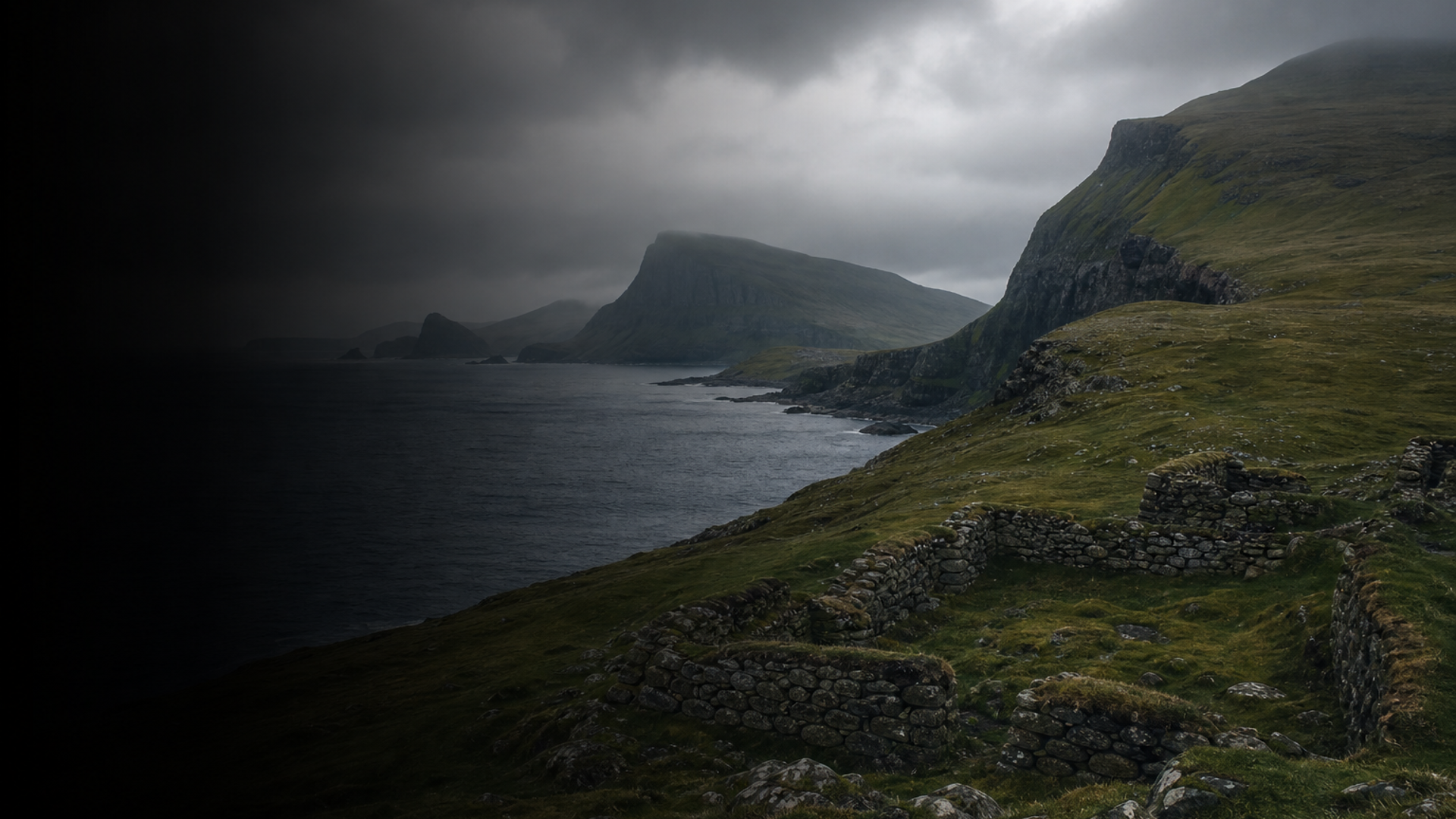
The Early Modern Faroes (1500–1700 CE) unfold against a landscape of wind-swept grass and stone—an archipelago long shaped by seafaring horizons. Archaeological data from Church2 (Faroes) places burials and associated material culture in the domestic and ecclesiastical heart of island life. While Norse settlement of the Faroes began many centuries earlier (c. 9th–10th centuries CE), the 16th–17th century record at Church2 reflects a community negotiating continuity and change: sustaining pastoral and maritime economies, using churchyard burial practices, and maintaining connections across the North Atlantic.

Material remains and burial contexts suggest a settled, small-population society where local traditions layered over centuries of contact. Historical documents from the North Atlantic hint at fishing, sheep husbandry, and periodic links to Norway, Scotland, and Iceland; the archaeological footprint at Church2 echoes those networks. Limited evidence means we must be cautious about precise migration events, but the combined archaeological and genetic picture suggests the Early Modern Faroes were at once insular and interconnected—an island culture whose everyday life bore traces of broader Atlantic currents.

  • Church2 provides primary burial context for 1500–1700 CE Faroes
  • Archaeological data indicates continuity with earlier Norse settlement patterns
  • Island isolation coupled with Atlantic contacts shaped emergence
Chapter IV

Daily Life & Society

Life on the Early Modern Faroes was organized around sea, sheep, and stone. Archaeological indicators—settlement traces, churchyard burials, and recovered artefacts—paint a scene of modest households oriented to coastal resources. Fish and small-boat technologies were central to subsistence; sheep grazing shaped the inland landscape. Church2 sits at the center of ritual life, where interments reflect community structure and perhaps family plots that persisted through generations.

Social organization likely combined kin groups and parish ties. Graves at Church2 imply established burial rites associated with Christian practice, but variation in graves and associated objects hints at social differences—age, sex, and perhaps status within a small population. Craft activities, repair of boats and tools, and seasonal travel for trade or kin-visiting would have punctuated the year. Archaeological data indicates resilience: islanders adapted material culture and economic strategies to the North Atlantic environment while maintaining cultural links across sea routes.

  • Subsistence centered on fishing and sheep husbandry
  • Churchyard burials suggest enduring parish and kin structures
Chapter V

Genetic Profile

Sixteen individuals sampled from Church2 (Faroes) provide an Early Modern snapshot linking bones to biological lineages. Y-chromosome data show a clear majority labeled as R (12 individuals) with a single I1; a small number of male lineages are not assigned to named categories in the provided counts. Mitochondrial DNA is dominated by haplogroup H (12 individuals), with additional maternal types J, H17, U, and H5 represented.

The prevalence of mtDNA H suggests continuity with widespread Western European maternal lineages common across the North Atlantic; the paternal R majority is consistent with broader Western European and Atlantic signals observed in many historical-period populations, though the dataset does not specify subclades (e.g., R1b) so direct assignment to particular migratory events is not possible here. The single I1 instance aligns with a known Scandinavian-associated paternal lineage but is rare in this sample.

Genetic patterns hint at a community shaped by admixture across Atlantic networks—maternal continuity paired with a predominantly R paternal signal—yet these inferences remain provisional. With 16 samples the dataset is informative for local structure but modest in size: broader geographic and temporal sampling, and subclade resolution, would strengthen interpretations about migration, kinship, and sex-biased mobility.

  • Majority Y-DNA R (12) with one I1 — suggests Western Atlantic/pan-European paternal signals
  • mtDNA dominated by H (12) — indicates strong Western European maternal continuity
Chapter VI

Legacy & Modern Connections

The genetic and archaeological imprint of the Early Modern Faroes continues to echo in the present. The dominance of mitochondrial H and a majority R paternal signal at Church2 resonates with broader patterns seen in North Atlantic populations, suggesting continuity of maternal lineages and persistent links to wider European gene pools. Local cultural practices—church-centered burial, maritime livelihoods, and small kin-based communities—helped conserve genetic signals over generations.

However, these results should be read with caution: 16 samples offer a meaningful but limited window into population history. Future ancient DNA work with finer Y-chromosome subclade resolution and wider sampling across islands, cemeteries, and time periods will clarify how Early Modern Faroese communities contributed to the genetic landscape of the modern Faroe Islands. For now, Church2 provides a cinematic glimpse of island lives shaped by sea and stone, and a tangible genetic thread connecting Early Modern islanders to the broader North Atlantic story.

  • Findings suggest maternal continuity and Atlantic connectivity into the present
  • Broader sampling and subclade resolution are needed to confirm long-term patterns
AI 电源

AI 助手

就 Island of Winds: Early Modern Faroes 文化提问

AI 助手 由DNAGENICS公司制作

解锁此特性
Ask questions about the Island of Winds: Early Modern Faroes culture. Our AI assistant can explain genetic findings, historical context, archaeological evidence, and modern connections.
AI 样本分析

Island of Winds: Early Modern Faroes 文化是人类历史中值得了解的一章……

遗传分析揭示了与早期种群的联系,同时显示了独特的适应和文化创新的证据。 古代DNA样本提供了对迁徙模式、社会结构以及古代种群之间的生物关系的深刻见解。

这是人工智能分析的预览。 解锁全AI 助手, 以探索关于:

  • 遗传组成和祖先
  • 移徙模式和起源
  • 日常生活和文化习俗
  • 现代遗传遗产

探索更古老的文化

揭开古代世界文明的故事

使用优惠码 可减免 35% • 11月12日 到期




