Isles of Stone: The Guanche

下载的 PDF 是图像副本。如需可选中文本及更好的辅助技术支持,请使用打印功能。

Isles of Stone: The Guanche

揭开一个失落的文明

正在加载考古记录……

正在收集古代记录

跳转到主内容
Isles of Stone: The Guanche
文明焦点

Isles of Stone: The Guanche

Island-born peoples of the Canaries, seen through archaeology and genomes

1031 BCE - 1500 CE
Canary Islands (Gran Canaria, Tenerife, others)
滚动开始
Chapter I

剧情

了解 Isles of Stone: The Guanche 文化

The Guanche were the indigenous peoples of the Canary Islands (c. 1031 BCE–1500 CE). Archaeology and 46 ancient genomes reveal North African roots with mixed maternal lineages, island lifeways, and a legacy still visible in modern Canary populations.

Time Period

1031 BCE – 1500 CE

Region

Canary Islands (Gran Canaria, Tenerife, others)

Common Y-DNA

E (observed in 5 samples)

Common mtDNA

L (2), H2a (2), T (2), U (2)

Chapter II

时间线

这种文化历史上的关键时刻

1000 BCE

Likely initial island colonization

Archaeological and genetic evidence points to colonization of the Canaries around the 1st millennium BCE, likely by groups with North African affinities.

Chapter III

Origins & Emergence

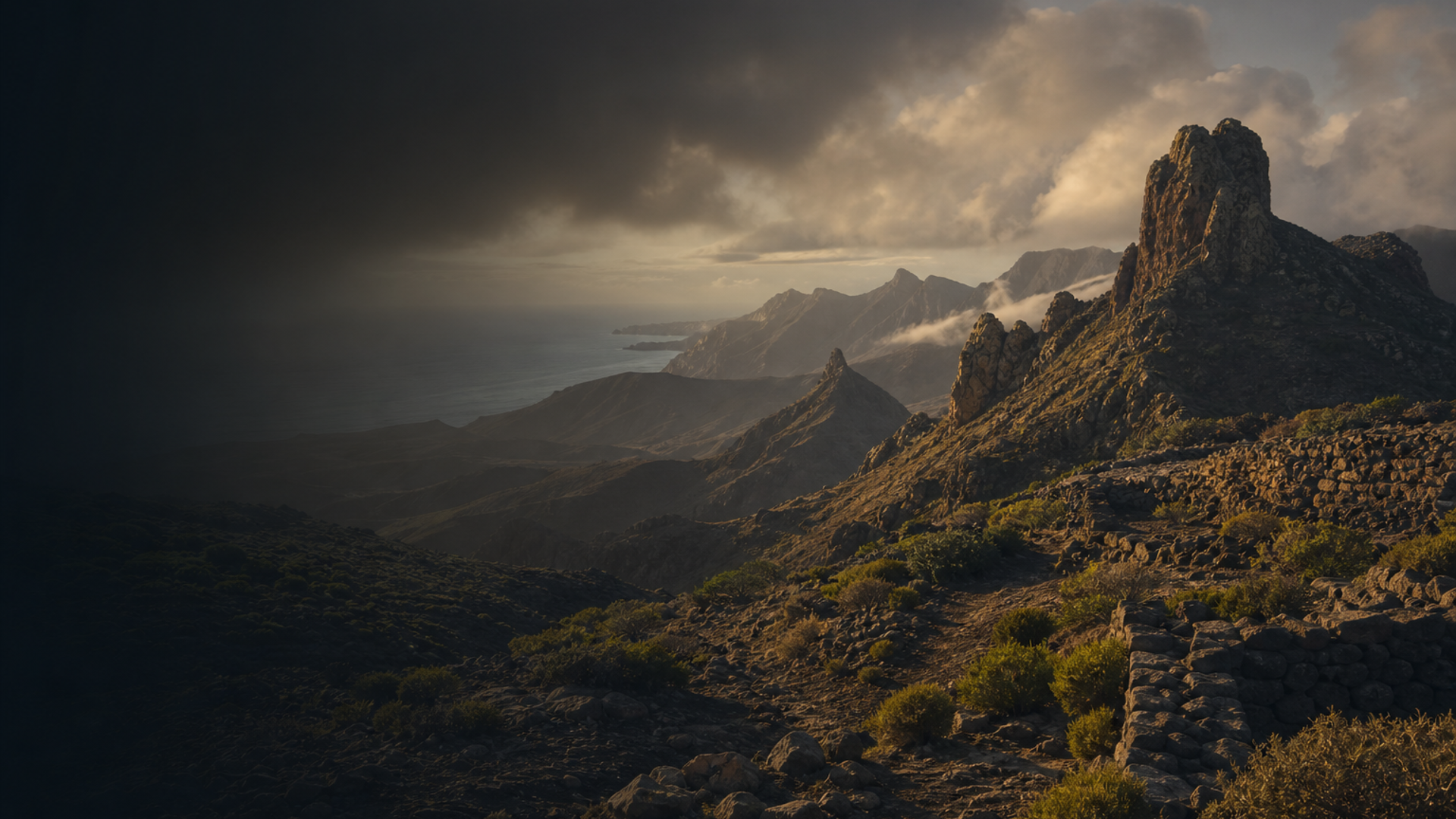
Beneath volcanic cliffs and in wind-blasted caves, the Guanche emerge from a story written in stone and bone. Archaeological data indicates human presence in the Canary archipelago from the first millennium BCE, with the earliest dated genomes in our dataset beginning around 1031 BCE. Limited evidence suggests the primary demographic source for the Guanche was North Africa — broadly consistent with archaeological affinities (material culture and burial practices) that echo Berber traditions on the nearby mainland.

Fieldwork on Tenerife and Gran Canaria — including sites such as Cueva del Viento and Roque Bentayga and burial caves like Cueva de los Guanches — reveals island colonization adapted to rugged terrain: terraced fields, pastoralism, and cave habitation. Genomic data from 46 ancient individuals support a dominant North African genetic signal, but they also show traces of West Eurasian maternal lineages. This pattern suggests either multiple north-to-island voyages or prior admixture on the mainland before migration. Because chronology and sample coverage remain uneven across islands and centuries, narratives of precise routes and timings should be treated as provisional.

  • Archaeological sites: Cueva del Viento (Tenerife), Roque Bentayga (Gran Canaria), Cueva de los Guanches
  • Primary origins: archaeological and genetic affinities to North Africa (Berber-related)
  • Colonization likely in the 1st millennium BCE; exact routes remain uncertain
Chapter IV

Daily Life & Society

The Guanche lived in a world shaped by lava, sea spray, and terraces carved into basalt. Archaeological remains—stone homes, grinding stones, carved stelae, and burial mummies—evoke a society of shepherds, small-scale farmers, and skilled stoneworkers. Animal husbandry (goats and sheep), cereal cultivation in sheltered terraces, and a focus on caves and rock shelters for ritual and burial define island lifeways preserved in the strata.

Material culture varies between islands: Gran Canaria shows distinct funerary monuments and rock art, while Tenerife preserves extensive lava-tube occupation and mummification practices. Social organization likely combined lineage-based groups with island-level identities; some sites show evidence for differential access to resources and ritual spaces. Radiocarbon dates cluster across centuries, suggesting centuries of stable occupation until European contact in the 15th century CE. Archaeological data indicates resilience and adaptation, but the arrival of Europeans and ensuing disruptions altered demographic trajectories dramatically.

  • Economy: pastoralism (goats, sheep), dry farming, limited maritime resources
  • Cultural practices: cave burials, mummification, island-specific material traditions
Chapter V

Genetic Profile

Ancient DNA from 46 Guanche-associated individuals offers a clearer, though still incomplete, genetic portrait. Y-chromosome data show haplogroup E in five samples — a lineage commonly observed in North Africa — supporting male-line connections to the nearby mainland. Mitochondrial results include a mixture: African L haplotypes (2 samples) alongside West Eurasian lineages such as H2a (2), T (2), and U (2). This maternal diversity indicates either female-mediated gene flow from different source populations or preexisting admixture among mainland groups before island colonization.

Genome-wide analyses (limited by sample distribution across islands and time) point to a dominant North African/Berber-like ancestry with variable West Eurasian contribution. Where sample counts for particular haplogroups are low, conclusions are preliminary: the five observed E Y-chromosomes suggest a notable North African paternal signature but do not capture the full diversity. Likewise, small mtDNA counts mean that observed H, T, U, and L lineages require cautious interpretation. Ongoing sampling across islands, and comparative analysis with North African and Iberian ancient samples, will refine models of migration, sex-biased admixture, and demographic change leading up to European contact.

  • Dominant signal: North African (Berber-related) ancestry in genome-wide data
  • Maternal lineages show both African (L) and West Eurasian (H2a, T, U) components
Chapter VI

Legacy & Modern Connections

The Guanche imprint survives in place names, folklore, and the genetic legacy of Canary Islanders. Modern populations of the Canaries retain detectable proportions of indigenous ancestry alongside later European and African inputs, making the islands a living palimpsest of Atlantic encounters. The 46 ancient genomes help anchor genetic continuity and change: they document an indigenous baseline against which post-15th-century admixture can be measured.

Culturally, Guanche technologies and place-based rituals inform contemporary Canary identity and heritage preservation. Scientifically, integrating archaeology with ancient DNA highlights processes of island colonization, adaptation, and resilience. However, because ancient sample coverage remains uneven across islands and centuries, researchers emphasize caution: many aspects of Guanche population history — precise routes of migration, internal island variation, and demographic sizes — remain open questions inviting deeper, multidisciplinary study.

  • Modern Canary Islanders retain indigenous genetic components measurable against ancient baselines
  • Archaeology + ancient DNA illuminate island colonization and later admixture, but gaps remain
AI 电源

AI 助手

就 Isles of Stone: The Guanche 文化提问

AI 助手 由DNAGENICS公司制作

解锁此特性
Ask questions about the Isles of Stone: The Guanche culture. Our AI assistant can explain genetic findings, historical context, archaeological evidence, and modern connections.
AI 样本分析

Isles of Stone: The Guanche 文化是人类历史中值得了解的一章……

遗传分析揭示了与早期种群的联系,同时显示了独特的适应和文化创新的证据。 古代DNA样本提供了对迁徙模式、社会结构以及古代种群之间的生物关系的深刻见解。

这是人工智能分析的预览。 解锁全AI 助手, 以探索关于:

  • 遗传组成和祖先
  • 移徙模式和起源
  • 日常生活和文化习俗
  • 现代遗传遗产

探索更古老的文化

揭开古代世界文明的故事

使用优惠码 可减免 35% • 11月12日 到期