A preparar o relatório

A carregar as informações e as referências disponíveis

Consultando el registro arqueológico...

Recopilando registros antiguos

Saltar para o conteúdo principal
Isles of Stone: The Guanche
Cultura de destaque

Isles of Stone: The Guanche

Island-born peoples of the Canaries, seen through archaeology and genomes

1031 BCE - 1500 CE
Canary Islands (Gran Canaria, Tenerife, others)
Desplázate para começar
Capítulo I

A História

Comprender la cultura Isles of Stone: The Guanche

The Guanche were the indigenous peoples of the Canary Islands (c. 1031 BCE–1500 CE). Archaeology and 46 ancient genomes reveal North African roots with mixed maternal lineages, island lifeways, and a legacy still visible in modern Canary populations.

Time Period

1031 BCE – 1500 CE

Region

Canary Islands (Gran Canaria, Tenerife, others)

Common Y-DNA

E (observed in 5 samples)

Common mtDNA

L (2), H2a (2), T (2), U (2)

Capítulo II

Cronologia

Momentos-chave da história desta cultura

1000 BCE

Likely initial island colonization

Archaeological and genetic evidence points to colonization of the Canaries around the 1st millennium BCE, likely by groups with North African affinities.

Capítulo III

Origins & Emergence

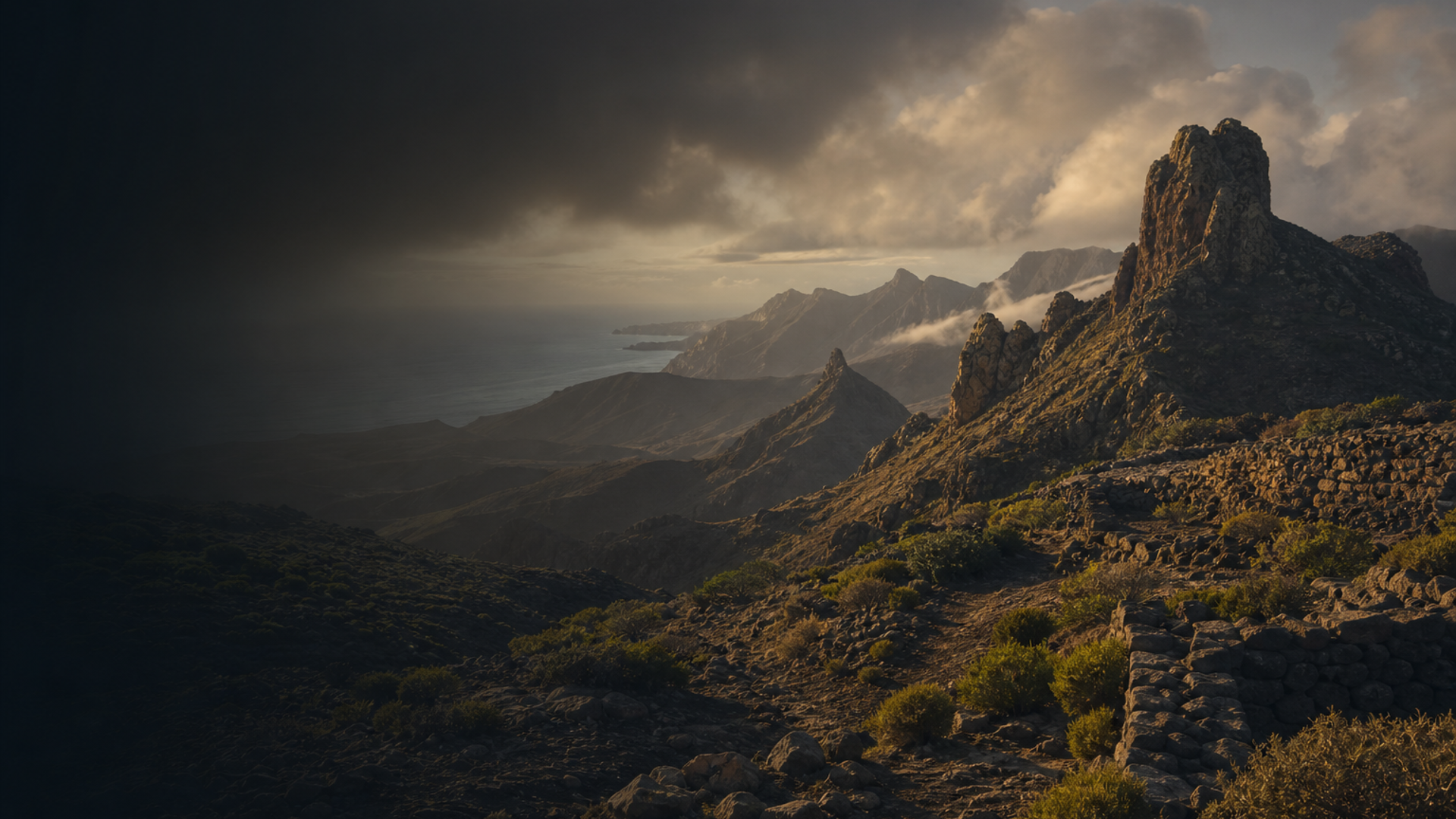
Beneath volcanic cliffs and in wind-blasted caves, the Guanche emerge from a story written in stone and bone. Archaeological data indicates human presence in the Canary archipelago from the first millennium BCE, with the earliest dated genomes in our dataset beginning around 1031 BCE. Limited evidence suggests the primary demographic source for the Guanche was North Africa — broadly consistent with archaeological affinities (material culture and burial practices) that echo Berber traditions on the nearby mainland.

Fieldwork on Tenerife and Gran Canaria — including sites such as Cueva del Viento and Roque Bentayga and burial caves like Cueva de los Guanches — reveals island colonization adapted to rugged terrain: terraced fields, pastoralism, and cave habitation. Genomic data from 46 ancient individuals support a dominant North African genetic signal, but they also show traces of West Eurasian maternal lineages. This pattern suggests either multiple north-to-island voyages or prior admixture on the mainland before migration. Because chronology and sample coverage remain uneven across islands and centuries, narratives of precise routes and timings should be treated as provisional.

  • Archaeological sites: Cueva del Viento (Tenerife), Roque Bentayga (Gran Canaria), Cueva de los Guanches
  • Primary origins: archaeological and genetic affinities to North Africa (Berber-related)
  • Colonization likely in the 1st millennium BCE; exact routes remain uncertain
Capítulo IV

Daily Life & Society

The Guanche lived in a world shaped by lava, sea spray, and terraces carved into basalt. Archaeological remains—stone homes, grinding stones, carved stelae, and burial mummies—evoke a society of shepherds, small-scale farmers, and skilled stoneworkers. Animal husbandry (goats and sheep), cereal cultivation in sheltered terraces, and a focus on caves and rock shelters for ritual and burial define island lifeways preserved in the strata.

Material culture varies between islands: Gran Canaria shows distinct funerary monuments and rock art, while Tenerife preserves extensive lava-tube occupation and mummification practices. Social organization likely combined lineage-based groups with island-level identities; some sites show evidence for differential access to resources and ritual spaces. Radiocarbon dates cluster across centuries, suggesting centuries of stable occupation until European contact in the 15th century CE. Archaeological data indicates resilience and adaptation, but the arrival of Europeans and ensuing disruptions altered demographic trajectories dramatically.

  • Economy: pastoralism (goats, sheep), dry farming, limited maritime resources
  • Cultural practices: cave burials, mummification, island-specific material traditions
Capítulo V

Genetic Profile

Ancient DNA from 46 Guanche-associated individuals offers a clearer, though still incomplete, genetic portrait. Y-chromosome data show haplogroup E in five samples — a lineage commonly observed in North Africa — supporting male-line connections to the nearby mainland. Mitochondrial results include a mixture: African L haplotypes (2 samples) alongside West Eurasian lineages such as H2a (2), T (2), and U (2). This maternal diversity indicates either female-mediated gene flow from different source populations or preexisting admixture among mainland groups before island colonization.

Genome-wide analyses (limited by sample distribution across islands and time) point to a dominant North African/Berber-like ancestry with variable West Eurasian contribution. Where sample counts for particular haplogroups are low, conclusions are preliminary: the five observed E Y-chromosomes suggest a notable North African paternal signature but do not capture the full diversity. Likewise, small mtDNA counts mean that observed H, T, U, and L lineages require cautious interpretation. Ongoing sampling across islands, and comparative analysis with North African and Iberian ancient samples, will refine models of migration, sex-biased admixture, and demographic change leading up to European contact.

  • Dominant signal: North African (Berber-related) ancestry in genome-wide data
  • Maternal lineages show both African (L) and West Eurasian (H2a, T, U) components
Capítulo VI

Legacy & Modern Connections

The Guanche imprint survives in place names, folklore, and the genetic legacy of Canary Islanders. Modern populations of the Canaries retain detectable proportions of indigenous ancestry alongside later European and African inputs, making the islands a living palimpsest of Atlantic encounters. The 46 ancient genomes help anchor genetic continuity and change: they document an indigenous baseline against which post-15th-century admixture can be measured.

Culturally, Guanche technologies and place-based rituals inform contemporary Canary identity and heritage preservation. Scientifically, integrating archaeology with ancient DNA highlights processes of island colonization, adaptation, and resilience. However, because ancient sample coverage remains uneven across islands and centuries, researchers emphasize caution: many aspects of Guanche population history — precise routes of migration, internal island variation, and demographic sizes — remain open questions inviting deeper, multidisciplinary study.

  • Modern Canary Islanders retain indigenous genetic components measurable against ancient baselines
  • Archaeology + ancient DNA illuminate island colonization and later admixture, but gaps remain
Com IA

Assistente de IA

Haz preguntas sobre la cultura Isles of Stone: The Guanche

Assistente de IA por DNAGENICS

Desbloquear esta função
Pregunta sobre la cultura Isles of Stone: The Guanche. El asistente con IA puede explicar hallazgos genéticos, contexto histórico, pruebas arqueológicas y conexiones modernas, con sus límites de interpretación.
Exemplo de análise com IA

La cultura Isles of Stone: The Guanche representa un capítulo de la historia humana...

A análise genética permite estudar semelhanças com populações anteriores e possíveis adaptações. As amostras de DNA antigo fornecem informações para investigar padrões migratórios e relações entre populações, com limites que dependem do estudo e do contexto arqueológico.

Esta é uma antevisão da análise com IA. Aceder ao assistente completo para explorar informações sobre:

  • Composição e similaridade genética
  • Padrões migratórios e origens
  • Vida cotidiana e práticas culturais
  • Contexto genético moderno

Explore mais culturas antigas

Descubra a história de civilizações de diferentes partes do mundo antigo