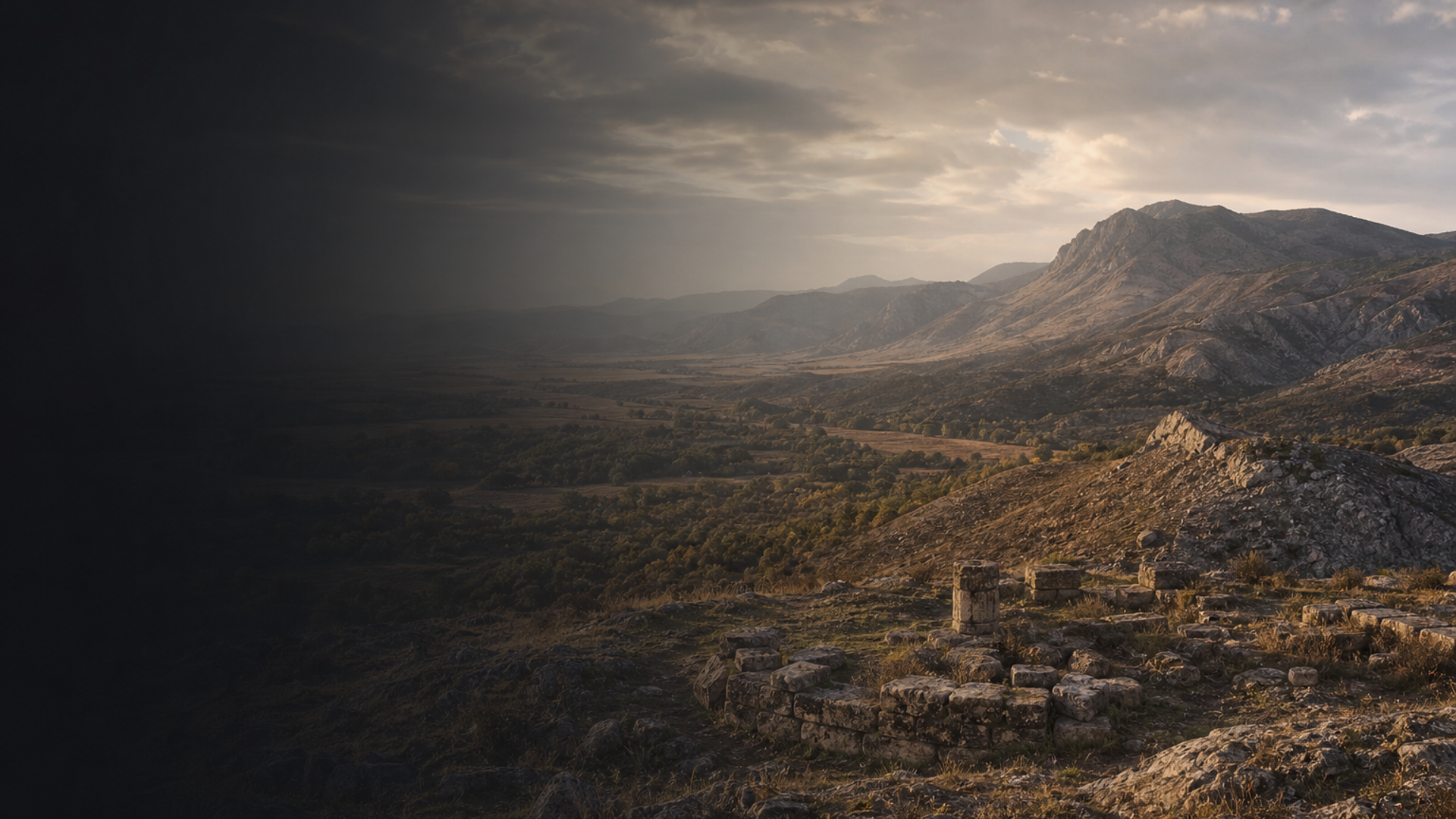
Macedonia: Classical to Hellenistic Echoes

下载的 PDF 是图像副本。如需可选中文本及更好的辅助技术支持,请使用打印功能。

Macedonia: Classical to Hellenistic Echoes

揭开一个失落的文明

正在加载考古记录……

正在收集古代记录

跳转到主内容
Macedonia: Classical to Hellenistic Echoes
文明焦点

Macedonia: Classical to Hellenistic Echoes

Five ancient individuals from Marvinci illuminate a world of Greek kings, local communities, and long-distance connections.

500 CE - 50 BCE
North Macedonia (Marvinci-Valandovo)
滚动开始
Chapter I

剧情

了解 Macedonia: Classical to Hellenistic Echoes 文化

Archaeological remains from the Marvinci-Valandovo necropolis (500–50 BCE) reveal funerary customs and material ties to Classical and Hellenistic Macedonia. Limited ancient DNA (5 samples) shows diverse maternal lineages (J, J1c, U), suggesting links across the Balkans and Mediterranean — preliminary but evocative.

Time Period

500–50 BCE

Region

North Macedonia (Marvinci-Valandovo)

Common Y-DNA

Not reported / limited data

Common mtDNA

J, J1c, U (observed; n=5 samples)

Chapter II

时间线

这种文化历史上的关键时刻

500 BCE

Regional consolidation of Macedonian polities

Local tribes and chiefdoms coalesce into larger polities in the northern Greek world, setting the stage for later Argead rule.

336 BCE

Alexander becomes king of Macedon

Accession of Alexander transforms Macedonian politics and propels Hellenistic expansion across the Eastern Mediterranean and Near East.

168 BCE

Roman conquest of Macedon

After the Battle of Pydna (168 BCE) Macedonian independence ends and Roman governance reshapes the region's political landscape.

Chapter III

Origins & Emergence

On the soft loess plains near the Vardar, communities that archaeologists identify with Classical and Hellenistic Macedonia left behind stone-lined graves, ceramic fragments and bronze fittings that speak of a frontier between local traditions and the expanding Greek world. Excavations at Isar Marvinci (Marvinci–Valandovo, southwest necropolis) reveal graves dated across the 5th–1st centuries BCE, a period when small tribal polities were consolidated under Macedonian dynasts and then swept into the Hellenistic kingdoms after Alexander. Archaeological data indicate sustained contact with southern Greece and the Aegean — imported pottery, weapon types, and burial goods suggest trade and cultural exchange.

Limited evidence suggests these communities maintained regional cultural markers even as political ties shifted: local burial rites persist alongside Hellenistic dress and metalwork styles. The material record at Marvinci captures a world in motion, where local elites adopted Mediterranean fashions while rural lifeways retained older patterns. Where archaeology ends, genetics offers a new lens: ancient DNA from the necropolis provides tentative signals of maternal ancestry that can be compared to broader Balkan and Mediterranean datasets. Because surviving samples are few, any ancestral narrative remains provisional, but the combination of mortuary evidence and genetic hints allows us to imagine a population shaped by mobility, exchange, and local continuity.

  • Isar Marvinci (Marvinci–Valandovo) is the primary necropolis site for these samples
  • Evidence dates to 500–50 BCE, spanning Classical and Hellenistic phases
  • Material culture shows mixture of local traditions and Aegean influences
Chapter IV

Daily Life & Society

Archaeological contexts from the Marvinci necropolis and nearby settlement traces paint a vivid portrait of daily existence: small agrarian villages alternating with fortified hilltops and burgeoning towns tied into regional trade networks. Ceramic assemblages — both locally made wares and imported Aegean fineware — suggest households participated in long-distance exchange, while metal tools and agricultural implements attest to mixed economies of farming, herding, and craft specialization. Graves at the southwest necropolis range from simple inhumations to richer burials with personal ornaments and horse-trappings, indicating social differentiation and the presence of mounted elites or warrior identities.

Archaeological data indicates that funerary customs were an important medium of identity: choices of grave goods, body position and tomb construction conveyed status, gendered roles, and possibly ethnic affiliation. The Hellenistic era introduced new fashions, such as decorative fibulae and Hellenistic-style jewelry, but many local motifs persist, demonstrating cultural resilience. These visible practices form the cultural backdrop against which genetic results are interpreted: mobility implied by trade and shifting political boundaries likely created a genetic tapestry of local and incoming lineages.

  • Mixed economy: agriculture, herding, craft production and trade
  • Grave variation suggests social hierarchy and changing funerary fashions
Chapter V

Genetic Profile

Five ancient individuals from the Marvinci–Valandovo southwest necropolis were sequenced with limited coverage. Maternal lineages observed among these individuals include mtDNA haplogroups J, J1c, and U. Haplogroup J and its subclade J1c are commonly associated in ancient DNA studies with Neolithic and later populations across the Balkans and the Mediterranean, while haplogroup U encompasses older European maternal lineages that persist from Mesolithic and Bronze Age contexts. These mtDNA findings point to maternal ancestry that connects the site to broader Balkan and Mediterranean networks rather than a single isolated origin.

No consistent Y-DNA pattern is reported for these samples (data absent or unpublished), so paternal lineages remain unresolved. Because the sample count is very small (n=5), conclusions about population structure, migration, or continuity are preliminary. Archaeological signals of trade, warfare, and political change during the Classical and Hellenistic eras are compatible with the genetic pattern of mixed maternal ancestries, but robust inferences require larger sample sizes and comparative datasets. In sum, the genetic data from Marvinci offer tantalizing glimpses: they suggest connectivity and admixture across regional spheres, but they cannot yet resolve the demographic processes that produced the mosaic of Classical and Hellenistic Macedonia.

  • mtDNA observed: J, J1c, U — suggesting Mediterranean and Balkan maternal affinities
  • Sample size is small (n=5); results are preliminary and require larger comparative datasets
Chapter VI

Legacy & Modern Connections

The archaeological and genetic traces from Marvinci remind us that the peoples of Classical and Hellenistic Macedonia were participants in wide networks of exchange, conquest and cultural transformation. Material culture and limited mtDNA evidence hint at deep connections between local Balkan populations and broader Mediterranean currents. However, direct lines of descent from these five individuals to contemporary populations cannot be asserted without further sampling: genetic continuity is a probabilistic signal, not a certainty.

Culturally, the legacy is clearer: Macedonian political institutions and Hellenistic cosmopolitanism reshaped the ancient world, while local communities preserved distinct lifeways that influenced subsequent centuries. Ancient DNA enriches this story by quantifying maternal links and offering hypotheses about mobility — hypotheses that future, larger studies can test. For museum audiences and researchers alike, Marvinci stands as a poignant locus where graves whisper about lives shaped by both the weight of local tradition and the tides of empire.

  • Cultural legacy: Macedonian statecraft and Hellenistic exchange reshaped the region
  • Genetic continuity is possible but unproven — more samples needed for definitive links
AI 电源

AI 助手

就 Macedonia: Classical to Hellenistic Echoes 文化提问

AI 助手 由DNAGENICS公司制作

解锁此特性
Ask questions about the Macedonia: Classical to Hellenistic Echoes culture. Our AI assistant can explain genetic findings, historical context, archaeological evidence, and modern connections.
AI 样本分析

Macedonia: Classical to Hellenistic Echoes 文化是人类历史中值得了解的一章……

遗传分析揭示了与早期种群的联系,同时显示了独特的适应和文化创新的证据。 古代DNA样本提供了对迁徙模式、社会结构以及古代种群之间的生物关系的深刻见解。

这是人工智能分析的预览。 解锁全AI 助手, 以探索关于:

  • 遗传组成和祖先
  • 移徙模式和起源
  • 日常生活和文化习俗
  • 现代遗传遗产

探索更古老的文化

揭开古代世界文明的故事

使用优惠码 可减免 35% • 11月12日 到期