Mira Flores, Titicaca — Middle Horizon

下载的 PDF 是图像副本。如需可选中文本及更好的辅助技术支持,请使用打印功能。

Mira Flores, Titicaca — Middle Horizon

揭开一个失落的文明

正在加载考古记录……

正在收集古代记录

跳转到主内容
Mira Flores, Titicaca — Middle Horizon
文明焦点

Mira Flores, Titicaca — Middle Horizon

A lone genome from the Titicaca Basin illuminates local lives and lineages

700 CE - 1000 CE
Titicaca Basin, Bolivia
滚动开始
Chapter I

剧情

了解 Mira Flores, Titicaca — Middle Horizon 文化

Single-sample ancient DNA from Miraflores (700–1000 CE) ties a Titicaca Basin human to Native American paternal haplogroup Q and maternal B2o. Archaeology indicates Middle Horizon Tiwanaku-era connections; genetic signals are preliminary but align with broader Andean ancestry patterns.

Time Period

700–1000 CE (Middle Horizon)

Region

Titicaca Basin, Bolivia

Common Y-DNA

Q (1 sample)

Common mtDNA

B2o (1 sample)

Chapter II

时间线

这种文化历史上的关键时刻

700 CE

Emergence in the Titicaca Basin

Local communities participate in Middle Horizon networks of exchange and ritual across the Titicaca Basin.

Chapter III

Origins & Emergence

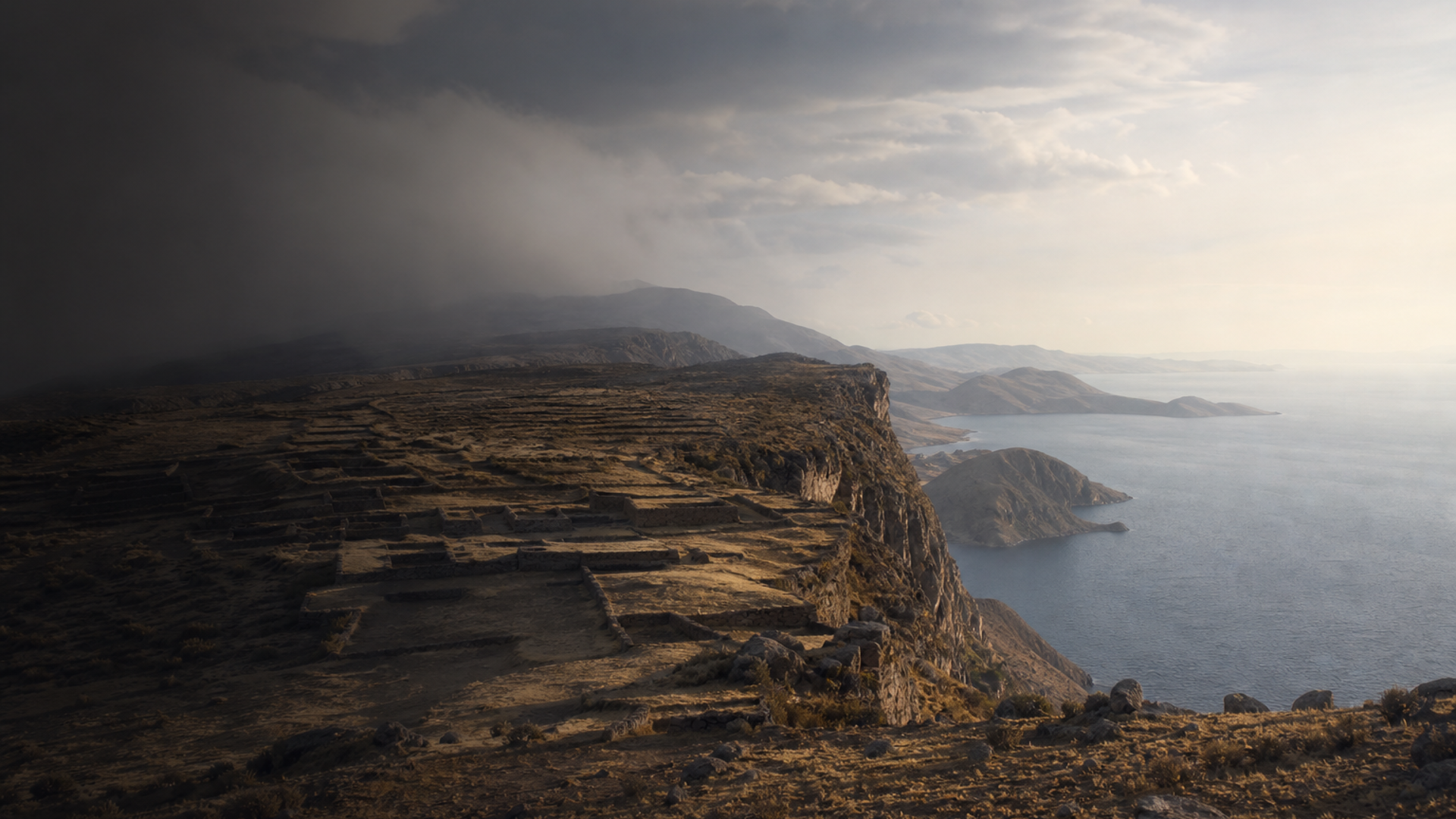
The Mira Flores individual lived during the Middle Horizon, a period of intensified social networks and ritual expression across the Titicaca Basin (c. 700–1000 CE). Archaeological data indicates a web of local communities connected to larger Tiwanaku-linked polities by exchange in ceramics, textiles, and pilgrimage. At sites across the basin, plazas, raised fields, and ritual architecture attest to organized labor and shared cosmologies.

Limited evidence suggests that the Miraflores occupation drew on long-standing highland lifeways—agropastoralism, specialized craft production, and ceremonial calendrics—and yet also participated in broader Middle Horizon stylistic horizons. The Mira Flores find should be read against this landscape of interaction: it is a single human voice among many, offering a genetic window into the people who inhabited a lake-edge world of reed bundles, stone causeways, and seasonal rituals.

Because this dataset is based on one sample, conclusions about population origins or migrations remain provisional. Archaeology helps situate that individual culturally, while genetic data offers a complementary, though limited, line of evidence about ancestral connections across the Andes.

  • Middle Horizon context: c. 700–1000 CE
  • Titicaca Basin networks and Tiwanaku influence
  • Single-sample DNA yields preliminary origin hypotheses
Chapter IV

Daily Life & Society

Archaeological traces from the Titicaca Basin evoke a highland world shaped by water, stone, and woven fiber. Raised agricultural platforms and irrigated fields sustained tubers, quinoa, and camelid herds. At small settlements and ceremonial centers, craft specialists produced painted ceramics and finely woven textiles that circulated as markers of identity and alliance. Communal labor on terraces and causeways structured seasonal cycles and social obligations.

Within such communities, household compounds likely combined domestic chores with craft production; feasting and ancestor veneration tied kin groups to specific locales. Iconography and material culture show shared visual vocabularies across the basin, yet local variants indicate community-level autonomy.

The Mira Flores individual may have been embedded in these routines—work with plants and animals, participation in regional ritual, and exchange of crafted goods. However, direct inference about occupation, status, or diet from a single burial remains speculative without broader contextual samples and isotopic analyses. Archaeology frames believable lifeways; genetics provides a tentative personal lineage.

  • Agriculture: raised fields, tubers, quinoa
  • Crafts and textiles linked communities to regional networks
Chapter V

Genetic Profile

The genetic data from the Mira Flores individual is extremely limited: one sampled genome dated between 700 and 1000 CE. Y-chromosome analysis assigns the male lineage to haplogroup Q, a clade widely associated with Native American paternal ancestry. The mitochondrial genome belongs to B2o, a sublineage of haplogroup B2 commonly observed in Andean and broader South American maternal lineages.

These assignments are consistent with broader patterns seen in ancient and modern Andean populations, where Q dominates paternal lineages and B haplogroups are frequent maternally. Yet with a sample count of one, population-level inferences—such as continuity with earlier pre-Middle Horizon groups, the scale of gene flow from lowland or coastal groups, or the presence of selection for high-altitude physiology—are speculative.

Archaeogeneticists therefore treat this Mira Flores result as a preliminary datapoint. When combined with additional genomes from the Titicaca Basin and isotopic or proteomic analyses, it will contribute to questions about demographic stability, mobility, and kinship patterns during the Middle Horizon. For now, DNA corroborates archaeological expectations of Andean ancestry while underscoring the need for more samples.

  • Y-DNA: Q — aligns with Native American paternal lineages
  • mtDNA: B2o — fits Andean maternal diversity; conclusions are preliminary
Chapter VI

Legacy & Modern Connections

The Mira Flores genome connects a single ancient person to the deep tapestry of Andean ancestry. Contemporary highland populations retain many genetic and cultural continuities with Middle Horizon communities, visible in language families, farming practices, and ritual landscapes. Archaeological continuity in the Titicaca Basin suggests enduring ties to land and water that shape identity through millennia.

Genetically, the Q paternal and B2o maternal markers echo patterns widespread among Indigenous populations in the Andes and beyond. However, modern genetic diversity also reflects centuries of additional movements and interactions, so direct one-to-one links should be presented carefully. This ancient sample offers a cinematic, human-scale glimpse into ancestral threads—an invitation for further sampling to illuminate population histories with statistical confidence.

  • Modern Andean populations show cultural and genetic continuities
  • Single ancient genome highlights need for expanded sampling
AI 电源

AI 助手

就 Mira Flores, Titicaca — Middle Horizon 文化提问

AI 助手 由DNAGENICS公司制作

解锁此特性
Ask questions about the Mira Flores, Titicaca — Middle Horizon culture. Our AI assistant can explain genetic findings, historical context, archaeological evidence, and modern connections.
AI 样本分析

Mira Flores, Titicaca — Middle Horizon 文化是人类历史中值得了解的一章……

遗传分析揭示了与早期种群的联系,同时显示了独特的适应和文化创新的证据。 古代DNA样本提供了对迁徙模式、社会结构以及古代种群之间的生物关系的深刻见解。

这是人工智能分析的预览。 解锁全AI 助手, 以探索关于:

  • 遗传组成和祖先
  • 移徙模式和起源
  • 日常生活和文化习俗
  • 现代遗传遗产

探索更古老的文化

揭开古代世界文明的故事

使用优惠码 可减免 35% • 11月12日 到期




