Préparation du rapport

Chargement des informations et références disponibles

Connexion au corpus archéologique…

Collecte des archives antiques

Aller au contenu principal
Mira Flores, Titicaca — Middle Horizon
Profil culturel

Mira Flores, Titicaca — Middle Horizon

A lone genome from the Titicaca Basin illuminates local lives and lineages

700 CE - 1000 CE
Titicaca Basin, Bolivia
Faites défiler pour commencer
Chapitre I

Le récit

Comprendre la culture Mira Flores, Titicaca — Middle Horizon

Single-sample ancient DNA from Miraflores (700–1000 CE) ties a Titicaca Basin human to Native American paternal haplogroup Q and maternal B2o. Archaeology indicates Middle Horizon Tiwanaku-era connections; genetic signals are preliminary but align with broader Andean ancestry patterns.

Time Period

700–1000 CE (Middle Horizon)

Region

Titicaca Basin, Bolivia

Common Y-DNA

Q (1 sample)

Common mtDNA

B2o (1 sample)

Chapitre II

Chronologie

Moments clés de l'histoire de cette culture

700 CE

Emergence in the Titicaca Basin

Local communities participate in Middle Horizon networks of exchange and ritual across the Titicaca Basin.

Chapitre III

Origins & Emergence

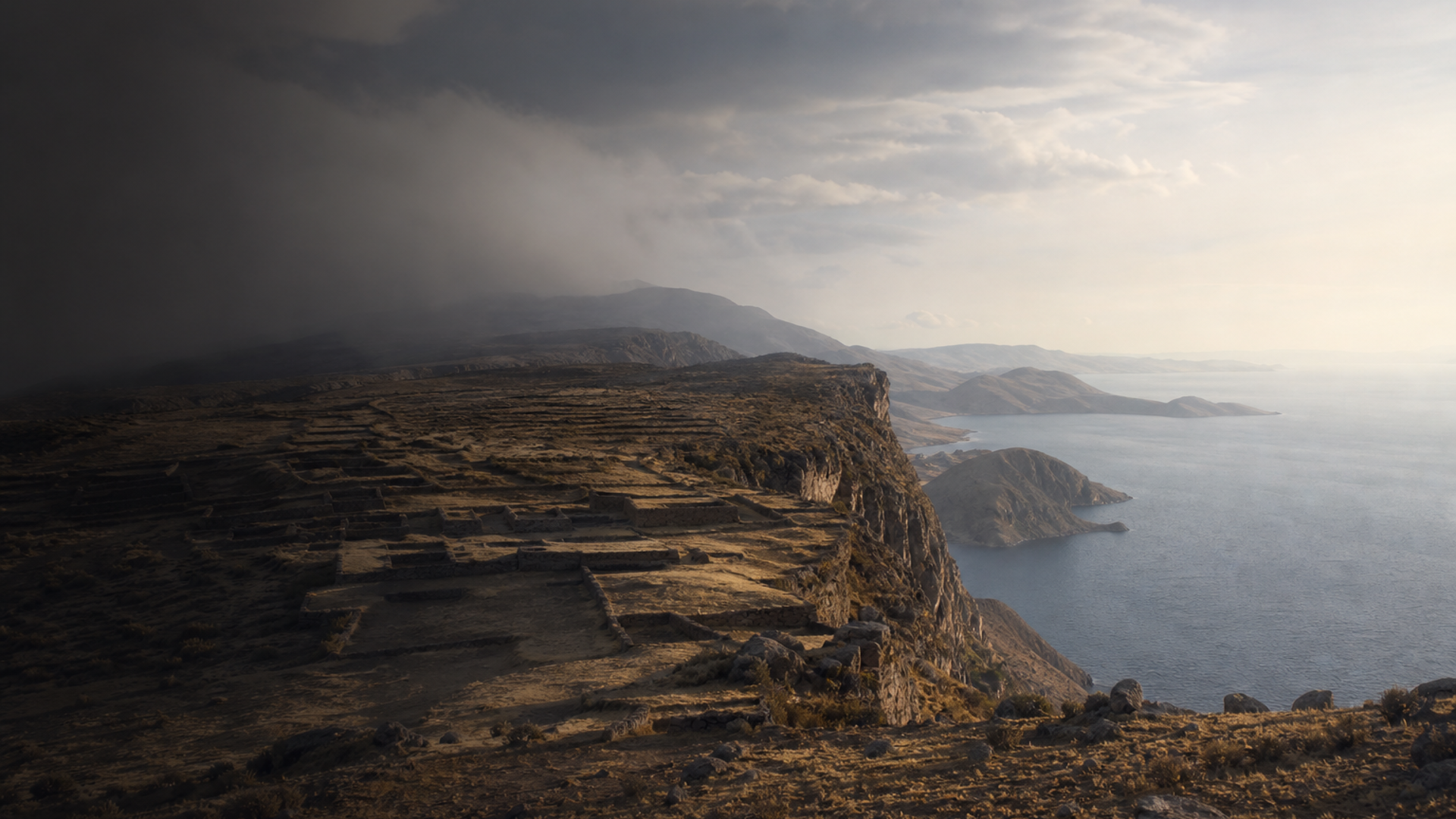
The Mira Flores individual lived during the Middle Horizon, a period of intensified social networks and ritual expression across the Titicaca Basin (c. 700–1000 CE). Archaeological data indicates a web of local communities connected to larger Tiwanaku-linked polities by exchange in ceramics, textiles, and pilgrimage. At sites across the basin, plazas, raised fields, and ritual architecture attest to organized labor and shared cosmologies.

Limited evidence suggests that the Miraflores occupation drew on long-standing highland lifeways—agropastoralism, specialized craft production, and ceremonial calendrics—and yet also participated in broader Middle Horizon stylistic horizons. The Mira Flores find should be read against this landscape of interaction: it is a single human voice among many, offering a genetic window into the people who inhabited a lake-edge world of reed bundles, stone causeways, and seasonal rituals.

Because this dataset is based on one sample, conclusions about population origins or migrations remain provisional. Archaeology helps situate that individual culturally, while genetic data offers a complementary, though limited, line of evidence about ancestral connections across the Andes.

  • Middle Horizon context: c. 700–1000 CE
  • Titicaca Basin networks and Tiwanaku influence
  • Single-sample DNA yields preliminary origin hypotheses
Chapitre IV

Daily Life & Society

Archaeological traces from the Titicaca Basin evoke a highland world shaped by water, stone, and woven fiber. Raised agricultural platforms and irrigated fields sustained tubers, quinoa, and camelid herds. At small settlements and ceremonial centers, craft specialists produced painted ceramics and finely woven textiles that circulated as markers of identity and alliance. Communal labor on terraces and causeways structured seasonal cycles and social obligations.

Within such communities, household compounds likely combined domestic chores with craft production; feasting and ancestor veneration tied kin groups to specific locales. Iconography and material culture show shared visual vocabularies across the basin, yet local variants indicate community-level autonomy.

The Mira Flores individual may have been embedded in these routines—work with plants and animals, participation in regional ritual, and exchange of crafted goods. However, direct inference about occupation, status, or diet from a single burial remains speculative without broader contextual samples and isotopic analyses. Archaeology frames believable lifeways; genetics provides a tentative personal lineage.

  • Agriculture: raised fields, tubers, quinoa
  • Crafts and textiles linked communities to regional networks
Chapitre V

Genetic Profile

The genetic data from the Mira Flores individual is extremely limited: one sampled genome dated between 700 and 1000 CE. Y-chromosome analysis assigns the male lineage to haplogroup Q, a clade widely associated with Native American paternal ancestry. The mitochondrial genome belongs to B2o, a sublineage of haplogroup B2 commonly observed in Andean and broader South American maternal lineages.

These assignments are consistent with broader patterns seen in ancient and modern Andean populations, where Q dominates paternal lineages and B haplogroups are frequent maternally. Yet with a sample count of one, population-level inferences—such as continuity with earlier pre-Middle Horizon groups, the scale of gene flow from lowland or coastal groups, or the presence of selection for high-altitude physiology—are speculative.

Archaeogeneticists therefore treat this Mira Flores result as a preliminary datapoint. When combined with additional genomes from the Titicaca Basin and isotopic or proteomic analyses, it will contribute to questions about demographic stability, mobility, and kinship patterns during the Middle Horizon. For now, DNA corroborates archaeological expectations of Andean ancestry while underscoring the need for more samples.

  • Y-DNA: Q — aligns with Native American paternal lineages
  • mtDNA: B2o — fits Andean maternal diversity; conclusions are preliminary
Chapitre VI

Legacy & Modern Connections

The Mira Flores genome connects a single ancient person to the deep tapestry of Andean ancestry. Contemporary highland populations retain many genetic and cultural continuities with Middle Horizon communities, visible in language families, farming practices, and ritual landscapes. Archaeological continuity in the Titicaca Basin suggests enduring ties to land and water that shape identity through millennia.

Genetically, the Q paternal and B2o maternal markers echo patterns widespread among Indigenous populations in the Andes and beyond. However, modern genetic diversity also reflects centuries of additional movements and interactions, so direct one-to-one links should be presented carefully. This ancient sample offers a cinematic, human-scale glimpse into ancestral threads—an invitation for further sampling to illuminate population histories with statistical confidence.

  • Modern Andean populations show cultural and genetic continuities
  • Single ancient genome highlights need for expanded sampling
Propulsé par l'IA

Assistant IA

Posez des questions sur la culture Mira Flores, Titicaca — Middle Horizon

Assistant IA par DNAGENICS

Débloquer cette fonction
Posez des questions sur la culture Mira Flores, Titicaca — Middle Horizon. L'assistant IA peut expliquer les résultats génétiques, le contexte historique, les preuves archéologiques et les liens génétiques avec les populations actuelles, dans les limites de l'interprétation.
Exemple d'analyse IA

La culture Mira Flores, Titicaca — Middle Horizon représente un chapitre fascinant de l'histoire humaine…

L'analyse génétique met en évidence des similarités avec des populations antérieures et des signes d'adaptations propres. Les échantillons d'ADN ancien éclairent les schémas migratoires et les liens entre populations, avec des limites qui dépendent de l'étude et du contexte archéologique.

Il s'agit d'un aperçu de l'analyse IA. Accédez à l'assistant complet pour explorer :

  • Composition et similarité génétique
  • Schémas migratoires et origines
  • Vie quotidienne et pratiques culturelles
  • Contexte génétique actuel

Explorez d'autres cultures antiques

Découvrez les récits de civilisations issues du monde antique