
Petko Karavelovo: Chalcolithic Echoes

下载的 PDF 是图像副本。如需可选中文本及更好的辅助技术支持,请使用打印功能。

Petko Karavelovo: Chalcolithic Echoes

揭开一个失落的文明

正在加载考古记录……

正在收集古代记录

跳转到主内容
Petko Karavelovo: Chalcolithic Echoes
文明焦点

Petko Karavelovo: Chalcolithic Echoes

Small Chalcolithic community (4700–4400 BCE) in northern Bulgaria with intriguing, preliminary genetic signals

4700 CE - 4400 BCE
Petko Karavelovo, Veliko Tarnovo, Bulgaria
滚动开始
Chapter I

剧情

了解 Petko Karavelovo: Chalcolithic Echoes 文化

Archaeological and ancient-DNA evidence from Petko Karavelovo (Veliko Tarnovo province) illuminates a small Chalcolithic community (4700–4400 BCE). Four genomes reveal rare Y-lineages and common European maternal types, suggesting local Neolithic roots with complex contacts—conclusions remain tentative.

Time Period

4700–4400 BCE

Region

Petko Karavelovo, Veliko Tarnovo, Bulgaria

Common Y-DNA

M (2), V88 (1), CTS (1)

Common mtDNA

H (2), HV+ (1), U (1)

Chapter II

时间线

这种文化历史上的关键时刻

4700 BCE

Occupation at Petko Karavelovo

Archaeological and aDNA evidence indicates community life at Petko Karavelovo begins around 4700 BCE within the Chalcolithic Bulgarian cultural horizon.

Chapter III

Origins & Emergence

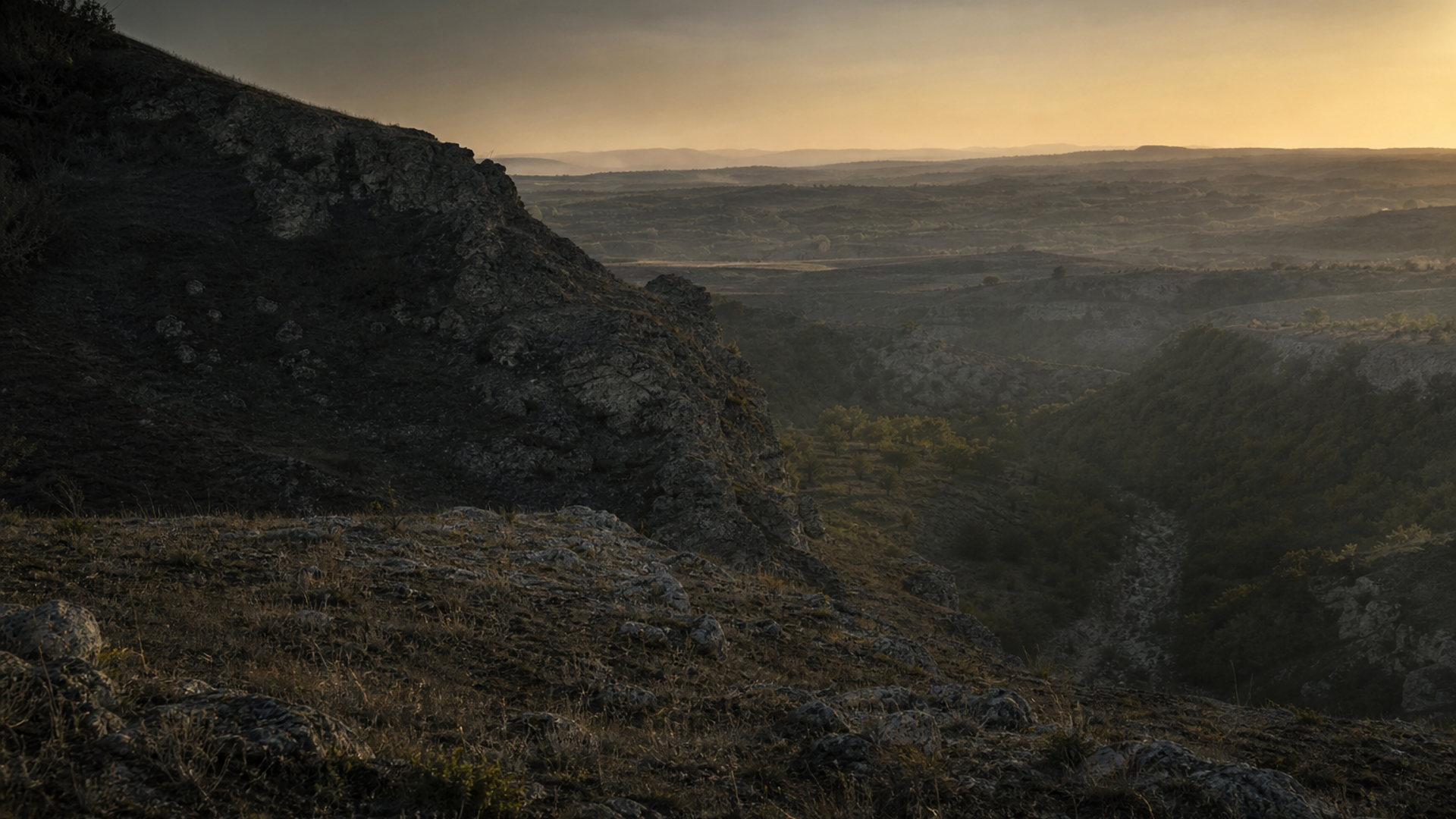
Beneath the open sky of northern Bulgaria, the Chalcolithic settlement at Petko Karavelovo (Polski Tyrambesh municipality, Veliko Tarnovo province) sits in the centuries between 4700 and 4400 BCE. Archaeological data indicates small, sedentary communities in this part of the central Balkans were continuing Neolithic lifeways while incorporating new technologies such as copper use and more elaborate pottery forms. The material horizon known locally as the Chalcolithic Bulgarian Culture (Petko Karavelovo) seems to represent a regionally distinct strand of these broader developments.

Limited evidence from the site itself—few burials and small habitation features—suggests modestly sized households embedded in riverine and arable landscapes. The cinematic image is of low mounds, domestic hearths, and fields where generations tended crops introduced earlier in the Neolithic. However, because large-scale excavations and published inventories from Petko Karavelovo are limited, many aspects of emergence—social organization, craft specializations, and external connections—remain uncertain and are best described as provisional.

  • Occupation centered 4700–4400 BCE in northern Bulgaria
  • Represents a regional expression of Chalcolithic Bulgarian Culture
  • Archaeological evidence is limited; broader regional context informs interpretation
Chapter IV

Daily Life & Society

The everyday world of Petko Karavelovo can be imagined from fragmentary clues: households organized around hearths, pottery vessels for cooking and storage, and small-scale copper objects that signal early metallurgy. Archaeological parallels across the central Balkans indicate mixed farming economies—wheat, barley, pulses—combined with domesticated animals such as sheep, goats, and cattle. Settlement patterns were often dispersed hamlets rather than dense urban centers, producing a landscape of intimate, kin-based communities.

Social life likely revolved around household and local ritual practices rather than grand monumental architectures. Burials—when present—offer the most direct window into beliefs and social differentiation, but at Petko Karavelovo such mortuary contexts are sparse. This scarcity means reconstructions of hierarchy or long-distance exchange are necessarily cautious; instead, the site fits a quieter picture of Chalcolithic lifeways where local tradition met incremental innovation.

  • Mixed farming and herding economy inferred from regional analogies
  • Small households and limited mortuary evidence; social interpretations remain tentative
Chapter V

Genetic Profile

Four ancient genomes recovered from Petko Karavelovo (sample count = 4) provide a slender but evocative genetic snapshot. On the paternal side, two individuals carry Y-haplogroup M, one carries V88, and one carries a CTS-designated lineage. These Y-lineages are notable: M and V88 are uncommon in later European populations and their presence here raises questions about deep, possibly long-standing west–east or north–south connections in the Chalcolithic era. CTS is a SNP-prefix used in contemporary Y-tree nomenclature; without further subclade resolution its broader affinities are unresolved.

Maternally, two individuals belong to mtDNA H, one to HV+ and one to U—haplogroups that are widely attested across Neolithic and later European populations. Archaeological and regional genomic studies indicate that Chalcolithic Balkans generally represent mixtures of earlier Anatolian farmer ancestry with variable hunter-gatherer input; the Petko Karavelovo maternal profiles are compatible with that pattern. Because the sample count is small (<10), these genetic patterns are preliminary: they hint at both continuity with European Neolithic maternal lineages and unexpected paternal diversity that will require more sampling and deeper sequencing to interpret robustly.

  • Paternal diversity: M (2), V88 (1), CTS (1) — unexpected in this region, interpretation tentative
  • Maternal profiles (H, HV+, U) align with broader Neolithic/Chalcolithic European patterns
Chapter VI

Legacy & Modern Connections

The genetic echoes of Petko Karavelovo are subtle rather than dominant. MtDNA haplogroups such as H and U persist widely in modern European populations, implying a degree of maternal continuity across millennia, but population history in the Balkans is complex—successive migrations, cultural shifts, and demographic turnovers dilute simple lines of descent. The unusual Y-lineages observed at Petko Karavelovo (M and V88) suggest episodes of contact or survival of deep paternal lineages that are not well represented in later periods; whether these represent localized founder effects or broader networks remains unresolved.

For museum audiences and genetic ancestry platforms, Petko Karavelovo offers a reminder: ancient genomes can illuminate forgotten threads in human history, but small sample sizes demand humility. These remains invite targeted future sampling across the Veliko Tarnovo region to test whether the patterns seen in four individuals reflect a local community trait or chance preservation.

  • Maternal continuity plausible but population history is complex and layered
  • Paternal signals are intriguing; further sampling needed to assess long-term legacy
AI 电源

AI 助手

就 Petko Karavelovo: Chalcolithic Echoes 文化提问

AI 助手 由DNAGENICS公司制作

解锁此特性
Ask questions about the Petko Karavelovo: Chalcolithic Echoes culture. Our AI assistant can explain genetic findings, historical context, archaeological evidence, and modern connections.
AI 样本分析

Petko Karavelovo: Chalcolithic Echoes 文化是人类历史中值得了解的一章……

遗传分析揭示了与早期种群的联系,同时显示了独特的适应和文化创新的证据。 古代DNA样本提供了对迁徙模式、社会结构以及古代种群之间的生物关系的深刻见解。

这是人工智能分析的预览。 解锁全AI 助手, 以探索关于:

  • 遗传组成和祖先
  • 移徙模式和起源
  • 日常生活和文化习俗
  • 现代遗传遗产

探索更古老的文化

揭开古代世界文明的故事

使用优惠码 可减免 35% • 11月12日 到期




