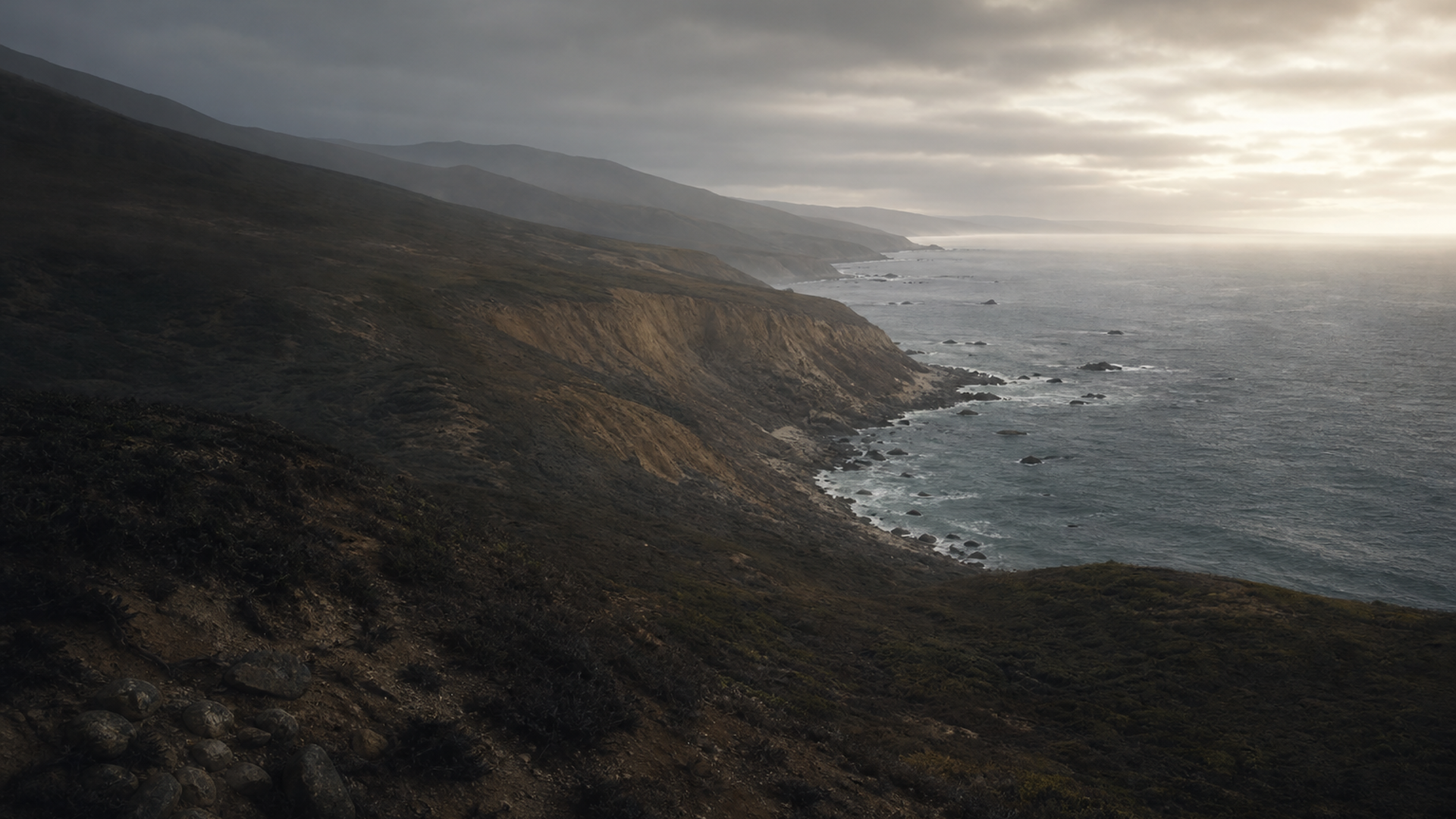
Point Sal Chumash Echoes

下载的 PDF 是图像副本。如需可选中文本及更好的辅助技术支持,请使用打印功能。

Point Sal Chumash Echoes

揭开一个失落的文明

正在加载考古记录……

正在收集古代记录

跳转到主内容
Point Sal Chumash Echoes
文明焦点

Point Sal Chumash Echoes

Ancient coastal lifeways (100–700 CE) revealed by archaeology and DNA.

100 CE - 700 CE
Point Sal, California, USA
滚动开始
Chapter I

剧情

了解 Point Sal Chumash Echoes 文化

Archaeogenetic portrait of 11 individuals (100–700 CE) from Point Sal, CA. mtDNA dominated by D1t and A2c; Y-DNA shows Q and CT. Archaeological data indicates coastal subsistence, shell-bead exchange, and regional connections. Genetic patterns are promising but preliminary.

Time Period

100–700 CE

Region

Point Sal, California, USA

Common Y-DNA

Q (5), CT (1) — 6 males resolved

Common mtDNA

D1t (7), A2c (3), D1s (1)

Chapter II

时间线

这种文化历史上的关键时刻

100 CE

Earliest dated individuals at Point Sal

Human remains dated to ~100 CE mark the earliest samples in this dataset from Point Sal, California.

500 CE

Intensification of coastal exchange

Archaeological layers indicate growing bead production and exchange across coastal communities around this time.

700 CE

Latest individuals in study

The most recent samples in the assemblage date to ~700 CE, bounding the current genetic time series.

Chapter III

Origins & Emergence

Beneath windswept dunes at Point Sal, archaeological layers preserve a coastal chapter of the Chumash story dated between 100 and 700 CE. Shell middens, flaked stone, and burial contexts reveal long-term occupation of an abundant shore: fish, shellfish, and marine mammals sculpted lifeways here. Archaeological data indicates sustained coastal resource use and participation in wider exchange networks that reached into the Channel Islands and along the mainland coast.

The genetic dataset from 11 individuals provides a new lens on these origins. Maternal lineages are dominated by mtDNA subclades (D1t and A2c) that are within the broader spectrum of Native American haplogroups, suggesting continuity of local maternal ancestry through centuries. Paternal markers are sparser: six individuals yielded Y assignments (mostly haplogroup Q), a lineage widespread among Indigenous peoples of the Americas. The presence of a CT-level assignment likely reflects limited resolution in some male samples rather than a distinct incoming population.

Limited evidence suggests a community anchored to the sea but connected by trade and marriage to neighboring groups. These connections are visible both in the beads and artifacts recovered at Point Sal and in the mixed genetic signal. Given the modest sample size, patterns should be treated as preliminary; nevertheless, the convergence of material and genetic data paints a cinematic portrait of a resilient coastal people integrating local continuity and regional interaction.

  • Occupation documented at Point Sal between 100–700 CE
  • Shell middens and burials indicate long-term coastal subsistence
  • Genetic evidence suggests maternal continuity with regional contacts
Chapter IV

Daily Life & Society

Imagine dawn over a rocky cove: breath white with salt spray, shorelines full of life. The people living at Point Sal exploited this abundance with finely made implements and intensive shellfish gathering. Archaeological deposits record large concentrations of Olivella shell beads and manufacturing debris — evidence of bead production that fueled exchange networks across coastal California. Fish bones, shellfish remains, and stone fishing weights speak to a diet dominated by marine protein, supplemented by terrestrial plants and game collected from nearby terraces.

Material culture from contemporaneous Chumash sites suggests specialized craft production and the circulation of prestige goods. Burial offerings and finely made ornaments visible in some contexts imply social differentiation that would intensify in later centuries. Evidence for watercraft use and coastal voyaging is strong in the wider Chumash corpus, and Point Sal’s location would have made it a node in maritime routes.

Archaeological data indicates labor specialization around bead-making and marine procurement, with a cultural landscape shaped by tides, trade, and seasonal rhythms. But many details of social organization at Point Sal remain unresolved: skeletal counts, spatial patterning, and context-specific grave goods require more excavation and careful collaboration with descendant communities to fully interpret.

  • Marine-focused diet: fish, shellfish, marine mammals
  • Olivella bead production and exchange are archaeologically visible
Chapter V

Genetic Profile

The genetic dataset from Point Sal comprises 11 dated individuals (100–700 CE). Mitochondrial DNA was resolved for all 11: a majority carry D1t (7), with A2c present in three individuals and D1s in one. These mtDNA subclades sit within well-established Native American maternal lineages, and the dominance of D1t suggests a strong local maternal signal at this site and time.

Y-chromosome resolution is more limited: six individuals yielded Y assignments, five to haplogroup Q and one to a broad CT-level designation. Haplogroup Q is commonly observed in Indigenous American populations and is consistent with an autochthonous paternal ancestry. The CT assignment likely reflects low-resolution or degraded data rather than evidence of an exotic paternal origin; CT is a broad upstream category that contains many downstream lineages.

Interpretation must remain cautious. Eleven individuals form a modest sample: while the mtDNA homogeneity hints at maternal continuity or founder effects, small numbers and single-site sampling can exaggerate apparent patterns. Similarly, male lineages are undersampled and subject to preservation bias. Archaeological context — burial placement, associated artifacts, and stratigraphy — supports that these genetic signatures belong to local coastal communities participating in regional exchange. Future sampling across multiple Chumash sites and chronological spans will be required to test hypotheses about mobility, kinship practices (for example, matrilocal residence), and population continuity.

  • mtDNA dominated by D1t (7/11) with A2c (3) and D1s (1)
  • Y-DNA: Q predominant among resolved males; CT reflects low resolution
Chapter VI

Legacy & Modern Connections

The human remains and DNA from Point Sal are part of a long continuum that connects ancient lifeways to contemporary Chumash descendants. Genetic signals such as dominant mtDNA subclades can indicate multi-generational maternal lines in a locale, but they do not map simply onto modern identity. Archaeological and genetic studies must therefore be paired with community consultation, cultural context, and respect for living traditions.

Ancient DNA offers tools to illuminate past population structure, migration, and local continuity; it also raises ethical responsibilities: collaboration on research questions, transparent data sharing, and attention to repatriation laws are essential. When handled carefully, the combination of artifacts, ecological reconstruction, and genetic data creates a richer, more empathetic narrative of the people who shaped California’s coast — a story written in shell, stone, and DNA that still matters to communities today.

  • Genetic continuity signals possible long-term maternal ancestry at Point Sal
  • Research must be community-centered and ethically driven
AI 电源

AI 助手

就 Point Sal Chumash Echoes 文化提问

AI 助手 由DNAGENICS公司制作

解锁此特性
Ask questions about the Point Sal Chumash Echoes culture. Our AI assistant can explain genetic findings, historical context, archaeological evidence, and modern connections.
AI 样本分析

Point Sal Chumash Echoes 文化是人类历史中值得了解的一章……

遗传分析揭示了与早期种群的联系,同时显示了独特的适应和文化创新的证据。 古代DNA样本提供了对迁徙模式、社会结构以及古代种群之间的生物关系的深刻见解。

这是人工智能分析的预览。 解锁全AI 助手, 以探索关于:

  • 遗传组成和祖先
  • 移徙模式和起源
  • 日常生活和文化习俗
  • 现代遗传遗产

探索更古老的文化

揭开古代世界文明的故事

使用优惠码 可减免 35% • 11月12日 到期