Poznań Echoes: 1000–1200 CE

下载的 PDF 是图像副本。如需可选中文本及更好的辅助技术支持,请使用打印功能。

跳转到主内容
文明焦点

Poznań Echoes: 1000–1200 CE

A fragmentary genetic and archaeological portrait from medieval Poznań

1000 CE - 1200 CE
Poznań, Greater Poland (Poland)

剧情

Archaeological remains from Poznań (1000–1200 CE) reveal a city at the crossroads of local Iron Age traditions and emerging medieval networks. Seven ancient genomes show diverse Y-DNA lineages; conclusions remain preliminary given the small sample size.

Time Period

1000–1200 CE

Region

Poznań, Greater Poland (Poland)

Common Y-DNA

CTS (2), L (1), FGC (1), M (1)

Common mtDNA

Undetermined / low coverage

时间线

1000 CE

Earliest dated samples from Poznań

Human remains from Poznań contextually dated and radiocarbon-calibrated to ca. 1000–1200 CE, marking early medieval urban activity.

Origins & Emergence

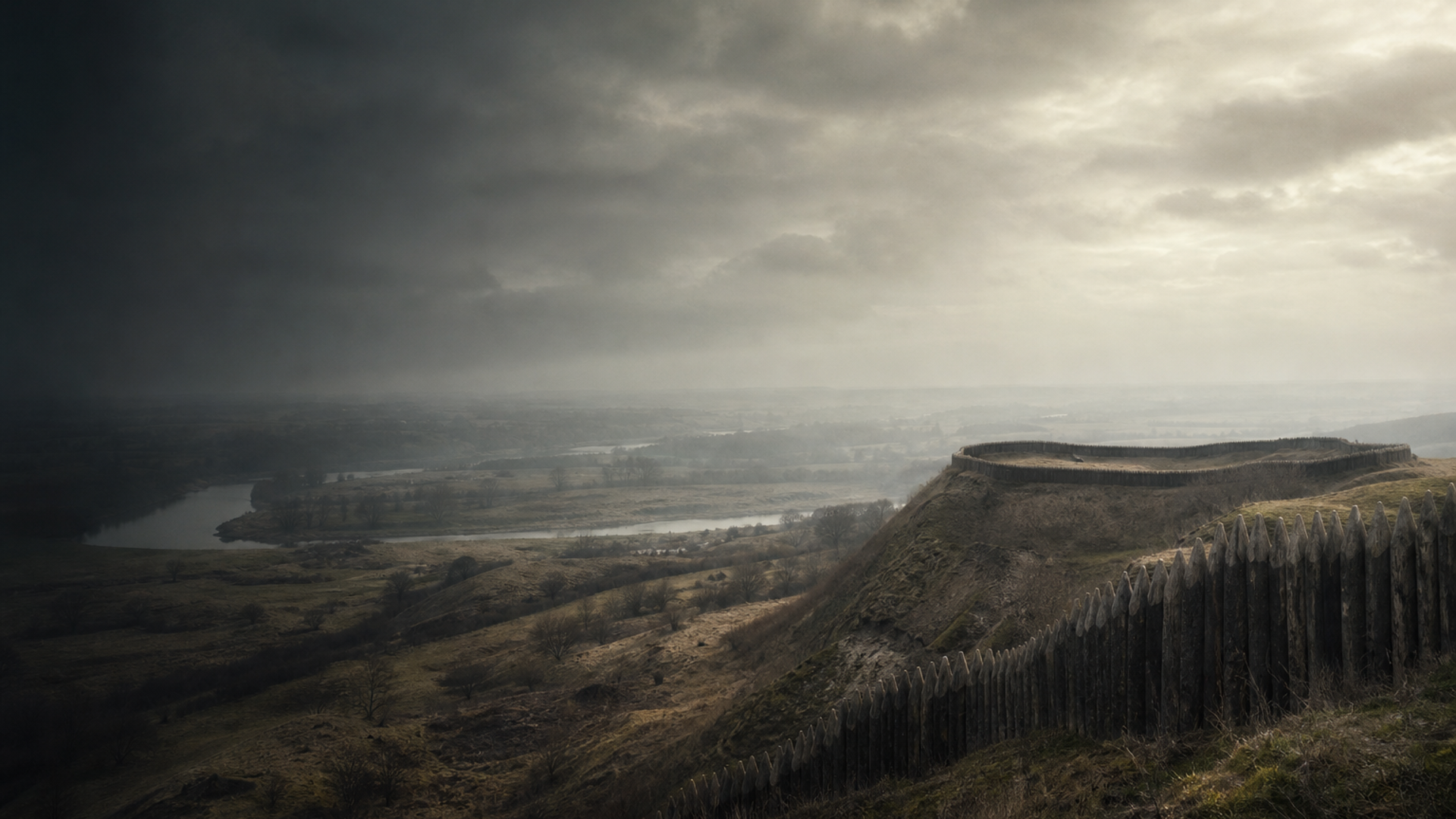
In the flickering light of the early medieval world, Poznań stands as both inheritance and invention. Archaeological excavations on Ostrów Tumski and surrounding terraces in Greater Poland record continuous occupation and reworking of older Iron Age landscapes. The dataset labeled Poland_Poznan_IA captures human remains dated by radiocarbon and contextual stratigraphy to roughly 1000–1200 CE, a period when a nascent Polish state, riverine trade, and craft specializations reshaped settlement patterns.

Archaeological data indicates that many burial and habitation contexts in Poznań sit atop or adjacent to earlier Iron Age deposits associated with the regional Iron Age Poznań Culture. This creates a palimpsest: traces of older material traditions persisted alongside new burial rites, imported goods, and urbanizing architecture. Limited evidence suggests both local continuity and incoming influences — trade, pilgrimage, and political shifts likely brought people and ideas along the Warta river corridor.

Because the genetic sample is small (seven individuals), interpretations about population origins must remain cautious. The remains provide tantalizing snapshots rather than a complete narrative. Ongoing excavations and additional aDNA will be critical to distinguish long-term local descent from episodic migration or elite mobility.

  • Samples dated to 1000–1200 CE from Poznań (Ostrów Tumski and environs)
  • Archaeological contexts show overlap with Iron Age Poznań Culture deposits
  • Evidence points to both local continuity and incoming influence; sample size is small

Daily Life & Society

The material remains of Poznań between 1000 and 1200 CE paint a city of craft, faith, and movement. Stone foundations, timber buildings, and craft debris attest to specialized production—metalworking, leather, and textile work—while coin hoards and imported ceramics speak to long-distance exchange. Churches on Ostrów Tumski anchor the spiritual life; cemeteries adjacent to ecclesiastical sites reflect evolving burial practices with both furnished graves and modest interments.

Stratified midden deposits and pollen records indicate a mixed economy: agriculture in the hinterland, fishing on the Warta, and craft workshops within the urban core. Social differentiation is visible archaeologically through grave goods and the organization of space, though many households leave only subtle traces. Material culture suggests connections to Scandinavian, Germanic, and Slavic networks, consistent with Poznań's role as a regional hub.

Human remains, when considered with burial context, provide windows into health, diet, and mobility. Isotopic studies (where available) can detect childhood residence shifts and dietary breadth; combined with aDNA they help identify whether newcomers were biologically recent arrivals or locals who adopted new practices. Given the small number of genetic samples, these human stories remain provisional but evocative.

  • Urban craft and trade centered on Ostrów Tumski and Warta river routes
  • Burial variability suggests social difference and changing religious practices

Genetic Profile

The Poland_Poznan_IA dataset includes seven ancient genomes from Poznań dated to 1000–1200 CE. Observed Y-DNA labels in the dataset include CTS (2 individuals), L (1), FGC (1), and M (1). No robust common mtDNA haplogroup pattern is reported in this small sample, and several individuals have low mtDNA coverage or unresolved calls.

These Y-DNA observations point to male-line diversity within this early medieval urban population. "CTS," "FGC," "L," and "M" as dataset labels likely represent internal clade names or assay-specific designations; without larger comparative sampling and full phylogenetic placement, it is not possible to equate them directly with broad continental haplogroup narratives. Archaeogeneticists therefore interpret these signals cautiously: diversity can reflect local continuity, patrilineal influxes, or admixture from trade and migration networks.

Methodological caveats are important. With only seven samples (fewer than 10), genetic frequencies are highly uncertain and susceptible to sampling bias—funerary context, sex bias in burial recovery, and preservation can skew results. Contamination assessment, radiocarbon anchoring, and comparison to contemporaneous regional datasets are required before asserting population-level conclusions. Nonetheless, even preliminary aDNA from Poznań illuminates how medieval towns were genetic mosaics shaped by local roots and wider connections.

  • Seven genomes show diverse Y-DNA labels (CTS, L, FGC, M); mtDNA largely unresolved
  • Small sample size (<10) makes population-level inferences preliminary

Legacy & Modern Connections

Poznań's skeletons whisper into the present: they remind us that medieval urban centers were loci of continuity and change. Archaeological continuity with Iron Age substrates suggests long-term occupation patterns in Greater Poland, while genetic diversity hints at a networked medieval society where people moved for commerce, service, or alliance. Modern populations of western Poland are the heirs to this deep, layered history, though direct genetic continuity cannot be assumed from this small dataset alone.

Future work linking denser ancient DNA sampling from Poznań and surrounding regions with isotopic, osteological, and material culture studies will clarify the balance of local persistence versus mobility. For now, these seven genomes act as luminous fragments—each one a human story that, when combined with archaeology, enriches our understanding of how people lived, met, and mingled in early medieval Central Europe.

  • Archaeological continuity suggests deep regional roots in Greater Poland
  • Genetic diversity indicates medieval mobility; larger datasets needed for firm links to modern populations

AI 助手

AI 助手 由DNAGENICS公司制作

解锁此特性
Ask questions about the Poznań Echoes: 1000–1200 CE culture. Our AI assistant can explain genetic findings, historical context, archaeological evidence, and modern connections.
AI 样本分析

Poznań Echoes: 1000–1200 CE 文化是人类历史中值得了解的一章……

遗传分析揭示了与早期种群的联系,同时显示了独特的适应和文化创新的证据。 古代DNA样本提供了对迁徙模式、社会结构以及古代种群之间的生物关系的深刻见解。

这是人工智能分析的预览。 解锁全AI 助手, 以探索关于:

  • 遗传组成和祖先
  • 移徙模式和起源
  • 日常生活和文化习俗
  • 现代遗传遗产
使用优惠码 可减免 30% • 11月14日 到期




