Queensland Sea Country Ancestors

下载的 PDF 是图像副本。如需可选中文本及更好的辅助技术支持,请使用打印功能。

Queensland Sea Country Ancestors

揭开一个失落的文明

正在加载考古记录……

正在收集古代记录

跳转到主内容
Queensland Sea Country Ancestors
文明焦点

Queensland Sea Country Ancestors

Genetic and archaeological traces from Flinders Island and Mapoon illuminate coastal lifeways before 1788.

410 CE - 1788 CE
Queensland, Australia (Flinders Island; Mapoon)
滚动开始
Chapter I

剧情

了解 Queensland Sea Country Ancestors 文化

Four pre‑European individuals (410–1788 CE) from Flinders Island and Mapoon reveal persistent maternal lineages (mtDNA P) and rare Y‑lineage markers (F, P). Archaeology and DNA together hint at deep Sahul roots and coastal foraging lifeways; conclusions are tentative given the small sample size.

Time Period

410–1788 CE

Region

Queensland, Australia (Flinders Island; Mapoon)

Common Y-DNA

F (1), P (1)

Common mtDNA

P (4)

Chapter II

时间线

这种文化历史上的关键时刻

410 CE

Earliest dated sampled individual

A human sample from this dataset is dated to about 410 CE, providing a pre‑colonial genetic snapshot of Queensland sea country (short description).

1788 CE

Onset of sustained European presence in Australia

The year 1788 marks the beginning of sustained European colonization in Australia, after which Indigenous lifeways in many regions experienced major disruption.

Chapter III

Origins & Emergence

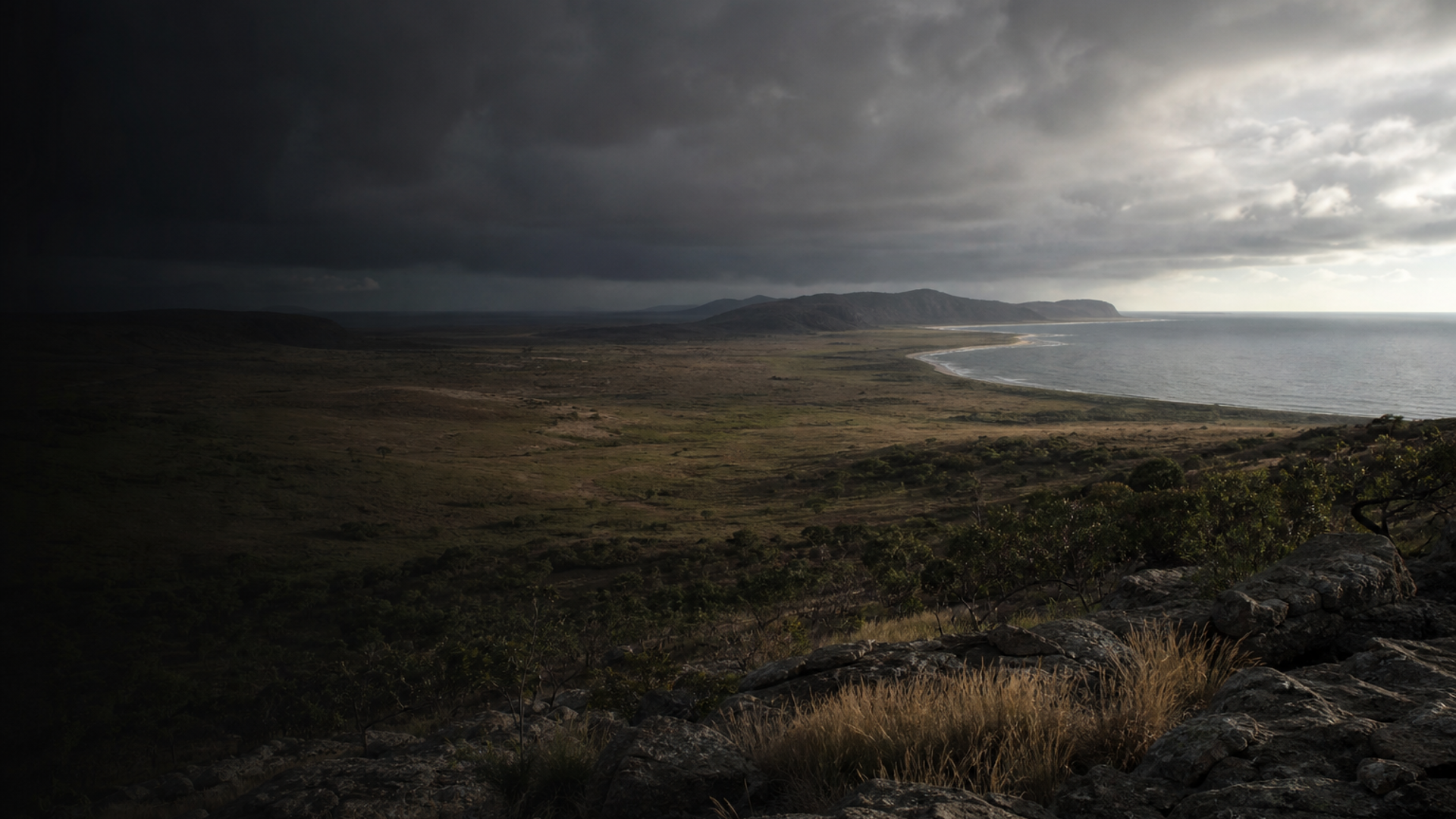
Across a coastal horizon of shell middens and reef channels, the human story preserved at Flinders Island (Great Barrier Reef Marine Park) and Mapoon (Cape York) is a late chapter in a much older book. Archaeological data indicates long‑term occupation of Queensland’s sea country, but the biological lineages that trace into the present day were shaped far earlier when the first peoples of Sahul adapted to island coasts and riverine systems. The dated range for the four recovered individuals—410 CE to 1788 CE—places them squarely in a period of vibrant coastal lifeways before sustained European disruption.

Limited evidence suggests continuity of maternal ancestry in this region: all four samples carry mtDNA haplogroup P, a maternal lineage with roots across New Guinea and Sahul. Paternal markers are sparse in the dataset (single examples of Y‑lineages labelled F and P), so reconstructing male‑line dynamics is preliminary. Archaeology—shell deposits, fish remains, stone tools and living sites—provides the cultural context in which these genetic signals persisted. Taken together, the material and molecular traces evoke people deeply connected to sea, reef and estuary, yet we emphasize that interpretations must be cautious given the very small sample set.

  • Samples dated 410–1788 CE from Flinders Island and Mapoon
  • All four individuals carry mtDNA haplogroup P, suggesting maternal continuity
  • Paternal data (Y F and P) are sparse; broader patterns require more samples
Chapter IV

Daily Life & Society

Imagine tidal rhythms setting the tempo of daily life: fishers and gatherers moving between mangroves, reef platforms and inland creeks, leaving behind layered shell middens and hearths. Archaeological deposits at locations like Flinders Island preserve dense concentrations of marine shell, fish bone, and stone tools that signal specialized coastal economies. At Cape York and Mapoon, the landscape of river mouths and estuaries supported seasonal rounds that integrated marine harvest, freshwater resources and terrestrial game.

Social life would have been organized around kin networks, country‑based custodianship, and knowledge of tides, stars and seasonal cycles. Portable material culture—fishhooks, shell tools, and ochre pigments linked to rock art traditions across northern Queensland—speaks to complex symbolic life as well as subsistence. Archaeological data indicates continuity in tool forms and site placement through the first and second millennia CE, but the small number of genetically analyzed burials means we must not assume uniformity across the whole region. Ethnographic and Indigenous knowledge demonstrate a mosaic of interconnected communities with enduring ties to particular sea country.

  • Coastal foraging focused on reef, estuary and mangrove resources
  • Shell middens and toolkits preserve seasonal and symbolic aspects of life
Chapter V

Genetic Profile

The DNA evidence from these four individuals is striking for its consistency on the maternal side and its sparseness on the paternal side. All four samples carry mitochondrial haplogroup P—a maternal lineage widely observed in Papua New Guinea and parts of northern Australia—supporting archaeological indications of deep Sahul ancestry and long‑term maternal continuity in Queensland’s coastal populations. This continuity aligns with broader patterns seen across northern Australia where mtDNA lineages persist through millennia, reflecting local transmission of maternal heritage.

Y‑chromosome results are limited: one individual assigned to Y‑haplogroup F and one to Y‑haplogroup P. Both labels point to deep, regionally entrenched paternal branches within broader Australo‑Papuan phylogeography, but single instances cannot reveal local male‑line diversity or migration events. Because the dataset comprises only four genomes, any population‑level inference is provisional. Genetic signals here should therefore be read as initial snapshots: mtDNA P indicates robust maternal continuity, while the isolated Y markers hint at connections to wider Sahul paternal lineages. Larger, ethically conducted sampling across multiple sites would be required to resolve questions of kinship, sex‑biased mobility, and population structure.

  • mtDNA P in all four samples suggests deep maternal continuity in Sahul
  • Y markers (F, P) are singletons—interpretation is preliminary due to n=4
Chapter VI

Legacy & Modern Connections

The genetic and archaeological traces from Flinders Island and Mapoon form threads in a living tapestry. For descendants and neighboring communities, these findings corroborate long histories of occupation and stewardship of sea country. Archaeological continuity and mtDNA signals both underline connections across generations—connections that are best understood in concert with Indigenous knowledge, oral histories and cultural practice.

Researchers must stress uncertainty: with only four samples, conclusions about population change, continuity or contact are tentative. Ethical collaboration with Traditional Owners remains paramount. Where DNA and archaeology intersect, they can amplify Indigenous perspectives on ancestry, mobility and land‑sea relationships, but they do not replace the community narratives that sustain cultural identity today.
  • Findings support long‑term ties to sea country and maternal continuity
  • Interpretations must be cautious and pursued in partnership with Indigenous communities
AI 电源

AI 助手

就 Queensland Sea Country Ancestors 文化提问

AI 助手 由DNAGENICS公司制作

解锁此特性
Ask questions about the Queensland Sea Country Ancestors culture. Our AI assistant can explain genetic findings, historical context, archaeological evidence, and modern connections.

AI 样本分析

Queensland Sea Country Ancestors 文化是人类历史中值得了解的一章……

遗传分析揭示了与早期种群的联系,同时显示了独特的适应和文化创新的证据。 古代DNA样本提供了对迁徙模式、社会结构以及古代种群之间的生物关系的深刻见解。

这是人工智能分析的预览。 解锁全AI 助手, 以探索关于:

  • 遗传组成和祖先
  • 移徙模式和起源
  • 日常生活和文化习俗
  • 现代遗传遗产

探索更古老的文化

揭开古代世界文明的故事

使用优惠码 可减免 35% • 11月12日 到期




