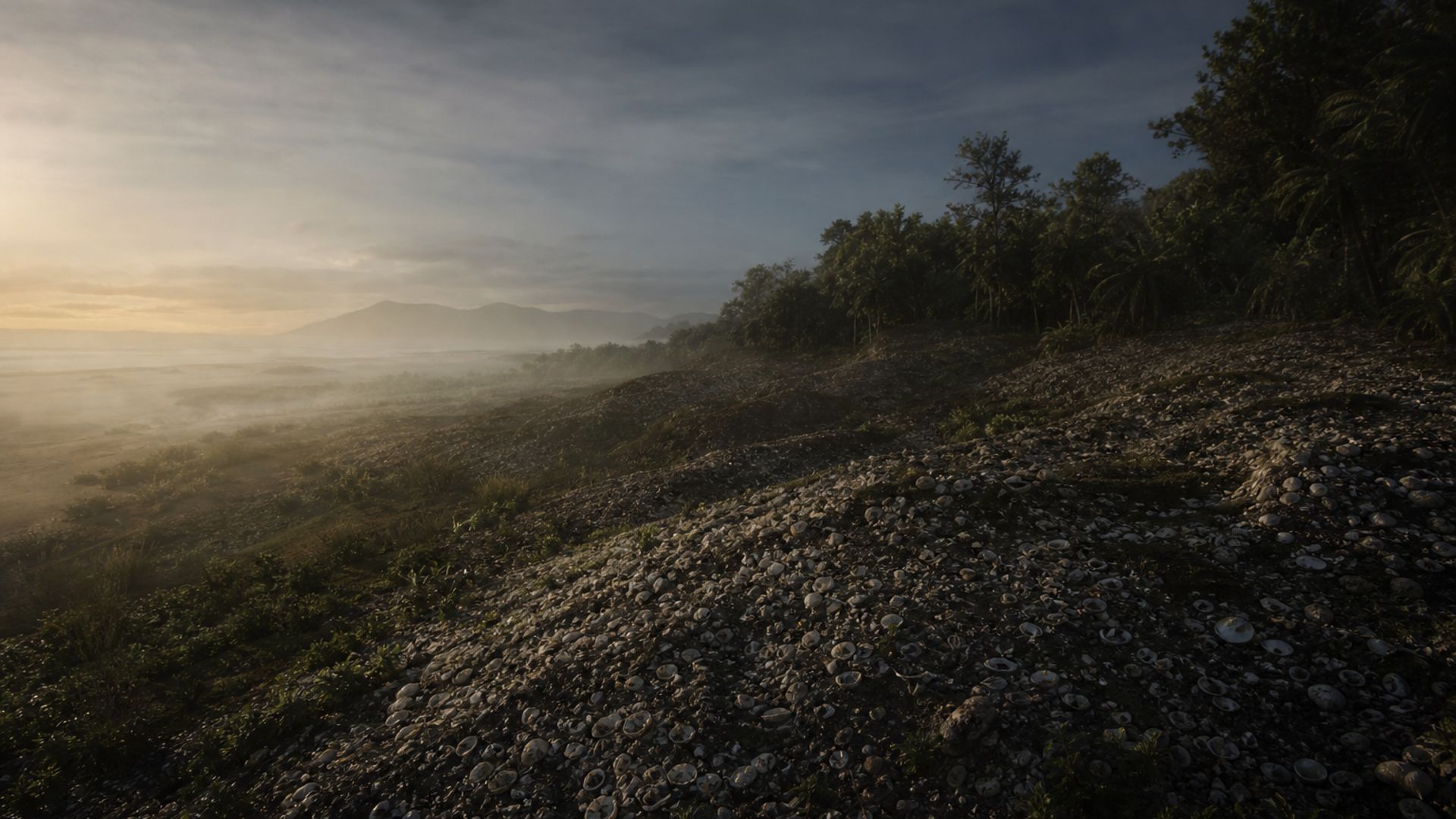
Shell-Mound Mothers of Jabuticabeira

下载的 PDF 是图像副本。如需可选中文本及更好的辅助技术支持,请使用打印功能。

跳转到主内容
文明焦点

Shell-Mound Mothers of Jabuticabeira

Coastal sambaqui builders on Brazil’s south coast, 364–57 BCE — maternal lineages C1c

364 CE - 572200 BCE
South Coast, Brazil (present-day Santa Catarina)

剧情

Archaeological remains from Jabuticabeira II (south coast Brazil) dated 364–57 BCE illuminate coastal sambaqui lifeways. Two ancient genomes show mtDNA C1c, hinting at Native American maternal continuity; sample size is very small and conclusions remain preliminary.

Time Period

364–57 BCE (≈2200 BP)

Region

South Coast, Brazil (present-day Santa Catarina)

Common Y-DNA

Undetermined (no Y-DNA data)

Common mtDNA

C1c (2 samples)

时间线

250 BCE

Intensified Sambaqui occupation

Local shell-mound construction and burial activity at Jabuticabeira II during the late Holocene, within the dated range of recovered genomes.

Origins & Emergence

The Jabuticabeira II complex is part of the Sambaqui tradition of Brazil's southern coast, where generations built monumental shell middens and burial features. Archaeological data indicates active mound construction and repeated seasonal or year-round use of coastal resources during the late Holocene. Radiocarbon-calibrated dates for the samples under study fall between 364 BCE and 57 BCE (approximately 2200 calendar years before present), situating these individuals within a long-lived tradition of maritime adaptation.

Sambaquis are archaeological landscapes of layered shells, hearths, and human interment. Their accumulation represents centuries of intensive shellfish gathering, fishing, and onshore processing. The material record at Jabuticabeira II includes faunal remains, lithic tools, and burial contexts that together evoke communities highly attuned to estuarine and nearshore ecologies. Limited evidence suggests these sambaqui builders maintained place-based connections to specific shoreline locales, leaving visible earthworks that structured movement and memory along the coast.

Because preserved ancient DNA from coastal Brazil is still sparse, the Jabuticabeira II genomes provide rare direct glimpses of individual ancestries. Archaeological context and dated materials anchor the genetic samples in a well-defined cultural horizon, but the broader demographic processes that produced sambaqui villages—migration, local continuity, and social exchange—remain areas for further study.

  • Part of the Sambaqui jar of shell-mound builders on Brazil’s south coast
  • Samples dated to 364–57 BCE (~2200 BP), within late Holocene coastal occupation
  • Middens reflect sustained shellfish and marine resource use over generations

Daily Life & Society

Life at Jabuticabeira II would have been shaped by the rhythms of tide and season. Archaeological evidence from sambaqui sites broadly indicates economies built on shellfish harvesting, fishing, and small-scale terrestrial resources: abundant mollusk shells, fish bones, and occasional terrestrial faunal remains attest to a mixed foraging strategy. Hearths, bone tools, and ground stone artifacts suggest food processing and craft production took place within and around the mounds.

Burial practices within sambaquis often involved interment within the midden layers, sometimes accompanied by ornaments or worked shells. These funerary contexts create a tangible dialogue between the living landscape and social memory. The scale of some mounds implies coordinated labor and social ties that could organize seasonal resource zones and kin networks. Archaeological data indicates variability across sambaqui sites in size and form, pointing to diverse social configurations rather than a single rigid social order.

Ethnographic analogy and zooarchaeological study suggest specialized skill sets—fishing, canoe use, shell processing—and knowledge passed through generations. Yet many aspects of daily life remain inferred: organic structures, textiles, and perishable technology rarely survive, so the archaeological picture relies heavily on durable remains preserved in midden contexts.

  • Marine-centered diet with supplemental terrestrial foods inferred from midden contents
  • Burials within shell mounds point to place-based ritual and memory

Genetic Profile

Two ancient individuals from the Jabuticabeira II sambaqui yield mitochondrial haplogroup C1c. Haplogroup C1c is a sublineage of the wider haplogroup C1, one of the founding maternal lineages observed across the Americas. The presence of C1c in both samples is consistent with the broader picture of Native American maternal diversity, suggesting local maternal ancestries that tie these coastal individuals to deep American lineages.

It is crucial to emphasize that the sample count is very small (n=2). With fewer than ten genomes, statistical inferences about population-level diversity, migration, or continuity are preliminary. No Y-chromosome haplogroup information is reported for these samples, so paternal lineages remain unknown. Likewise, genome-wide ancestry and admixture profiles are not established here, so claims about genetic continuity with later populations or connections to inland groups must be tentative.

Genetic results do, however, provide direct personal links to the people who built and inhabited sambaquis. When combined with stratigraphy, radiocarbon dates, and material culture, these mitochondrial signals can begin to map maternal lines across places and times. Future aDNA sampling, especially with larger sample sizes and genome-wide data, will be needed to resolve questions about mobility, kinship within mounds, and demographic relationship to modern Indigenous populations.

  • Both samples carry mtDNA haplogroup C1c, a Native American maternal lineage
  • Very small sample size (n=2) — conclusions about population structure are preliminary

Legacy & Modern Connections

The shell mounds of Jabuticabeira II are cultural landmarks that continue to shape archaeological understanding of Brazil's coastal past. Genetic signals such as mtDNA C1c hint at maternal threads linking ancient sambaqui people to the wider tapestry of Native American lineages. However, direct connections to specific modern groups cannot be assumed from two mitochondrial genomes alone; genealogical and population histories are complex and require broader sampling and respectful engagement with descendant communities.

These findings underscore the value of integrating archaeology and genetics: ancient DNA anchors individuals within time and place, while material culture preserves how people lived, worked, and commemorated the dead. Protecting sambaqui sites, expanding ancient DNA sampling responsibly, and collaborating with Indigenous stakeholders will improve the resolution of coastal demographic history and honor the living legacies of these landscapes.

  • mtDNA C1c offers a maternal link to broader Native American lineages
  • Further sampling and community collaboration are essential to clarify continuity

AI 助手

AI 助手 由DNAGENICS公司制作

解锁此特性
Ask questions about the Shell-Mound Mothers of Jabuticabeira culture. Our AI assistant can explain genetic findings, historical context, archaeological evidence, and modern connections.
AI 样本分析

Shell-Mound Mothers of Jabuticabeira 文化是人类历史中值得了解的一章……

遗传分析揭示了与早期种群的联系,同时显示了独特的适应和文化创新的证据。 古代DNA样本提供了对迁徙模式、社会结构以及古代种群之间的生物关系的深刻见解。

这是人工智能分析的预览。 解锁全AI 助手, 以探索关于:

  • 遗传组成和祖先
  • 移徙模式和起源
  • 日常生活和文化习俗
  • 现代遗传遗产
使用优惠码 可减免 30% • 11月15日 到期