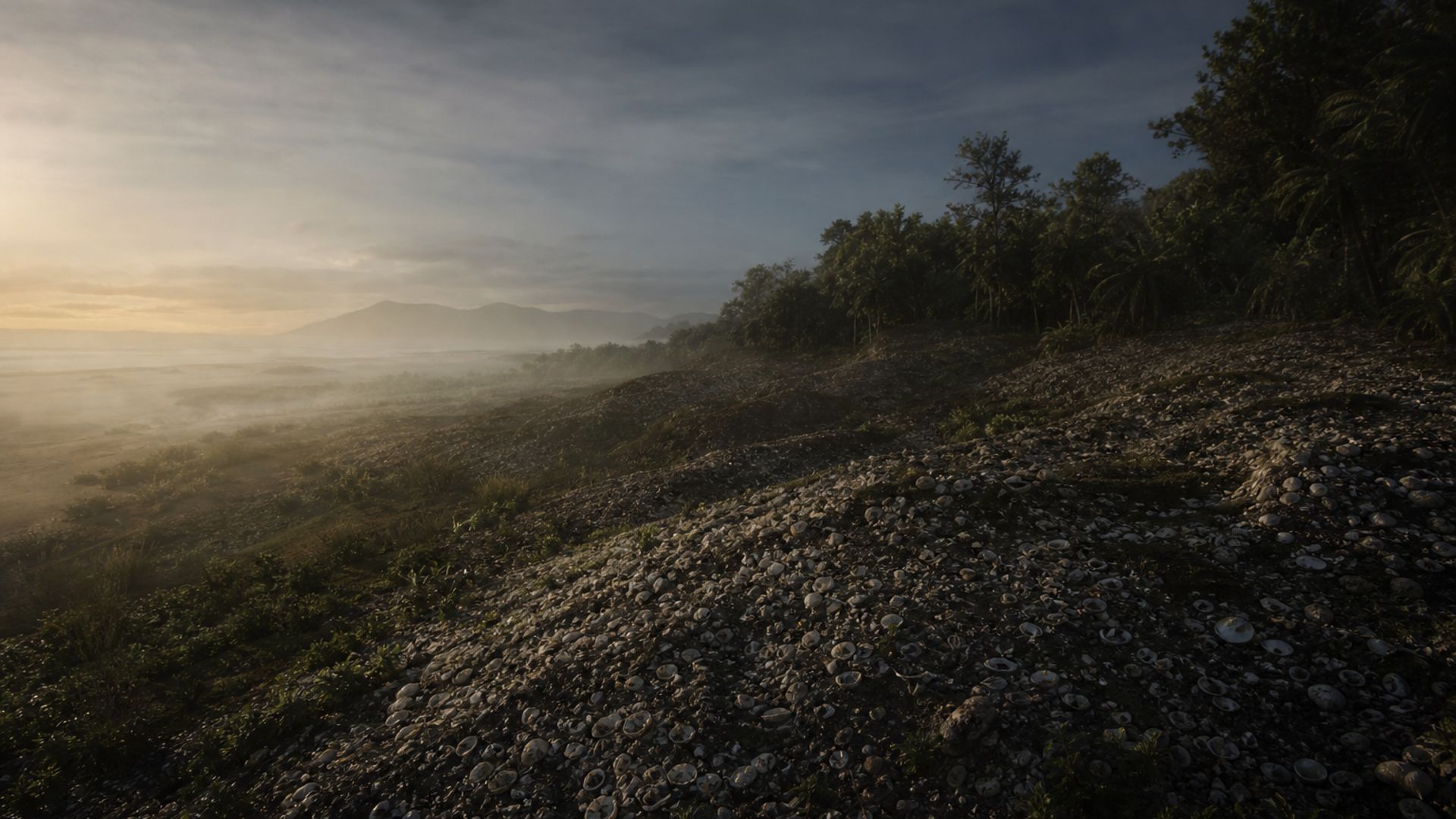
Two ancient individuals from the Jabuticabeira II sambaqui yield mitochondrial haplogroup C1c. Haplogroup C1c is a sublineage of the wider haplogroup C1, one of the founding maternal lineages observed across the Americas. The presence of C1c in both samples is consistent with the broader picture of Native American maternal diversity, suggesting local maternal ancestries that tie these coastal individuals to deep American lineages.
It is crucial to emphasize that the sample count is very small (n=2). With fewer than ten genomes, statistical inferences about population-level diversity, migration, or continuity are preliminary. No Y-chromosome haplogroup information is reported for these samples, so paternal lineages remain unknown. Likewise, genome-wide ancestry and admixture profiles are not established here, so claims about genetic continuity with later populations or connections to inland groups must be tentative.
Genetic results do, however, provide direct personal links to the people who built and inhabited sambaquis. When combined with stratigraphy, radiocarbon dates, and material culture, these mitochondrial signals can begin to map maternal lines across places and times. Future aDNA sampling, especially with larger sample sizes and genome-wide data, will be needed to resolve questions about mobility, kinship within mounds, and demographic relationship to modern Indigenous populations.