Threads of the Islamic World

下载的 PDF 是图像副本。如需可选中文本及更好的辅助技术支持,请使用打印功能。

Threads of the Islamic World

揭开一个失落的文明

正在加载考古记录……

正在收集古代记录

跳转到主内容
Threads of the Islamic World
文明焦点

Threads of the Islamic World

Archaeology and DNA illuminating lives across 680–1700 CE

680 CE - 1700 CE
Turkey, Spain, Israel, Syria, Pakistan
1 Ancient Samples
滚动开始
Chapter I

剧情

了解 Threads of the Islamic World 文化

Archaeological remains from sites in Turkey, Spain, Israel, Syria and Pakistan (28 samples) reveal a mobile, multiethnic Islamic world. Genetic signals—mixed Eurasian, Near Eastern, and North African lineages—align with archaeological contexts from early Islamic expansion to Ottoman-era graves.

Time Period

680–1700 CE

Region

Turkey, Spain, Israel, Syria, Pakistan

Common Y-DNA

R (4), CT (2), E (1), J (1)

Common mtDNA

H (5), U (5), J (3), K (2), W9 (1)

Chapter II

时间线

这种文化历史上的关键时刻

680 CE

Early Islamic Period

Expansion and administrative consolidation link Mediterranean and Near Eastern towns, shaping burial practices and material culture.

1250 CE

Nasrid Granada Flourishes

Nasrid rule in Andalusia produces urban cemeteries like Mondújar and shifts in craft and funerary traditions.

1500 CE

Ottoman Consolidation in Anatolia

Ottoman administration and population movements influence grave groupings in Aegean Turkish sites.

1700 CE

Late Pre-Modern Transformations

Regional trade networks and local dynamics continue to reshape communities across the Islamic world.

Chapter III

Origins & Emergence

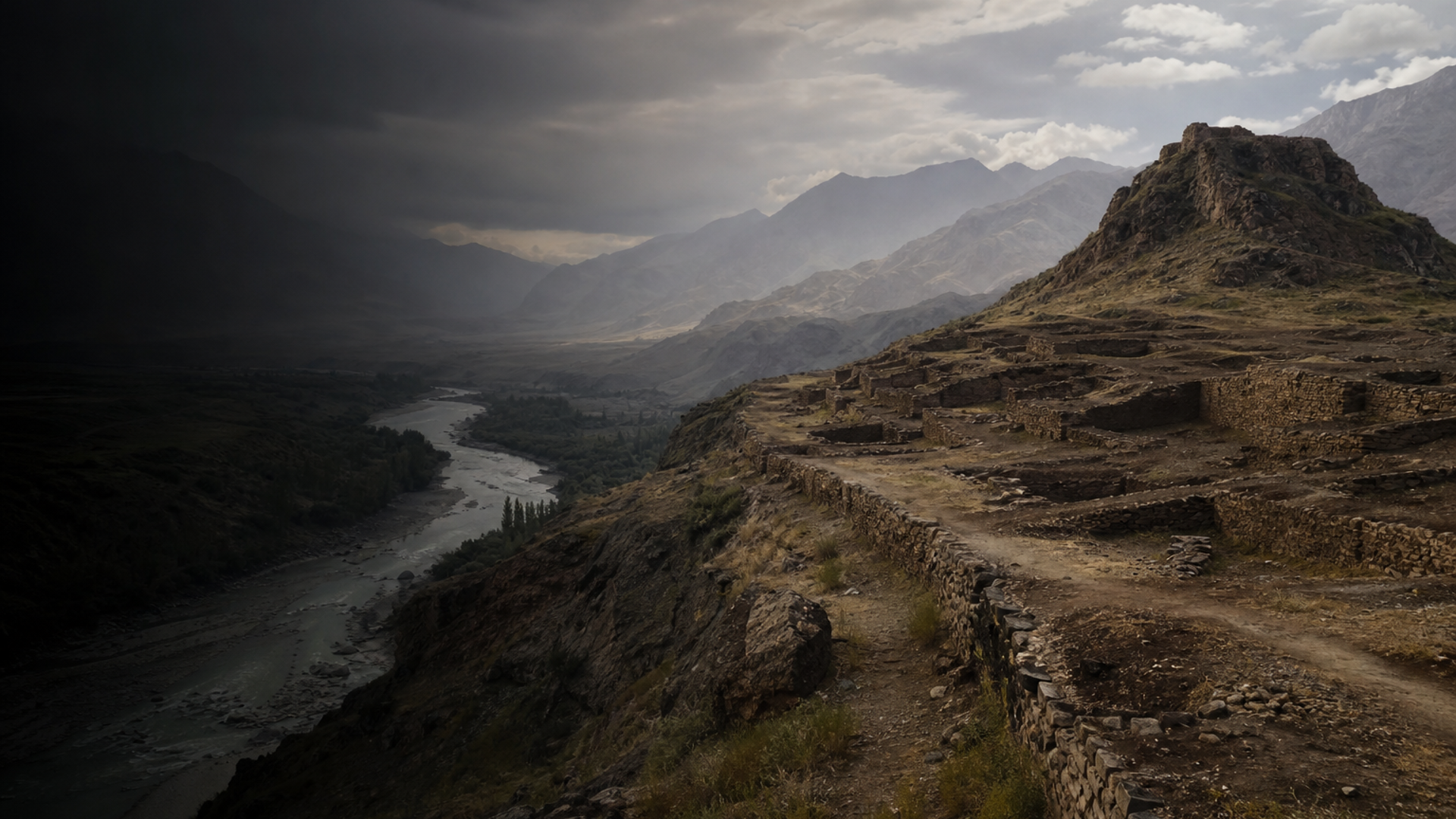
From the first centuries after 600 CE, the archaeological record paints a picture of rapid change and long-distance connections. Sites in southwest Israel (Tell el-Hesi), Andalusia (Mondújar, Nécropolis de Torna Alta), the Aegean coast of Turkey (Çapalıbağ, Yeşilbağcılar), the Swat Valley (Barikot), and Tell Masaikh in Syria each preserve funerary and settlement traces spanning early Islamic conversions through medieval and Ottoman transformation.

Archaeological data indicate a mosaic of material cultures: reused Roman and Byzantine architecture in Levantine towns, Nasrid-period ceramics and burial patterns in Granada, and stratified occupation layers in Barikot reflecting South Asian Islamic urbanization. These material threads reflect religious, administrative, and mercantile integration across the Mediterranean, Levant, and South Asia.

Genetic sampling (28 individuals) provides a complementary lens. The distribution of Y-chromosome and mitochondrial lineages suggests a blend of local and incoming ancestries rather than wholesale population replacement. Limited evidence cautions that localized events—military movements, merchants settling abroad, enslaved peoples, and conversion—could each leave distinct genetic signatures. Archaeology anchors those possibilities to places and practices: burial orientation, grave goods, and shifting ceramic types that together tell of identities negotiated across centuries.

  • Sites span 680–1700 CE across Mediterranean, Levant, and South Asia
  • Material culture shows reuse of pre-Islamic infrastructure and regional continuity
  • Archaeology suggests mobility, trade, and localized cultural blending
Chapter IV

Daily Life & Society

Beneath grand narratives of empires lies the tactile reality of households, marketplaces, and cemeteries. In Tell el-Hesi and Tell Masaikh, stratified layers preserve domestic compounds, pottery assemblages, and food remains that speak of diets combining Mediterranean cereals, pulses, and olive oil with region-specific staples. In Granada's Nasrid contexts, urban archaeology exposes cramped streets, craft workshops, and funerary neighborhoods such as the Nécropolis de Torna Alta where burial orientation and offerings shift alongside religious practice.

In the Aegean Turkish sites, Ottoman-period grave clusters and mosque-adjacent burials reflect evolving social structures: patronage networks, guild identities, and family plots. Barikot in the Swat Valley reveals how South Asian urban forms and Islamic institutions merged—mosque foundations adjoined older civic cores, indicating continuity of communal space.

Archaeological indicators of trade—imported ceramics, coin hoards, and caravan-route goods—corroborate the notion that daily life was connected to long-distance exchange. Craftspeople, soldiers, farmers, and religious specialists all contributed to the fabric of communities. Where osteological data survive, health markers and isotopes sometimes show dietary diversity and occasional non-local origins, but sample sizes and preservation vary; therefore, interpretations remain cautious.

  • Households combined regional diets with imported goods
  • Burial patterns and mosque-adjacent cemeteries reflect social and religious identities
Chapter V

Genetic Profile

Genetic analyses of 28 individuals spanning 680–1700 CE reveal a heterogeneous picture consistent with a cosmopolitan Islamic world. On the paternal side, haplogroup R (4 individuals) is the most frequent single marker; R is widespread across Eurasia and may reflect local or incoming Eurasian male lineages. Haplogroup CT (2) is a broad macro-haplogroup designation that can encompass many downstream lineages; its presence here signals deep, pan-Eurasian ancestry but is not diagnostic without further subclade resolution. Haplogroups E (1) and J (1) point toward North African and Near Eastern paternal inputs respectively—patterns compatible with Mediterranean and Levantine gene flow during medieval centuries.
Mitochondrial diversity is notable: H (5) and U (5) are common across Europe and western Asia, while J (3) and K (2) are typical Near Eastern/European maternal lineages; a single W9 points to rarer maternal affinity. The relative richness of mtDNA haplogroups suggests women in these cemetery assemblages came from diverse local and regional backgrounds.

Taken together, the data indicate admixture rather than replacement. Genetic signals align with archaeological expectations of mobility: merchant settlements, military garrisons, matrimonial alliances, and population movements under Umayyad, Abbasid, Nasrid, and Ottoman polities. That said, with 28 samples spread across five countries and a millennium of history, spatial and temporal resolution is limited—subclade analyses, isotopic mobility studies, and larger sample sets are needed to refine population dynamics and sex-biased migration patterns.

  • Mixed paternal lineages: Eurasian (R), Near Eastern (J), North African (E), plus broad CT
  • Diverse maternal haplogroups (H, U, J, K, W9) suggest multi-regional maternal origins
Chapter VI

Legacy & Modern Connections

The archaeological and genetic mosaic of these sites echoes into the present. Place names, built landscapes, and local traditions in Andalusia, the Levant, Anatolia, and the Swat Valley bear traces of centuries of Islamic rule and cultural exchange. Genetic affinities observed in medieval cemeteries overlap with lineages still present in modern populations of the Mediterranean, Near East, and parts of South Asia, underscoring continuity alongside change.

However, caution is essential: temporal depth, post-medieval migrations, and later demographic events (including Ottoman-era resettlements and modern population movements) complicate direct lines from medieval samples to living communities. Archaeogenetics here is best read as illuminating processes—trade, conversion, mobility—rather than as a simple ancestry map. As more samples and higher-resolution data accumulate, the subtle contours of identity, migration, and everyday life across the Islamic world will become clearer.

  • Genetic patterns echo in modern Mediterranean and Near Eastern populations
  • Interpretations must account for later migrations and the need for larger datasets
Chapter VII

样本目录

1 份与 Threads of the Islamic World 文化相关的古 DNA 样本,为研究该时期的人群提供遗传线索。

1 / 1 samples
纵向 样本 国家 大纪元 日期 文化 性别 Y-DNA mtDNA
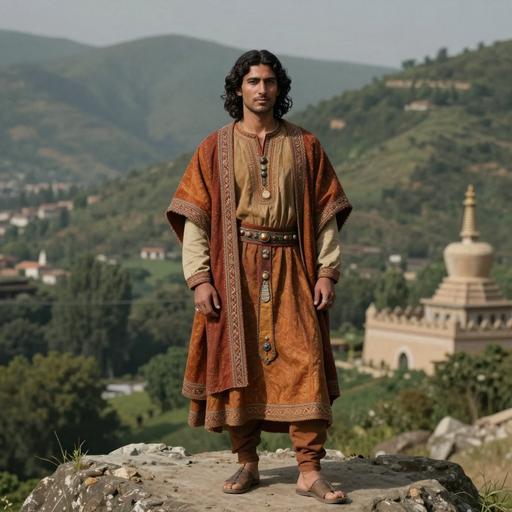
重建的肖像画 Medieval-2 individual, Pakistan
Medieval-2 individual, Pakistan
Pakistan Pakistan_Barikot_Medieval 1279-1389 calCE (670±25 BP, PSUAMS-4427) Islamic Civilization M J-F1614 M49
AI 电源

AI 助手

就 Threads of the Islamic World 文化提问

AI 助手 由DNAGENICS公司制作

解锁此特性
Ask questions about the Threads of the Islamic World culture. Our AI assistant can explain genetic findings, historical context, archaeological evidence, and modern connections.
AI 样本分析

Threads of the Islamic World 文化是人类历史中值得了解的一章……

遗传分析揭示了与早期种群的联系,同时显示了独特的适应和文化创新的证据。 古代DNA样本提供了对迁徙模式、社会结构以及古代种群之间的生物关系的深刻见解。

这是人工智能分析的预览。 解锁全AI 助手, 以探索关于:

  • 遗传组成和祖先
  • 移徙模式和起源
  • 日常生活和文化习俗
  • 现代遗传遗产

探索更古老的文化

揭开古代世界文明的故事

使用优惠码 可减免 35% • 11月12日 到期





