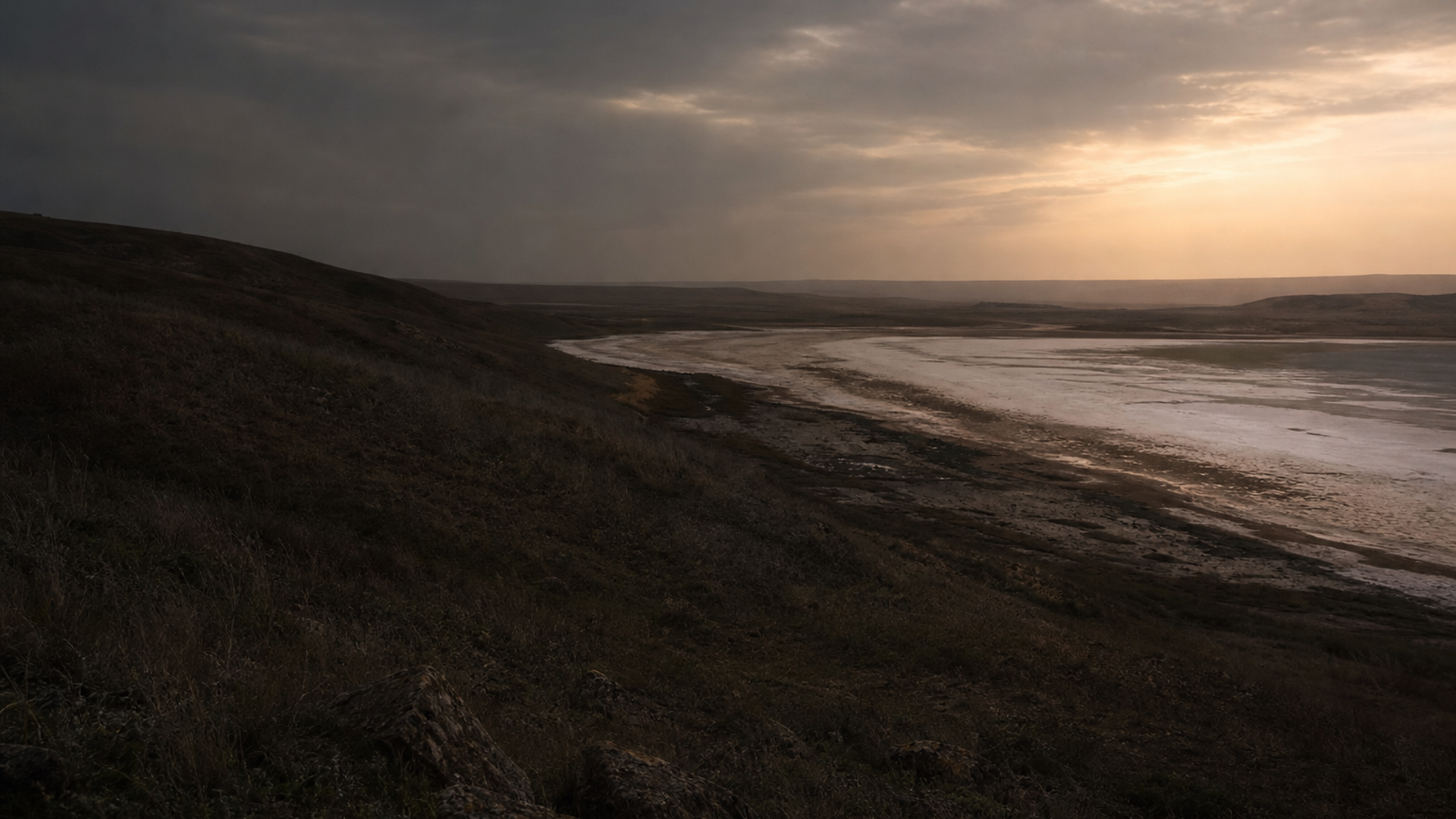
Usatove at Bolšoj Kujalnik

下载的 PDF 是图像副本。如需可选中文本及更好的辅助技术支持,请使用打印功能。

Usatove at Bolšoj Kujalnik

揭开一个失落的文明

正在加载考古记录……

正在收集古代记录

跳转到主内容
Usatove at Bolšoj Kujalnik
文明焦点

Usatove at Bolšoj Kujalnik

Coastal Eneolithic community (3973–3528 BCE); limited ancient DNA hints at mixed ancestries.

3973 CE - 3528 BCE
Odessa Oblast, Ukraine (Bolšoj Kujalnik)
滚动开始
Chapter I

剧情

了解 Usatove at Bolšoj Kujalnik 文化

Archaeological and genetic snapshot of four Usatove individuals (3973–3528 BCE) from Bolšoj Kujalnik, Odessa Oblast, Ukraine. mtDNA dominated by U and X2b; Y haplogroup I. Limited samples suggest persistence of local maternal lineages amid regional interactions.

Time Period

3973–3528 BCE (Late Eneolithic)

Region

Odessa Oblast, Ukraine (Bolšoj Kujalnik)

Common Y-DNA

I (observed in 1/4 samples)

Common mtDNA

U (2/4), X2b (1/4)

Chapter II

时间线

这种文化历史上的关键时刻

3750 BCE

Occupation and burial use at Bolšoj Kujalnik

Midpoint of dated burials and occupations (3973–3528 BCE) tying the site to late Eneolithic Usatove activity on the Black Sea coast.

Chapter III

Origins & Emergence

Perched on the shifting margins of the northwestern Black Sea, the Usatove horizon at Bolšoj Kujalnik represents a coastal expression of Late Eneolithic lifeways. Archaeological data indicates occupation between 3973 and 3528 BCE, a period of dynamic contact across the Pontic littoral. The site lies in present-day Odessa Oblast and typifies settlements and funerary deposits attributed to the broader Usatove cultural phenomenon.

Material traces—coastal settlements, curated pottery assemblages, and burials with varied grave goods—suggest communities that combined farming, animal herding and exploitation of marine and estuarine resources. Artefactual links to neighboring regions imply exchange networks reaching inland river valleys and possibly the northern Aegean/Balkan seaboard; however, the precise direction and intensity of those contacts remain debated.

Limited evidence suggests social differentiation in death rites at Bolšoj Kujalnik: grave complexity and associated objects vary within the cemetery, hinting at emerging hierarchies or differentiated access to long-distance goods. Archaeological interpretations of origin stress both local continuity from earlier forager-farmer mixtures in the north Pontic zone and renewed inputs from neighboring Eneolithic and Chalcolithic communities. Given the small number of well-dated samples from the site, models of population movement and cultural transmission should be regarded as provisional.

  • Occupied 3973–3528 BCE in Odessa Oblast, Ukraine
  • Coastal economy blending farming, herding and fishing
  • Material links hint at exchange with nearby Pontic and Balkan networks
Chapter IV

Daily Life & Society

The world of Bolšoj Kujalnik was defined by the interplay of sea, river and steppe. Archaeological remains indicate households engaged in mixed subsistence: cultivated cereals and domesticated animals shared the landscape with abundant fish and shellfish from estuaries. The lifeways would have been seasonal and mobile to varying degrees—field agriculture and livestock pasturing complemented by intensive shoreline exploitation during certain months.

Craft production likely included pottery fashioned for storage and cooking, bone and stone toolmaking, and localized metalworking as copper objects appear in contemporaneous Usatove contexts elsewhere. Personal ornaments and imported materials found at comparable sites convey a sense of visible identity and participation in wider exchange networks.

Socially, burial variability at Usatove cemeteries suggests households or lineages with unequal access to prestige items, perhaps reflecting emerging social differentiation as the fourth millennium BCE unfolded. Communal memory and ritual were woven into the landscape through grave placement and grave goods; yet many details—age- and sex-specific roles, exact exchange mechanisms, and the scale of craft specialization—remain only partially illuminated by current excavations at Bolšoj Kujalnik.

  • Mixed economy: farming, herding, fishing and estuarine foraging
  • Crafts and exchange produced visible social differentiation in burials
Chapter V

Genetic Profile

Ancient DNA from four individuals labeled Ukraine_Eneolithic_Usatove_BolsojKujalnik_C offers a narrow but revealing glimpse into the biological ancestry of this coastal Eneolithic community. Sample count is low (n=4), so conclusions are preliminary and should be treated cautiously.

Observed uniparental markers: Y-chromosome lineage I appears in one male, while mitochondrial lineages include U in two individuals and X2b in one. mtDNA haplogroup U is widely associated with longstanding European hunter‑gatherer maternal ancestry and is frequently present in late Neolithic and Eneolithic contexts across the region. The presence of X2b—while less common—is consistent with maternal lineages that appear intermittently in Neolithic and later populations spanning Europe and western Asia.

The single Y‑haplogroup I is notable because it aligns with lineages that persisted in Europe from the Mesolithic and Neolithic periods; it is distinct from R1a/R1b lineages often associated with later steppe expansions. Taken together, the uniparental profile hints at continuity of local maternal hunter‑gatherer-derived ancestry with male lineages that may reflect regional continuity rather than wholesale population replacement.

Genome-wide inference would be needed to test hypotheses about admixture between local forager‑derived groups, Neolithic farmers and incoming steppe‑associated groups; with only four genomes available, any such model is tentative. Future sampling from Bolšoj Kujalnik and nearby Usatove sites will be essential to refine population history.

  • Very small sample set (n=4) — interpretations are preliminary
  • mtDNA dominated by U (2) and X2b (1); Y-DNA includes I (1)
Chapter VI

Legacy & Modern Connections

The genetic and archaeological imprint of the Usatove presence at Bolšoj Kujalnik contributes to a mosaic of ancestry in the northwestern Black Sea region. Elements of maternal lineages such as mtDNA U persist in modern European populations, so the Usatove maternal signal forms one thread among many in later population histories. The observed Y‑lineage I likewise continues in parts of Europe today, though direct lineage continuity from a handful of Eneolithic individuals to any specific modern group cannot be demonstrated with current data.

Culturally, Usatove communities occupy a liminal position between inland farming societies and steppe pastoralists; they likely facilitated exchange of goods, ideas and genes along the Black Sea edge. This role may have helped shape the social and genetic landscapes that fed into Bronze Age transformations in Eastern Europe. Yet, given the limited ancient DNA and the fragmentary archaeological record at Bolšoj Kujalnik, claims of direct descent or exclusive ancestry should be avoided until broader datasets are available.

  • Maternal and paternal lineages observed have modern echoes but direct continuity is unproven
  • Usatove sites likely acted as conduits of cultural and genetic exchange along the Black Sea
AI 电源

AI 助手

就 Usatove at Bolšoj Kujalnik 文化提问

AI 助手 由DNAGENICS公司制作

解锁此特性
Ask questions about the Usatove at Bolšoj Kujalnik culture. Our AI assistant can explain genetic findings, historical context, archaeological evidence, and modern connections.
AI 样本分析

Usatove at Bolšoj Kujalnik 文化是人类历史中值得了解的一章……

遗传分析揭示了与早期种群的联系,同时显示了独特的适应和文化创新的证据。 古代DNA样本提供了对迁徙模式、社会结构以及古代种群之间的生物关系的深刻见解。

这是人工智能分析的预览。 解锁全AI 助手, 以探索关于:

  • 遗传组成和祖先
  • 移徙模式和起源
  • 日常生活和文化习俗
  • 现代遗传遗产

探索更古老的文化

揭开古代世界文明的故事

使用优惠码 可减免 35% • 11月12日 到期