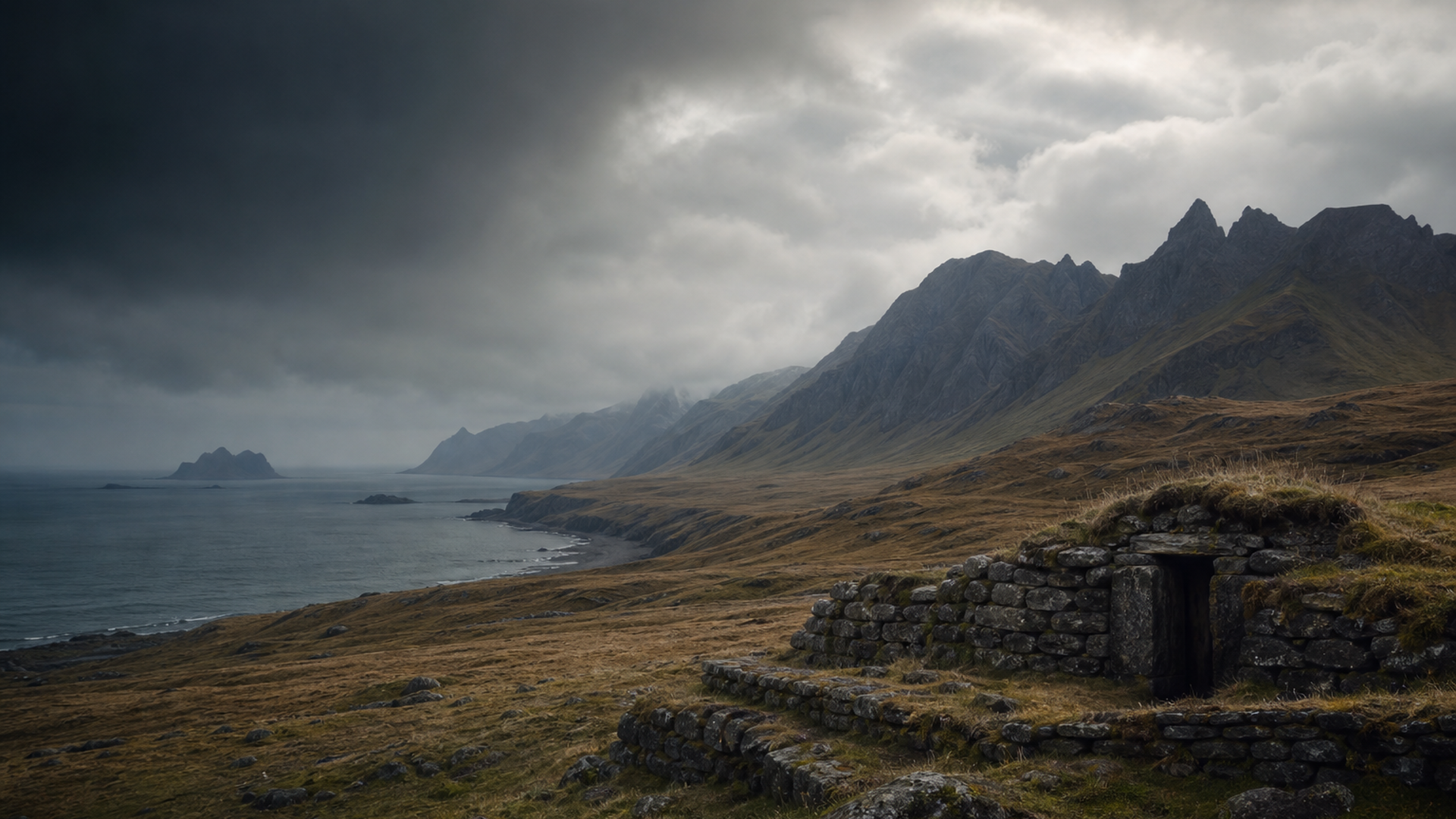
Voices of Iceland's Viking Age

下载的 PDF 是图像副本。如需可选中文本及更好的辅助技术支持,请使用打印功能。

Voices of Iceland's Viking Age

揭开一个失落的文明

正在加载考古记录……

正在收集古代记录

跳转到主内容
Voices of Iceland's Viking Age
文明焦点

Voices of Iceland's Viking Age

Archaeology and DNA illuminate settlement, farms, and kin in 10th–13th century Iceland.

900 CE - 1300 CE
Iceland
滚动开始
Chapter I

剧情

了解 Voices of Iceland's Viking Age 文化

Seventeen Viking Age individuals (900–1300 CE) from Ingiridarstadir, Hofstadir, and Hringsdalur reveal a Norse-rooted male lineage and diverse maternal heritage, linking archaeology with genetic traces of immigration, local adaptation, and North Atlantic networks.

Time Period

900-1300 CE

Region

Iceland

Common Y-DNA

R (7), I (2)

Common mtDNA

H (9), U (2), J (2), T (2), I (1)

Chapter II

时间线

这种文化历史上的关键时刻

874 CE

Traditional Settlement Period

Settlement of Iceland intensifies; archaeological and sagas place early farms across coastal areas during late 9th century.

Chapter III

Origins & Emergence

Iceland's settlement story reads as both dramatic voyage and gradual fusion. Archaeological data indicates settlement began in the late 9th century CE, with farms appearing across coastal fjords and interior valleys. Excavations at Hofstadir have revealed a large longhouse, high-status feasting debris, and imported material culture that point to active links with Norway and the British Isles. Ingiridarstadir and Hringsdalur provide complementary snapshots: farmsteads, burial contexts, and domestic midden deposits that record everyday life and seasonal use.

Genetic evidence from 17 individuals dated between 900 and 1300 CE adds a new layer to this picture. The male lineages are dominated by haplogroups labeled here as R and I, consistent with a northern European origin. Mitochondrial diversity—dominated by haplogroup H but with U, J, T, and I present—suggests more varied maternal origins and contact across the North Atlantic. Together, archaeology and ancient DNA sketch an emerging community shaped by maritime migration, farming adaptation, and social negotiation between incoming Norse groups and people connected to the British Isles.

Limited evidence remains for fine-grained regional patterns; the current dataset offers a coherent, though partial, glimpse into the initial centuries of Icelandic society.

  • Settlement evidence concentrated in coastal farms and valley longhouses
  • Hofstadir yields large communal architecture and feasting residues
  • Genetic signatures point to northern European male ancestry with diverse maternal lines
Chapter IV

Daily Life & Society

Archaeological remains from farms at Ingiridarstadir, Hofstadir, and Hringsdalur evoke a world of timbered longhouses, turf outbuildings, and hearth-centered domestic life. Zooarchaeological assemblages indicate mixed animal economy—sheep, cattle, and pigs—with seabirds and fish supplementing diets in coastal sites. Tools, spindle whorls, and weaving scraps speak to household production; carved bone and metalwork hint at status differences and regional tastes.

Longhouses served multifaceted roles: shelter, livestock wintering, and communal gathering. At Hofstadir, specialised feasting deposits and imported goods imply structures of social display and inter-regional exchange. Burial practices in this period are variable—from inhumation to dispersed ritual deposits—reflecting both Norse funerary traditions and local adaptation to Iceland’s environment.

Archaeological data indicates seasonal mobility was important: winter farm consolidation and summer outfield use for grazing and resource collection. Craft production, trade in iron and tools, and maritime navigation underpinned a resilient rural society negotiating scarce resources and long-distance connections.

  • Mixed farming economy with strong marine supplementation
  • Longhouses functioned as domestic, economic, and social centers
Chapter V

Genetic Profile

The ancient DNA dataset comprises 17 individuals from three Icelandic sites (Ingiridarstadir, Hofstadir, Hringsdalur) dated to 900–1300 CE. Y-chromosome markers are predominantly in categories labeled R (7 individuals) and I (2 individuals). These lineages are broadly common across northern Europe, and their presence is consistent with substantial male-mediated ancestry from Scandinavian source populations during the Viking Age. Mitochondrial DNA shows greater diversity: haplogroup H dominates (9), with U (2), J (2), T (2), and I (1) also represented.

This pattern—strong representation of northern European Y-lineages combined with a varied maternal pool—matches broader models of sex-biased migration seen in other Viking Age contexts: primarily male settlers from Scandinavia accompanied or later joined by women of mixed origins, including connections to the British Isles. Archaeological contexts such as imported goods and faunal remains at Hofstadir align with these genetic signals of trans-North Atlantic interaction.

Caveats: with 17 samples the dataset is modest. While patterns are suggestive of Norse-dominated male ancestry and maternally diverse inputs, archaeological sampling bias and small numbers limit fine-scale inferences about sublineage frequencies, temporal change, and social stratification. Additional genomes from more sites and time-slices are needed to refine population models and test hypotheses about kinship, migration waves, and marital networks.

  • Male lineages dominated by R and I, consistent with northern European origins
  • Mitochondrial diversity suggests mixed maternal ancestry and North Atlantic connections
Chapter VI

Legacy & Modern Connections

The genetic and archaeological imprint of Viking Age Iceland resonates in modern populations and cultural memory. Many modern Icelanders retain genetic affinities traceable to medieval settlers, yet the blend of paternal and maternal lineages reflects a complex legacy of migration, admixture, and isolation. Archaeological continuity in farm locations and longhouse architecture links living landscapes to their medieval predecessors, while material culture recovered from sites like Hofstadir continues to inform national narratives about origin and identity.

From a scientific viewpoint, these medieval genomes anchor models of North Atlantic peopling and serve as reference points for understanding later demographic events—population bottlenecks, disease impacts, and isolation-driven drift. Caution remains important: the present sample is informative but not exhaustive. Ongoing interdisciplinary work that combines more genomes with refined archaeological context will sharpen our picture of how Iceland’s Viking Age communities formed the genetic foundations of the island today.

  • Modern Icelandic genomes retain signals of medieval settlement with continuing archaeological continuity
  • Medieval genomes provide baseline data for studying later demographic change and isolation
AI 电源

AI 助手

就 Voices of Iceland's Viking Age 文化提问

AI 助手 由DNAGENICS公司制作

解锁此特性
Ask questions about the Voices of Iceland's Viking Age culture. Our AI assistant can explain genetic findings, historical context, archaeological evidence, and modern connections.
AI 样本分析

Voices of Iceland's Viking Age 文化是人类历史中值得了解的一章……

遗传分析揭示了与早期种群的联系,同时显示了独特的适应和文化创新的证据。 古代DNA样本提供了对迁徙模式、社会结构以及古代种群之间的生物关系的深刻见解。

这是人工智能分析的预览。 解锁全AI 助手, 以探索关于:

  • 遗传组成和祖先
  • 移徙模式和起源
  • 日常生活和文化习俗
  • 现代遗传遗产

探索更古老的文化

揭开古代世界文明的故事

使用优惠码 可减免 35% • 11月12日 到期