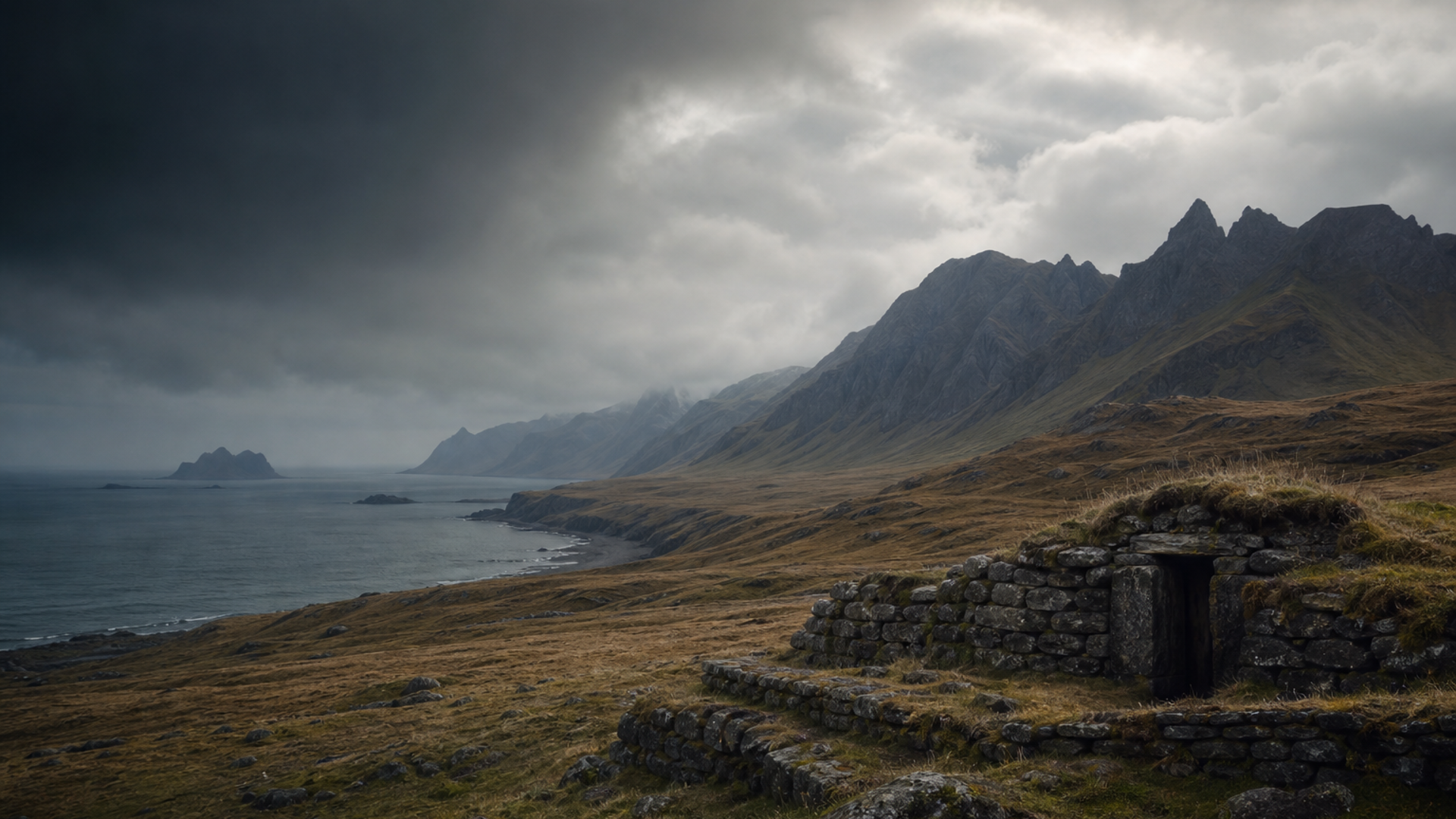
Archaeological remains from farms at Ingiridarstadir, Hofstadir, and Hringsdalur evoke a world of timbered longhouses, turf outbuildings, and hearth-centered domestic life. Zooarchaeological assemblages indicate mixed animal economy—sheep, cattle, and pigs—with seabirds and fish supplementing diets in coastal sites. Tools, spindle whorls, and weaving scraps speak to household production; carved bone and metalwork hint at status differences and regional tastes.
Longhouses served multifaceted roles: shelter, livestock wintering, and communal gathering. At Hofstadir, specialised feasting deposits and imported goods imply structures of social display and inter-regional exchange. Burial practices in this period are variable—from inhumation to dispersed ritual deposits—reflecting both Norse funerary traditions and local adaptation to Iceland’s environment.
Archaeological data indicates seasonal mobility was important: winter farm consolidation and summer outfield use for grazing and resource collection. Craft production, trade in iron and tools, and maritime navigation underpinned a resilient rural society negotiating scarce resources and long-distance connections.