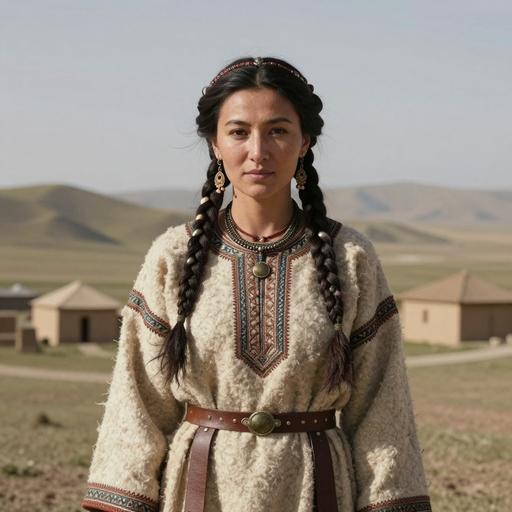
Whispers of the Steppe

下载的 PDF 是图像副本。如需可选中文本及更好的辅助技术支持,请使用打印功能。

Whispers of the Steppe

揭开一个失落的文明

正在加载考古记录……

正在收集古代记录

跳转到主内容
Whispers of the Steppe
文明焦点

Whispers of the Steppe

Horseborn nomads of the Scythian–Saka world across Central Asia

1499 BCE - 884 CE
Kyrgyzstan, Kazakhstan, Xinjiang (China), Russia
8 Ancient Samples
滚动开始
Chapter I

剧情

了解 Whispers of the Steppe 文化

Archaeological and genetic evidence from 92 Steppe_Nomads (1499 BCE–884 CE) reveals a mobile Scythian–Saka horizon across Xinjiang, Kazakhstan, Kyrgyzstan and Russia, showing west-east admixture and long-distance cultural networks.

Time Period

1499 BCE – 884 CE

Region

Kyrgyzstan, Kazakhstan, Xinjiang (China), Russia

Common Y-DNA

R (26), Q (10), J (10), E (2)

Common mtDNA

U (20), T (7), D (6), H (5), C (5)

Chapter II

时间线

这种文化历史上的关键时刻

700 BCE

Scythian–Saka cultural florescence

Material and genetic evidence point to a peak in Scythian/Saka social complexity and long-distance interactions across the steppe, reflected in rich kurgan burials and wide-ranging trade links.

Chapter III

Origins & Emergence

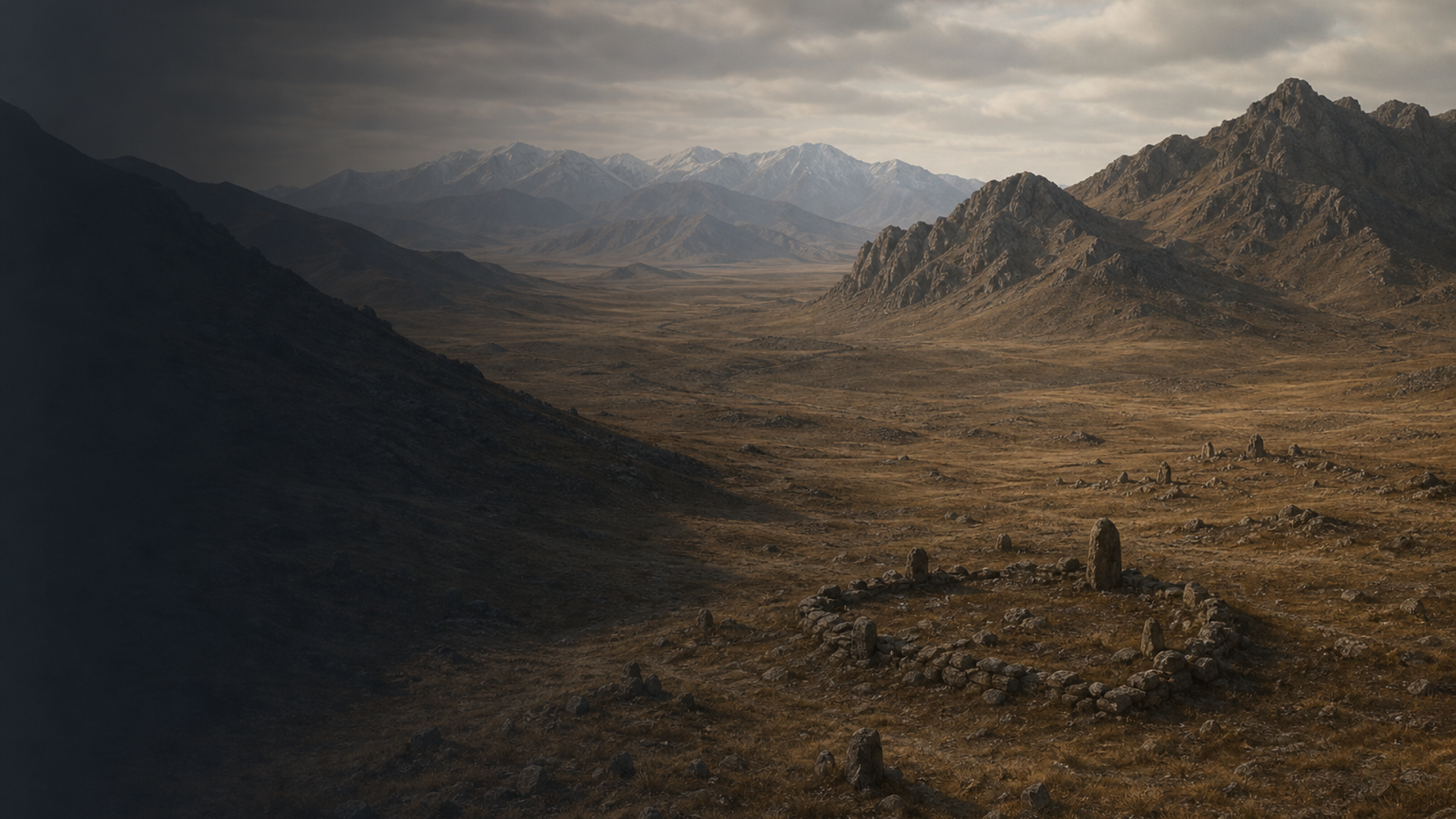
Across the wide, wind-carved grasslands, archaeological signals coalesce into the image of mobile mounted communities commonly grouped under Scythian and Saka labels. Beginning in the first millennium BCE and visible here between 1499 BCE and 884 CE, funerary mounds, weapon caches and horse gear from sites such as Bolati, Axile, Wutulan and the Chilpek burial mounds (Issyk‑Kul, Kyrgyzstan) map a network of pastoral nomadism and cultural exchange. Material culture — composite bows, bronze plaques, animal-style art — hints at shared identities that were flexible and regional.

Archaeological data indicates many of these communities practiced seasonal mobility with elite burial rites (kurgans) preserving rich grave goods. The geographic spread from the Yili and Aletai regions of Xinjiang into Kazakhstan and the southern Urals reflects sustained contact zones where steppe pastoralists, agro-pastoral communities and Silk Road caravans intersected. Limited evidence suggests local variation: some loci show stronger eastern material influences (Xinjiang sites), others more western steppe traits (Tasmola, Central Saka contexts in Kazakhstan). The archaeological record is uneven; many interpretations remain provisional where excavation or radiocarbon coverage is sparse.

  • Material culture unites wide geographic zone (kurgans, horse trappings, animal style art)
  • Key sites: Bolati, Axile, Wutulan (Xinjiang); Chilpek burial mounds (Issyk‑Kul)
  • Evidence shows regional variation and long-distance contacts along early Silk Road corridors
Chapter IV

Daily Life & Society

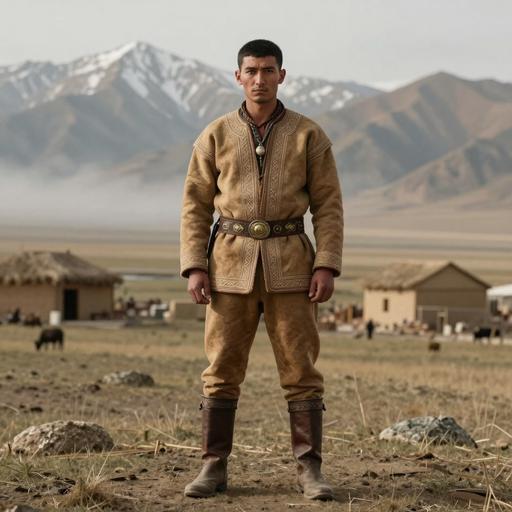
Life on the steppe was rhythm and motion: herds, hooves and seasonal camps. Archaeological remains — hearths, lightweight portable gear, and faunal assemblages — indicate economies based primarily on pastoralism (horses, sheep, goats, cattle), supplemented by hunting and traded cereals. Horse harness fragments and bit wear on horse teeth at multiple sites point to the centrality of mounted mobility for transport, raiding and status display.

Social organization appears hierarchical but flexible. Elaborate kurgan burials with weaponry and imported goods suggest warrior elites with far-reaching connections; simpler burials attest to lower-status pastoral households. Women’s graves often include distinctive ornamentation and craft tools, showing gendered roles that combined household, craft and possibly political functions. Archaeobotanical traces and trade items at Xinjiang sites indicate contact with oasis economies and Silk Road exchange, highlighting how these nomads both shaped and were shaped by sedentary neighbors. Preservation biases (funerary elites survive best) mean everyday household archaeology is less visible, so reconstructions rely on combining burial assemblages with sparse camp-site evidence.

  • Economy focused on mounted pastoralism with complementary hunting and trade
  • Kurgan burials reveal elite status differentiation; everyday life less archaeologically visible
Chapter V

Genetic Profile

Genetic data from 92 individuals spanning 1499 BCE to 884 CE provides a clearer picture of ancestry and mobility across the steppe. Y-chromosome markers are diverse: R is most common (26 instances), accompanied by Q (10), J (10) and a small number of E (2). Mitochondrial diversity likewise spans west and east Eurasian lineages: U (20), T (7), D (6), H (5) and C (5). This mix indicates repeated admixture between western steppe-associated males (R lineages often associated with broader Indo-European steppe ancestry) and eastern/Inner Asian maternal contributions (D, C), consistent with archaeological evidence for interaction zones.

The genetic pattern suggests a core West Eurasian steppe ancestry blended over time with eastern or Siberian components, particularly in Xinjiang sites (Bolati, Axile, Wutulan, Qiafuqihaishuiku) where eastern mtDNAs are more frequent. Haplogroup J and E occurrences point to gene flow from more southerly or Near Eastern sources, perhaps via trade networks or incorporation of diverse groups. While 92 samples give substantial resolution, geographic sampling is uneven—many specimens come from Xinjiang and Chilpek mounds—so regional conclusions should be treated cautiously. Where sample counts are low (<10) for particular sites or subperiods, interpretations remain preliminary and require more data.

  • Mixed west–east ancestry: predominant R Y-lineages with notable eastern mtDNA (D, C)
  • Presence of J and E hints at southern/Near Eastern contacts via trade or migration
Chapter VI

Legacy & Modern Connections

The Scythian–Saka horizon left a deep cultural and genetic imprint across Central Asia. Modern populations in Kazakhstan, Kyrgyzstan and Xinjiang carry echoes of this blended ancestry: traces of steppe-associated Y-lineages and a mosaic of mitochondrial types persist in varying frequencies. Artistic motifs, horse culture and burial practices influenced later nomadic polities such as the Sarmatians and contributed to the cultural repertoire of medieval Eurasian steppe societies.
Genetically, the steppe nomads exemplify how mobility knits populations together: repeated admixture events produced regional mosaics rather than uniform populations. Contemporary genetic links are complex and region-specific; archaeological continuity in ritual and horse pastoralism is clearer than direct one-to-one ancestry claims. Continued sampling from underrepresented sites and better temporal coverage will refine how these ancient threads connect to present-day genomes.

  • Modern Central Asian populations retain mixed signals reflecting steppe ancestry and regional admixture
  • Cultural traditions (horse culture, artistic motifs) influenced successive nomadic empires
Chapter VII

样本目录

8 份与 Whispers of the Steppe 文化相关的古 DNA 样本,为研究该时期的人群提供遗传线索。

8 / 8 samples
纵向 样本 国家 大纪元 日期 文化 性别 Y-DNA mtDNA
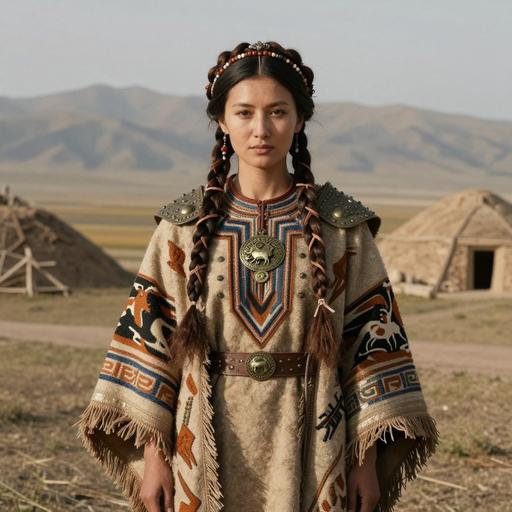
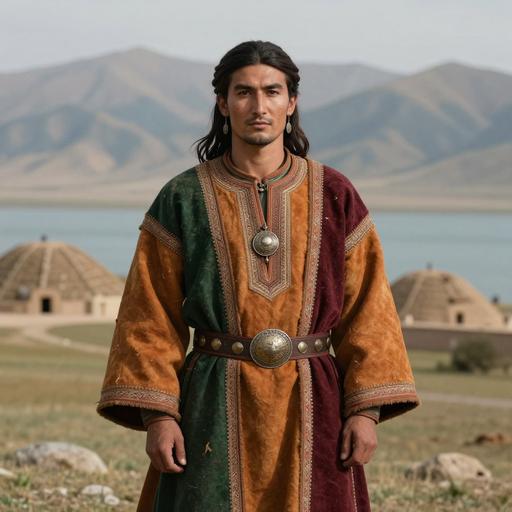
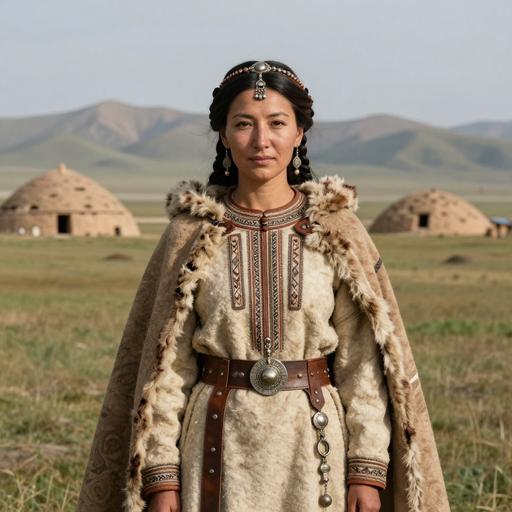
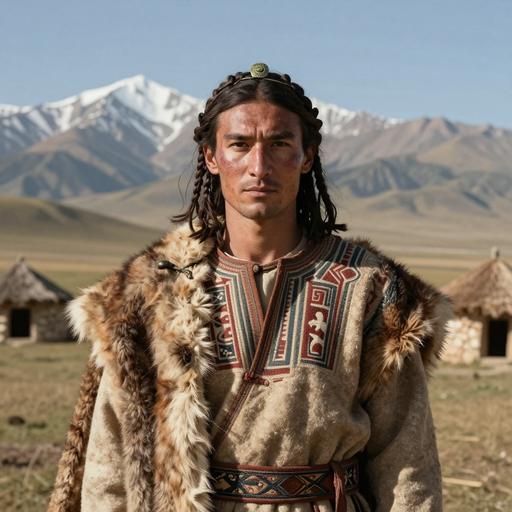
重建的肖像画 IA Saka individual, Kyrgyzstan
IA Saka individual, Kyrgyzstan
Kyrgyzstan Kyrgyzstan_Saka_IA 356-116 calBCE (2170±23 BP) Steppe Nomads M J-Z7449 A16
重建的肖像画 IA Saka individual, Kyrgyzstan
IA Saka individual, Kyrgyzstan
Kyrgyzstan Kyrgyzstan_Saka_IA 300 BCE - 100 CE Steppe Nomads F - U1a
重建的肖像画 IA Saka-o individual, Kyrgyzstan
IA Saka-o individual, Kyrgyzstan
Kyrgyzstan Kyrgyzstan_Saka_IA 709-884 calCE (1213±21 BP) Steppe Nomads M J-PH358 F1b1f
重建的肖像画 IA Saka individual, Kyrgyzstan
IA Saka individual, Kyrgyzstan
Kyrgyzstan Kyrgyzstan_Saka_IA 751-414 calBCE (2450±22 BP) Steppe Nomads F - -
重建的肖像画 IA Saka individual, Kyrgyzstan
IA Saka individual, Kyrgyzstan
Kyrgyzstan Kyrgyzstan_Saka_IA 400-1 BCE Steppe Nomads M R-Z2124 G2a3
重建的肖像画 IA Saka individual, Kyrgyzstan
IA Saka individual, Kyrgyzstan
Kyrgyzstan Kyrgyzstan_Saka_IA 540-397 calBCE (2386±22 BP) Steppe Nomads F - U4a1a
重建的肖像画 IA Saka individual, Kyrgyzstan
IA Saka individual, Kyrgyzstan
Kyrgyzstan Kyrgyzstan_Saka_IA 750-411 calBCE (2444±23 BP) Steppe Nomads F - U4a2
重建的肖像画 IA Saka individual, Kyrgyzstan
IA Saka individual, Kyrgyzstan
Kyrgyzstan Kyrgyzstan_Saka_IA 514-389 calBCE (2361±22 BP) Steppe Nomads F - H1
AI 电源

AI 助手

就 Whispers of the Steppe 文化提问

AI 助手 由DNAGENICS公司制作

解锁此特性
Ask questions about the Whispers of the Steppe culture. Our AI assistant can explain genetic findings, historical context, archaeological evidence, and modern connections.
AI 样本分析

Whispers of the Steppe 文化是人类历史中值得了解的一章……

遗传分析揭示了与早期种群的联系,同时显示了独特的适应和文化创新的证据。 古代DNA样本提供了对迁徙模式、社会结构以及古代种群之间的生物关系的深刻见解。

这是人工智能分析的预览。 解锁全AI 助手, 以探索关于:

  • 遗传组成和祖先
  • 移徙模式和起源
  • 日常生活和文化习俗
  • 现代遗传遗产

探索更古老的文化

揭开古代世界文明的故事

使用优惠码 可减免 35% • 11月12日 到期