Zhagunluke Iron-Age Oasis

下载的 PDF 是图像副本。如需可选中文本及更好的辅助技术支持,请使用打印功能。

Zhagunluke Iron-Age Oasis

揭开一个失落的文明

正在加载考古记录……

正在收集古代记录

跳转到主内容
Zhagunluke Iron-Age Oasis
文明焦点

Zhagunluke Iron-Age Oasis

A frontier community in the eastern Tarim Basin where steppe and oasis lineages met

541 CE - 8 BCE
Zhagunluke, Qiemo County, Xinjiang, China
滚动开始
Chapter I

剧情

了解 Zhagunluke Iron-Age Oasis 文化

Iron Age community at Zhagunluke (Qiemo, Xinjiang), 541–8 BCE. Archaeology and DNA (16 individuals) reveal substantial West Eurasian paternal R lineages and diverse maternal H/T/N haplogroups, indicating frontier interaction across the Eurasian steppe and Tarim corridors.

Time Period

541–8 BCE

Region

Zhagunluke, Qiemo County, Xinjiang, China

Common Y-DNA

R (8 of 16 samples)

Common mtDNA

H (3), T (3), N (2), R (1), HV (1)

Chapter II

时间线

这种文化历史上的关键时刻

541 BCE

Early dated contexts at Zhagunluke

Radiocarbon-calibrated contexts mark human activity at Zhagunluke beginning around 541 BCE, placing the site in the Iron Age frontier of the Tarim Basin.

Chapter III

Origins & Emergence

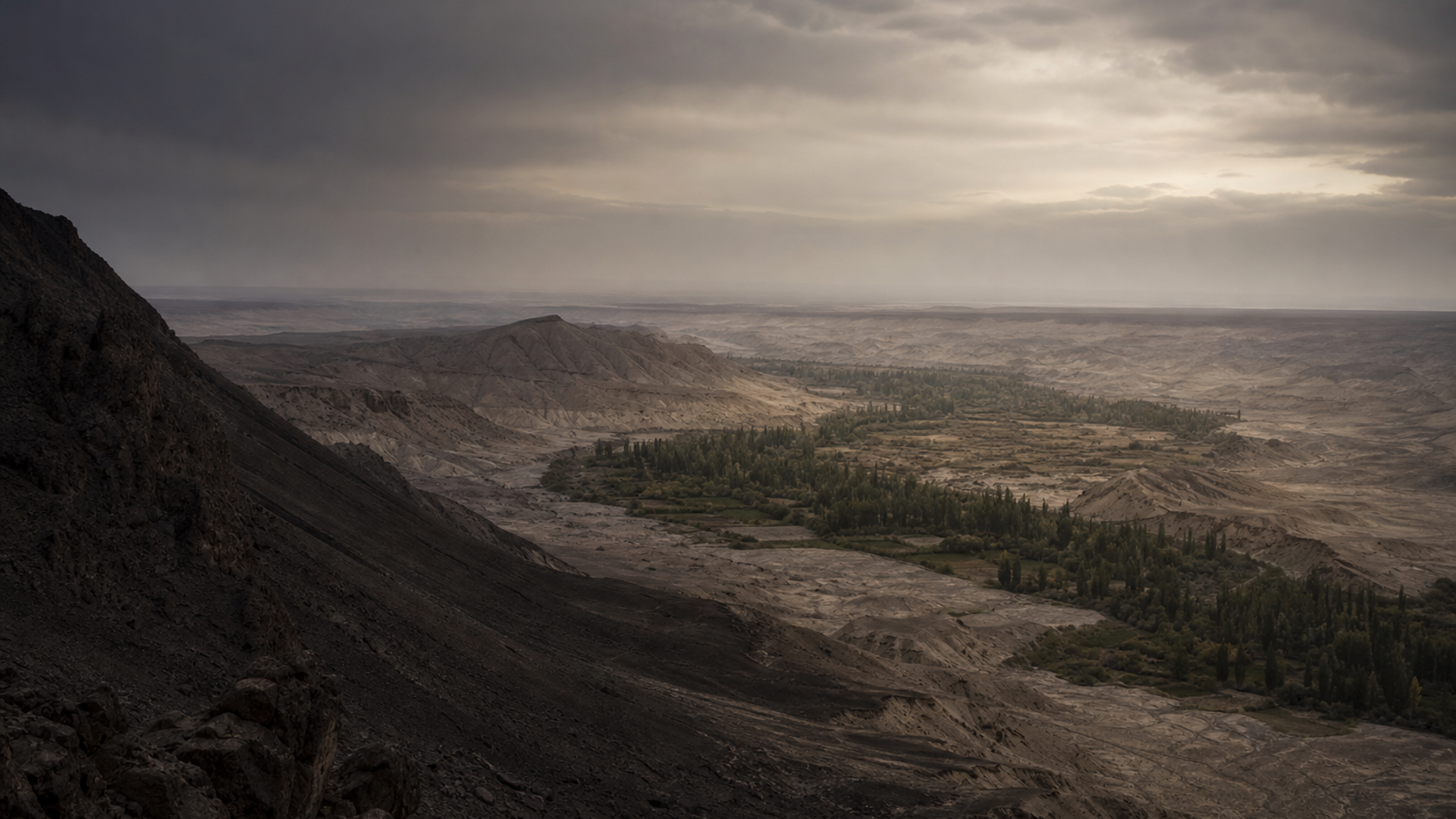
Archaeological excavations at Zhagunluke (also spelled Zaghunluq) in Qiemo County, Bayinguoleng Region, place human activity firmly in the Iron Age, with radiocarbon-calibrated contexts dated between 541 and 8 BCE. The site occupies an ecological threshold — the eastern fringe of the Taklamakan Desert where oasis settlements met mobile steppe groups. Stratigraphy and burial contexts indicate a community shaped by trans-Eurasian contact: material culture and grave assemblages show influences that can be traced along north–south and east–west trade corridors.

Genetic sampling (16 individuals) provides an archaeological complement: paternal lineages show a strong presence of haplogroup R, a marker frequently associated with West Eurasian and steppe-derived ancestries. Maternal lineages include H, T, N, R, and HV, many of which have broad West Eurasian or Eurasian distributions. These data are consistent with a scenario in which Zhagunluke emerges as a frontier population formed through admixture between local east Eurasian groups and incoming or connected western-derived groups.

Limited evidence cautions against overreach: while the genetic signal is clear in parts, the sample set is modest and spatially constrained. Archaeological data indicate a dynamic place of encounter rather than a single, homogeneous population. Further excavations and denser sampling across the Tarim Basin are needed to resolve finer-grained origins and migration pathways.

  • Site located at Zhagunluke (Qiemo County), eastern Tarim Basin
  • Radiocarbon dates: 541–8 BCE (Iron Age contexts)
  • Evidence points to admixture between steppe-linked and local lineages
Chapter IV

Daily Life & Society

The landscape around Zhagunluke would have been a mosaic of irrigated oasis, seasonal pastures, and desert margins. Archaeological remains from the region suggest communities practiced mixed economies: small-scale agriculture and horticulture in oasis plots, combined with herding of sheep, goats, and potentially horses or other mobile-stock managed across nearby steppe and desert steppe. Artefactual indicators — from ceramic styles to metalworking debris — hint at craft specialization alongside household production, with goods moving along routes that would later become part of the Silk Road network.

Social life at Zhagunluke likely reflected its frontier status. Burial practices show variability that may record differences in ancestry, wealth, or social role. The presence of western-associated genetic markers alongside local traditions suggests households or lineages that maintained long-distance ties, marriage exchange, and mobility. Seasonal cycles — planting, herding, caravan movement — would structure daily rhythms, while communal burial grounds and shared ritual spaces anchored local identities.

Archaeological data indicates a community adapted to marginal environments, resilient to climatic shifts and connected to wider Eurasian exchange. However, direct evidence for specific crafts, trade goods, or social institutions remains incomplete; many inferences rely on regional comparison and should be treated as provisional.

  • Mixed oasis agriculture and mobile pastoralism likely sustained the community
  • Burial variability may reflect social and ancestral heterogeneity
Chapter V

Genetic Profile

The genetic dataset from Zhagunluke comprises 16 analyzed individuals dated to 541–8 BCE. A striking feature is the prevalence of Y-chromosome haplogroup R in 8 of 16 males, indicating that roughly half of the male lineages sampled derive from a lineage commonly found across West Eurasia and often linked to Steppe-related populations. On the maternal side, reported mtDNA haplogroups include H (3), T (3), N (2), R (1), and HV (1). These maternal lineages are likewise common across western and central Eurasia, though several also have broader pan-Eurasian distributions.

Taken together, the uniparental markers point to significant West Eurasian genetic contributions at Zhagunluke, especially in paternal ancestry. This pattern is consistent with archaeological interpretations of the Tarim corridor as a crossroads where people, goods, and ideas flowed between the steppe and oasis worlds. However, caution is warranted: mtDNA counts listed here cover 10 individuals; the remaining samples may include additional lineages not summarized in this set or incomplete preservational coverage. Autosomal genome-wide data would better quantify admixture proportions and directionality, but current uniparental signals already suggest sex-biased processes — potentially male-mediated movements or patrilocal residence patterns — that influenced local gene pools.

Because the total sample is modest and geographically specific, conclusions about population-wide dynamics across Xinjiang should remain tentative. Further aDNA sampling, combined with broader comparative datasets, will refine interpretations of migration, marriage networks, and the tempo of admixture across the Tarim Basin.

  • Y-DNA: R predominant (8/16), suggesting substantial West Eurasian paternal input
  • mtDNA diversity (H, T, N, R, HV) points to mixed maternal ancestries with West Eurasian affinities
Chapter VI

Legacy & Modern Connections

Zhagunluke stands as a tangible chapter in the story of Eurasian connectivity. The genetic and archaeological traces from this Iron Age oasis illustrate how populations at the margins of the Taklamakan contributed to the deep tapestry of human movement across the continent. Modern populations in Xinjiang display varying degrees of West and East Eurasian ancestry; while Zhagunluke individuals are not direct ancestors of any single modern group, they exemplify intermediate communities that helped shape regional diversity through admixture and cultural exchange.

Researchers should treat direct lines of descent with care: genetic continuity is complex, and centuries of later migrations — including Han, Turkic, and Mongolic movements — reshaped the genetic landscape. Nonetheless, Zhagunluke provides critical evidence that western-associated lineages were present in the eastern Tarim Basin by the Iron Age, informing models of prehistoric contact that eventually underpinned Silk Road dynamics. Continued interdisciplinary work will illuminate how these early frontier communities echo in the genetic and cultural makeup of later populations.

  • Illustrates early West–East Eurasian interactions in the Tarim Basin
  • Not a direct ancestor to any single modern group; instead part of complex regional admixture
AI 电源

AI 助手

就 Zhagunluke Iron-Age Oasis 文化提问

AI 助手 由DNAGENICS公司制作

解锁此特性
Ask questions about the Zhagunluke Iron-Age Oasis culture. Our AI assistant can explain genetic findings, historical context, archaeological evidence, and modern connections.
AI 样本分析

Zhagunluke Iron-Age Oasis 文化是人类历史中值得了解的一章……

遗传分析揭示了与早期种群的联系,同时显示了独特的适应和文化创新的证据。 古代DNA样本提供了对迁徙模式、社会结构以及古代种群之间的生物关系的深刻见解。

这是人工智能分析的预览。 解锁全AI 助手, 以探索关于:

  • 遗传组成和祖先
  • 移徙模式和起源
  • 日常生活和文化习俗
  • 现代遗传遗产

探索更古老的文化

揭开古代世界文明的故事

使用优惠码 可减免 35% • 11月12日 到期