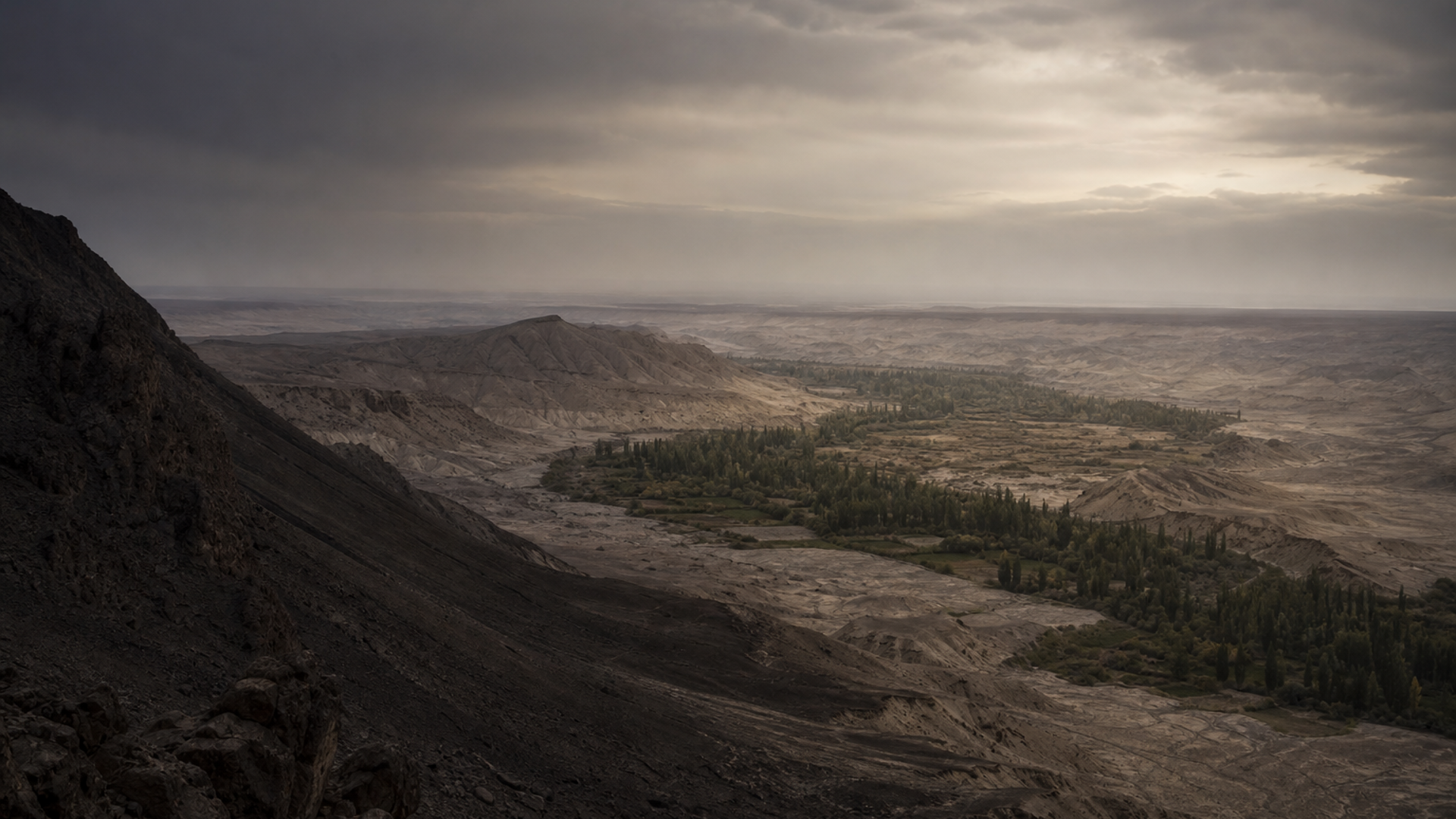
The genetic dataset from Zhagunluke comprises 16 analyzed individuals dated to 541–8 BCE. A striking feature is the prevalence of Y-chromosome haplogroup R in 8 of 16 males, indicating that roughly half of the male lineages sampled derive from a lineage commonly found across West Eurasia and often linked to Steppe-related populations. On the maternal side, reported mtDNA haplogroups include H (3), T (3), N (2), R (1), and HV (1). These maternal lineages are likewise common across western and central Eurasia, though several also have broader pan-Eurasian distributions.
Taken together, the uniparental markers point to significant West Eurasian genetic contributions at Zhagunluke, especially in paternal ancestry. This pattern is consistent with archaeological interpretations of the Tarim corridor as a crossroads where people, goods, and ideas flowed between the steppe and oasis worlds. However, caution is warranted: mtDNA counts listed here cover 10 individuals; the remaining samples may include additional lineages not summarized in this set or incomplete preservational coverage. Autosomal genome-wide data would better quantify admixture proportions and directionality, but current uniparental signals already suggest sex-biased processes — potentially male-mediated movements or patrilocal residence patterns — that influenced local gene pools.
Because the total sample is modest and geographically specific, conclusions about population-wide dynamics across Xinjiang should remain tentative. Further aDNA sampling, combined with broader comparative datasets, will refine interpretations of migration, marriage networks, and the tempo of admixture across the Tarim Basin.