Menu
Store
Blog
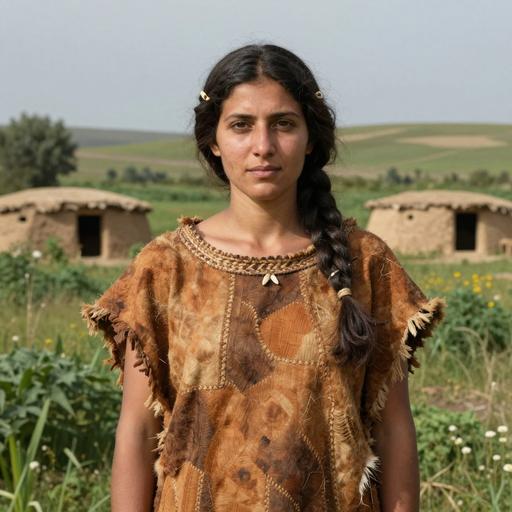
Portrait reconstruction of Bon005
Ancient Individual

A woman buried in Turkey in the Neolithic era

Bon005
8300 BCE - 8240 BCE
Female
Neolithic Turkey
Turkey
Scroll to begin
Chapter I

Identity

The biological and cultural markers that define this ancient individual

Sample ID

Bon005

Date Range

8300 BCE - 8240 BCE

Biological Sex

Female

mtDNA Haplogroup

N1a1a1

Cultural Period

Neolithic Turkey

Chapter II

Place

Where this individual was discovered

Country Turkey
Locality Boncuklu
Coordinates 37.7519, 32.8649
Chapter III

Time

When this individual lived in the broader context of human history

Bon005 8300 BCE - 8240 BCE
Chapter IV

Story

The narrative of this ancient life

The Neolithic era in Turkey, particularly at sites like Boncuklu, represents a fascinating period of transition in the Ancient Near Eastern civilization. This era, generally spanning from around 10,000 to 6,500 BCE, marks the shift from nomadic hunter-gatherer societies to more settled, agrarian-based communities. This transformation set the stage for the development of complex societies and eventually, urban civilizations in the region.

Geography and Environment

During the Neolithic period, the area that is now modern-day Turkey provided a diverse landscape that was conducive to the development of various early settlements. The region featured fertile plains, river valleys, and semi-arid uplands, ideal for agriculture and animal domestication. The climatic conditions during this period were relatively stable and became increasingly favorable for the cultivation of cereals and legumes, as well as for the domestication of animals like sheep, goats, and cattle.

Cultural and Technological Developments

  1. Agriculture and Domestication: The Neolithic inhabitants of Turkey were among the first in the world to practice agriculture, cultivating crops such as wheat, barley, lentils, and peas. Evidence suggests that they engaged in selective breeding of plants and animals, contributing to a more reliable and sustainable food supply.

  2. Settlement Patterns: The establishment of permanent settlements was a hallmark of this era. Villages consisted of mudbrick houses, often rectangular in design, suggesting an increasing degree of architectural planning and social organization. Boncuklu, like other Neolithic sites in Turkey, shows evidence of tightly clustered housing, implying a close-knit community structure.

  3. Social Organization and Craftsmanship: The material culture of these Neolithic peoples reflects their societal values and structure. Artifacts such as intricately crafted obsidian tools, pottery, and personal ornaments indicate a burgeoning sense of identity and social complexity. The community likely had some form of social stratification, suggested by differential access to certain goods and resources.

  4. Art and Symbolism: Artwork from this period often includes figurines, carvings, and painted motifs, reflecting the spiritual and ritualistic aspects of Neolithic life. Such artifacts suggest a rich belief system, possibly revolving around fertility, nature deities, and ancestor worship.

  5. Trade and Communication: The Neolithic era in Turkey was characterized by emerging trade networks, facilitated by the exchange of goods such as obsidian and other exotic materials. These networks are indicative of communication and cultural interaction with neighboring regions.

  6. Technological Innovations: The Neolithic period saw significant technological advancements, including the development of polished stone tools, early pottery, and textile production. These innovations contributed to improved efficiency in daily tasks and the overall quality of life.

Ritual Practices and Beliefs

Rituals and spiritual beliefs played a central role in Neolithic societies. At sites like Boncuklu, archaeologists have uncovered evidence of complex burial practices, including the interment of individuals beneath house floors. Such practices may have been tied to notions of kinship, ancestry, and the afterlife. Additionally, communal spaces and shrines suggest the presence of collective rituals, possibly linked to agricultural cycles and community cohesion.

Legacy and Impact

The Neolithic period in Turkey laid the groundwork for later cultural and technological developments that shaped the trajectory of human civilization in the Near East. By mastering agriculture, these early communities enabled population growth and the eventual rise of urban centers. Moreover, their innovations in tool-making, pottery, and social organization set precedents that influenced subsequent cultures in the region.

Overall, Neolithic Turkey was a crucible of innovation and cultural development that played a pivotal role in the broader narrative of human history. The archaeological evidence from this era provides invaluable insights into the lives, beliefs, and advancements of our early ancestors, who set humanity on a path towards complex civilizations.

Chapter V

Context

Other ancient individuals connected to this sample

Sources

References

Scientific publications and genetic data

Scientific Publication

The Demographic Development of the First Farmers in Anatolia

Authors Kılınç GM, Omrak A, Özer F
Abstract

The archaeological documentation of the development of sedentary farming societies in Anatolia is not yet mirrored by a genetic understanding of the human populations involved, in contrast to the spread of farming in Europe [1-3]. Sedentary farming communities emerged in parts of the Fertile Crescent during the tenth millennium and early ninth millennium calibrated (cal) BC and had appeared in central Anatolia by 8300 cal BC [4]. Farming spread into west Anatolia by the early seventh millennium cal BC and quasi-synchronously into Europe, although the timing and process of this movement remain unclear. Using genome sequence data that we generated from nine central Anatolian Neolithic individuals, we studied the transition period from early Aceramic (Pre-Pottery) to the later Pottery Neolithic, when farming expanded west of the Fertile Crescent. We find that genetic diversity in the earliest farmers was conspicuously low, on a par with European foraging groups. With the advent of the Pottery Neolithic, genetic variation within societies reached levels later found in early European farmers. Our results confirm that the earliest Neolithic central Anatolians belonged to the same gene pool as the first Neolithic migrants spreading into Europe. Further, genetic affinities between later Anatolian farmers and fourth to third millennium BC Chalcolithic south Europeans suggest an additional wave of Anatolian migrants, after the initial Neolithic spread but before the Yamnaya-related migrations. We propose that the earliest farming societies demographically resembled foragers and that only after regional gene flow and rising heterogeneity did the farming population expansions into Europe occur.

Use code for 40% off Expires Feb 27