Menu
Store
Blog
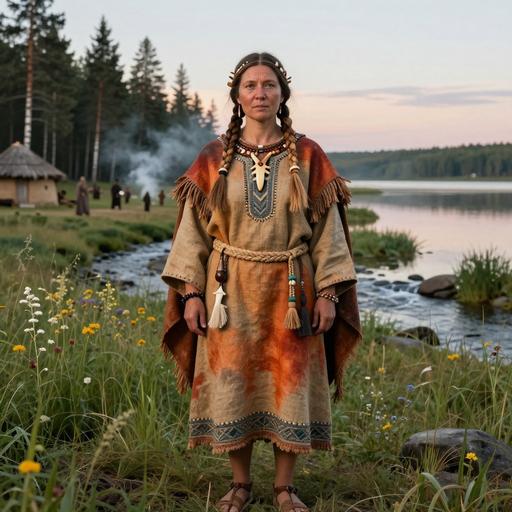
Portrait reconstruction of DA249
Ancient Individual

A woman buried in Russia in the Early Neolithic era

DA249
5987 BCE - 5782 BCE
Female
Eneolithic Shamanka, Russia
Russia
Scroll to begin
Chapter I

Identity

The biological and cultural markers that define this ancient individual

Sample ID

DA249

Date Range

5987 BCE - 5782 BCE

Biological Sex

Female

mtDNA Haplogroup

C4

Cultural Period

Eneolithic Shamanka, Russia

Chapter II

Place

Where this individual was discovered

Country Russia
Locality Shamanka II
Chapter III

Time

When this individual lived in the broader context of human history

DA249 5987 BCE - 5782 BCE
Chapter IV

Story

The narrative of this ancient life

The Eneolithic period, also known as the Chalcolithic or Copper Age, marks a fascinating transitional era from the late Neolithic to the early Bronze Age, characterized by the first usage of metal to complement traditional stone tool technology. The Eneolithic Shamanka culture of Siberia is an intriguing example of this period, highlighting the life, technologies, and cultural practices of Siberian hunter-gatherers.

Geographic and Temporal Context

Situated predominantly around the southern region of Siberia, particularly near Lake Baikal, the Shamanka culture thrived approximately between 4000 and 3000 BCE. This region is characterized by its diverse and rich ecosystems, including vast forests, steppes, and freshwater lake systems, which provided the necessary resources for the survival of these ancient communities. Climatic conditions during this period were relatively stable, providing some level of predictability in resource availability, which the Shamanka inhabitants exploited efficiently.

Subsistence and Economy

The Shamanka culture, like its contemporaries, relied heavily on a hunter-gatherer economy, supplemented by rudimentary forms of fishing and small-scale agriculture. The abundance of wildlife, including deer, elk, and smaller mammals, along with a rich diversity of fish species in Lake Baikal, constituted the primary sources of protein. In addition, foraging for wild plants, nuts, and berries provided essential vitamins and minerals, balancing their diet.

Fishing played a critical role in their subsistence strategy, and they developed specialized tools like fish hooks and spears made from both bone and emerging copper technology. The gradual incorporation of copper tools represents a significant technological advancement, making hunting and gathering more efficient and influencing their continued reliance on natural resources.

Settlement Patterns

Eneolithic Shamanka societies were semi-nomadic, with patterns of movement dictated by seasonal availability of resources. Settlements were often established along riverbanks or lakeshores, enabling easy access to fishing grounds and freshwater resources. These settlements typically consisted of semi-permanent structures made with organic materials such as wood, animal hides, and thatch.

Archaeological evidence suggests that some Shamanka groups may have had designated areas for pottery production, storage, and possibly communal activities, indicating an early form of social organization and labor division. The development and use of pottery are significant, not just as a utilitarian object but also reflecting the culture’s artistic expression and technological progression.

Technology and Craftsmanship

The Eneolithic era is marked by the nascent use of metal, with the Shamanka culture showing some of the earliest evidence of copper working in Siberia. Artifacts include simple copper tools, which complemented existing stone implements, leading to more versatile toolkits. The Shamanka is also noted for its refined bone and antler tools, which exhibit expert craftsmanship and an intimate understanding of material properties.

Pottery is another hallmark of the Shamanka culture, often decorated with incised or impressed patterns. The pottery styles demonstrate not only functional utility but also reveal aesthetic preferences and potential symbolic or ritualistic uses.

Social Structure and Cultural Practices

The social structure of the Eneolithic Shamanka culture likely revolved around kinship ties and small family groups or clans, typical of hunter-gatherer societies. Evidence of burial practices suggests a certain degree of social stratification or differential status, possibly based on age, gender, or individual accomplishments.

Burial sites provide an invaluable glimpse into their spiritual and cultural life. The presence of grave goods, ranging from personal ornaments to utilitarian items, suggests beliefs in an afterlife or ancestor veneration practices. Some burials exhibit elaborate arrangements, hinting at ceremonial roles or status distinctions within the society.

Religion and Rituals

The Shamanka culture, like many hunter-gatherer societies, probably had animistic beliefs, where natural objects, flora, fauna, and environmental elements were imbued with spiritual significance. Shamanka artifacts, such as carved figurines and zoomorphic motifs, indicate a rich symbolic tradition possibly tied to shamanistic practices.

Rituals may have been closely linked to hunting cycles, fertility, and seasonal changes, reflecting their deep interconnectedness with nature. Of particular interest are potential ceremonial sites, recognizable by their peculiar layout and associated artifacts, which may have hosted community gatherings or rituals to ensure successful hunts or bountiful harvests.

Conclusion

The Eneolithic Shamanka culture of Siberia represents a crucial phase in human prehistory where traditional hunter-gatherer lifeways began evolving with the advent of metallurgy and increased social complexity. Their ability to adapt and innovate in response to their environment exemplifies human resilience and ingenuity, laying foundational patterns for subsequent cultural developments in the region. As ongoing archaeological research continues to unravel the mysteries of the Shamanka culture, each discovery contributes to a better understanding of the intricate dynamics of ancient Siberian communities.

Chapter V

Genetics

The genetic ancestry of this ancient individual

Ancient Genetic Admixture

This analysis compares the DNA profile of DA249 with ancient reference populations, showing the genetic composition in terms of prehistoric ancestral groups.

Ancient Asians 100.0%

Modern Genetic Admixture

This analysis compares the DNA profile with present-day reference populations, showing what percentage of genetic makeup resembles modern populations from different regions.

Asia 97.8%
Northern Asian 77.8%
Mongolian 40.6%
Siberian 37.2%
Japanese & Korean 16.2%
Japanese 16.2%
Chinese & Southeast Asian 3.8%
Tibetan 3.8%
America 2.2%
America 2.2%
Native American 2.2%

Closest Modern Populations

These are the modern populations showing the closest statistical alignment to A woman buried in Russia in the Early Neolithic era, ranked by genetic distance. Lower distance values indicate closer statistical similarity.

1
Negidal
4.4845
2
Ulchi
5.1664
3
Nanai
5.4442
4
Oroqen
6.6986
5
Nivkh
7.2128
6
Khamnegan
7.4911
7
Yukagir Tundra
9.1035
8
Evenk O
9.4807
9
Buryat
9.8493
10
Yukagir
10.1254
Chapter VI

Context

Other ancient individuals connected to this sample

Sources

References

Scientific publications and genetic data

Scientific Publication

The first horse herders and the impact of early Bronze Age steppe expansions into Asia

Authors de Barros Damgaard P, Martiniano R, Kamm J
Abstract

The Yamnaya expansions from the western steppe into Europe and Asia during the Early Bronze Age (~3000 BCE) are believed to have brought with them Indo-European languages and possibly horse husbandry. We analyzed 74 ancient whole-genome sequences from across Inner Asia and Anatolia and show that the Botai people associated with the earliest horse husbandry derived from a hunter-gatherer population deeply diverged from the Yamnaya. Our results also suggest distinct migrations bringing West Eurasian ancestry into South Asia before and after, but not at the time of, Yamnaya culture. We find no evidence of steppe ancestry in Bronze Age Anatolia from when Indo-European languages are attested there. Thus, in contrast to Europe, Early Bronze Age Yamnaya-related migrations had limited direct genetic impact in Asia.

G25 Coordinates

The G25 coordinates for sample DA249 can be used for detailed admixture analysis in our G25 Studio tool.

DA249,0.03638534,-0.42550744,0.09639392,-0.0251218,-0.08083212,-0.04863332,0.00972084,0.01216152,0.01088456,0.01212164,0.00545736,0.00206258,-0.00064622,-0.00252148,-0.01515808,-0.0159985,-0.0075671,0.01101802,0.02089258,0.01170844,0.0236804,-0.0289893,0.00198932,0.00654474,0.0145936
Analyze in G25 Studio
Use code for 40% off Expires Feb 27