Menu
Store
Blog
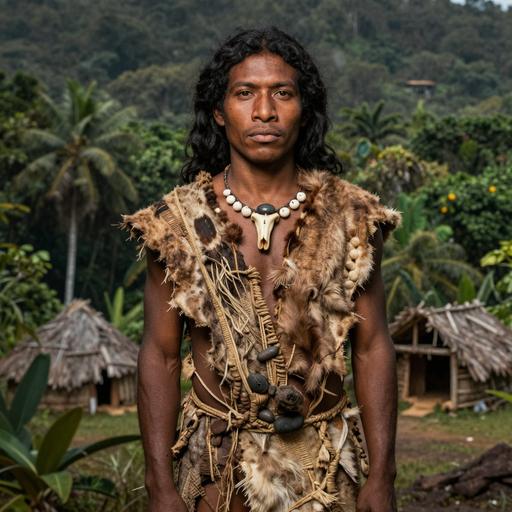
Portrait reconstruction of I18320
Ancient Individual

A man buried in Dominican Republic in the Archaic era

I18320
1300 BCE - 200 CE
Male
Dominican Preceramic
Dominican Republic
Scroll to begin
Chapter I

Identity

The biological and cultural markers that define this ancient individual

Sample ID

I18320

Date Range

1300 BCE - 200 CE

Biological Sex

Male

mtDNA Haplogroup

D4

Y-DNA Haplogroup

Not available

Cultural Period

Dominican Preceramic

Chapter II

Place

Where this individual was discovered

Country Dominican Republic
Locality Cueva Roja (southern DR, Pedernales)
Chapter III

Time

When this individual lived in the broader context of human history

I18320 1300 BCE - 200 CE
Chapter IV

Story

The narrative of this ancient life

The Dominican Preceramic era is a fascinating period in the prehistory of the Dominican Republic, characterized by the absence of pottery and the presence of indigenous communities who lived on the island of Hispaniola before the advent of ceramic technology. This era is a part of the larger Caribbean Preceramic period, and understanding it provides valuable insights into the early human occupation and cultural development in the region.

Time Frame

The Preceramic period in the Dominican Republic is generally dated to around 6000 BCE to 2000 BCE. However, specific dates can vary based on different archaeological interpretations and evidence. During this time, human groups began to settle in the Caribbean, bringing with them distinct cultural practices that adapted to the island environment.

Cultural Characteristics

  1. Subsistence and Economy:

    • The Preceramic peoples were primarily foragers and hunters, relying heavily on the rich marine resources available to them. Shellfish, fish, and sea mammals formed a significant part of their diet.
    • They also exploited terrestrial resources, including hunting small game such as hutias (a type of rodent) and gathering available plant materials, nuts, and fruits.
  2. Tools and Technology:

    • The absence of pottery is a defining characteristic, with a reliance on stone tools and organic materials.
    • Lithic technology included simple flake tools made from chert or other locally available stones. These tools were used for cutting, scraping, and processing food.
    • Bone and shell were also used to create tools and decorative items like beads.
  3. Settlement Patterns:

    • Archaeological evidence suggests that Preceramic peoples lived in small, semi-permanent settlements near coastal areas, estuaries, and rivers.
    • Caves and rock shelters were also common habitation sites, providing natural protection and resources.
  4. Social Organization:

    • While specific details about their social structure remain speculative, it is likely that Preceramic communities were organized in small kin-based groups, with a focus on cooperative survival strategies.
    • The exchange of resources and materials between groups suggests some level of social interaction and trade networks.
  5. Art and Symbolism:

    • There is limited evidence of artistic expression during this period, but some engraved stones and shells indicate an early form of symbolic or artistic activity.
    • These artifacts might have served ritualistic purposes or played roles in societal status and identity.
  6. Migration and Adaptation:

    • The Dominican Preceramic culture is linked to broader migration patterns in the Caribbean. It is believed that these early groups arrived from the mainland South America, moving through the Antillean arc.
    • Adaptation to island life required changes in subsistence strategies and toolmaking techniques, setting the stage for future cultural developments.

Archaeological Evidence

Archaeologists have uncovered several Preceramic sites across the Dominican Republic, such as those in the provinces of La Romana, Samaná, and Monte Cristi. These sites provide crucial evidence of the tools, diet, and living conditions of these early inhabitants. Studies of these sites continue to evolve, offering new understandings of the Preceramic way of life.

Significance and Legacy

The Dominican Preceramic era represents the dawn of human history in the Caribbean, laying the groundwork for the subsequent Ceramic Age cultures like the Taíno. Understanding this era deepens our comprehension of human adaptation and resilience in new environments, and it underscores the dynamic interactions between human societies and their ecosystems long before European contact.

In summary, the Dominican Preceramic era is a pivotal chapter in Caribbean prehistory, characterized by unique adaptations to island living and a rich yet enigmatic legacy that continues to intrigue archaeologists and historians today.

Chapter V

Context

Other ancient individuals connected to this sample

Sources

References

Scientific publications and genetic data

Scientific Publication

A genetic history of the pre-contact Caribbean

Authors Fernandes DM, Sirak KA, Ringbauer H
Abstract

Humans settled the Caribbean about 6,000 years ago, and ceramic use and intensified agriculture mark a shift from the Archaic to the Ceramic Age at around 2,500 years ago1-3. Here we report genome-wide data from 174 ancient individuals from The Bahamas, Haiti and the Dominican Republic (collectively, Hispaniola), Puerto Rico, Curaçao and Venezuela, which we co-analysed with 89 previously published ancient individuals. Stone-tool-using Caribbean people, who first entered the Caribbean during the Archaic Age, derive from a deeply divergent population that is closest to Central and northern South American individuals; contrary to previous work4, we find no support for ancestry contributed by a population related to North American individuals. Archaic-related lineages were >98% replaced by a genetically homogeneous ceramic-using population related to speakers of languages in the Arawak family from northeast South America; these people moved through the Lesser Antilles and into the Greater Antilles at least 1,700 years ago, introducing ancestry that is still present. Ancient Caribbean people avoided close kin unions despite limited mate pools that reflect small effective population sizes, which we estimate to be a minimum of 500-1,500 and a maximum of 1,530-8,150 individuals on the combined islands of Puerto Rico and Hispaniola in the dozens of generations before the individuals who we analysed lived. Census sizes are unlikely to be more than tenfold larger than effective population sizes, so previous pan-Caribbean estimates of hundreds of thousands of people are too large5,6. Confirming a small and interconnected Ceramic Age population7, we detect 19 pairs of cross-island cousins, close relatives buried around 75 km apart in Hispaniola and low genetic differentiation across islands. Genetic continuity across transitions in pottery styles reveals that cultural changes during the Ceramic Age were not driven by migration of genetically differentiated groups from the mainland, but instead reflected interactions within an interconnected Caribbean world1,8.

Use code for 40% off Expires Feb 27