Menu
Store
Blog
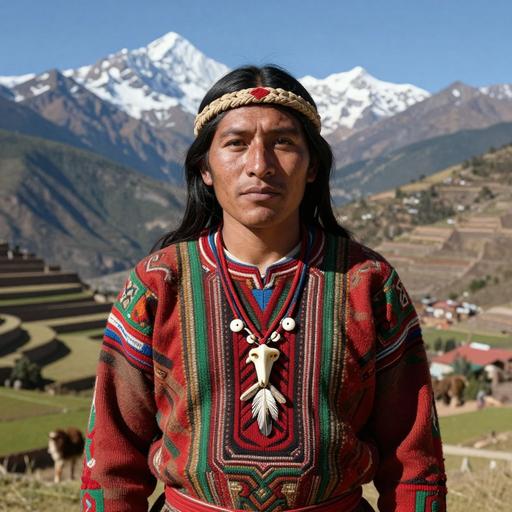
Portrait reconstruction of I2236
Ancient Individual

A man buried in Peru in the Pre-Columbian South America era

I2236
1200 CE - 1400 CE
Male
Late Intermediate Period Chanka Culture, Peru
Peru
Scroll to begin
Chapter I

Identity

The biological and cultural markers that define this ancient individual

Sample ID

I2236

Date Range

1200 CE - 1400 CE

Biological Sex

Male

mtDNA Haplogroup

D1f

Y-DNA Haplogroup

Q-Z5907

Cultural Period

Late Intermediate Period Chanka Culture, Peru

Chapter II

Place

Where this individual was discovered

Country Peru
Locality Chanka
Chapter III

Time

When this individual lived in the broader context of human history

I2236 1200 CE - 1400 CE
Chapter IV

Story

The narrative of this ancient life

The Chanka culture, which thrived during the Late Intermediate Period (LIP) of Andean civilizations (circa 1000 to 1450 AD), is a significant yet often less understood chapter in the rich tapestry of pre-Columbian Peru. Centered in the central highlands of present-day Peru, particularly around the regions of Apurímac and Ayacucho, the Chanka were a formidable and resilient society known for their martial prowess and complex social structures.

Geography and Settlement

The Chanka territory was characterized by its rugged Andean landscapes, with high-altitude valleys and mountains defining much of the region’s topography. This geographical setting not only influenced their lifestyle and culture but also provided strategic advantages in their military endeavors. Urban centers and fortifications were often strategically placed on hilltops, providing a strong defensive advantage against invaders and rival groups.

Social and Political Structure

The society of the Chanka was organized into a hierarchical system with a centralized authority believed to be composed of warrior-chiefs. This structure was likely supported by a network of alliances and kinship ties between various tribes and clans within the Chanka confederation. The political organization was somewhat decentralized compared to later empires like the Inca, allowing each community a degree of autonomy under the overarching hegemony of the ruling class.

Culture and Artifacts

Culturally, the Chanka are noted for their fierce warrior ethos, often described in historical chronicles as highly aggressive and resistant to outside domination. This martial culture was reflected in their art and iconography, which frequently depicted warriors, battles, and mythological creatures. Archaeological evidence of Chanka ceramics often reveals intricate designs and motifs, showcasing their artistic capabilities and religious beliefs.

Chanka artifacts often include items associated with warfare, such as weapons and armor, illustrating the importance of martial prowess in their society. Similarly, textiles and other crafts were highly valued, with designs that conveyed both practical uses and symbolic meanings.

Economy and Agriculture

The Chanka economy was heavily reliant on agriculture, taking advantage of the fertile valleys within their domain. They cultivated crops typical to Andean agriculture, such as maize, potatoes, and quinoa, using advanced farming techniques such as terracing and irrigation to adapt to the challenging environment. Livestock, particularly llamas and alpacas, were integral to their economy, providing both transportation and wool for textiles.

Religion and Rituals

Religiously, the Chanka practiced a belief system that involved the worship of multiple deities, many of which were associated with natural elements and agricultural cycles. Rituals and ceremonies were a central part of Chanka life, with a focus on ensuring bountiful harvests and communal well-being. It is believed that they constructed ceremonial centers and possibly engaged in ritualistic warfare as part of their religious and cultural expression.

Conflict with the Inca

The historical narratives and oral traditions often highlight the Chanka as notable adversaries of the Inca Empire during its expansion in the early 15th century. According to Inca chroniclers, the Chanka engaged in fierce resistance against Inca conquest, often described in dramatic terms as a significant episode of confrontation before the eventual subjugation of the Chanka territories by the Incas. This encounter is frequently portrayed as a backdrop to the rise of particular Inca leaders, such as Pachacuti, who is credited with consolidating Inca power following these conflicts.

Legacy

The legacy of the Chanka culture remains an important part of the cultural heritage of Peru, contributing to our understanding of the diverse and dynamic societies that existed prior to the Spanish conquest. While much of the tangible evidence of their culture has been overshadowed by the more dominant Inca Empire, ongoing archaeological research continues to uncover the complexities and achievements of the Chanka civilization. Through the examination of artifacts, settlement ruins, and newfound understanding of their societal structures, the Chanka continue to emerge as a critical component of pre-Columbian Andean history, offering insights into the rich mosaic of cultures that once flourished in the Andes.

Chapter V

Genetics

The genetic ancestry of this ancient individual

Ancient Genetic Admixture

This analysis compares the DNA profile of I2236 with ancient reference populations, showing the genetic composition in terms of prehistoric ancestral groups.

Ancient Native Americans 75.9%
Ancient Asians 18.6%
Western Steppe Pastoralists 5.5%

Modern Genetic Admixture

This analysis compares the DNA profile with present-day reference populations, showing what percentage of genetic makeup resembles modern populations from different regions.

America 93.1%
America 93.1%
Native American 93.1%
Asia 6.1%
Central Asian, Northern Indian & Pakistani 3.8%
Central Asian 3.8%
Chinese & Southeast Asian 1.8%
Tibetan 1.7%
Japanese & Korean 0.6%
Japanese 0.6%

Closest Modern Populations

These are the modern populations showing the closest statistical alignment to A man buried in Peru in the Pre-Columbian South America era, ranked by genetic distance. Lower distance values indicate closer statistical similarity.

1
Piapoco
1.9516
2
Aymara
2.2200
3
Wichi
2.3777
4
Yukpa
2.4102
5
Bolivian Lapaz
3.2354
6
Karitiana
3.2634
7
Colla
3.6910
8
Cachi
4.1845
9
Surui
4.2893
10
Mixe
4.6195
Chapter VI

Context

Other ancient individuals connected to this sample

Sources

References

Scientific publications and genetic data

Scientific Publication

A Paleogenomic Reconstruction of the Deep Population History of the Andes

Authors Nakatsuka N, Lazaridis I, Barbieri C
Abstract

There are many unanswered questions about the population history of the Central and South Central Andes, particularly regarding the impact of large-scale societies, such as the Moche, Wari, Tiwanaku, and Inca. We assembled genome-wide data on 89 individuals dating from ∼9,000-500 years ago (BP), with a particular focus on the period of the rise and fall of state societies. Today's genetic structure began to develop by 5,800 BP, followed by bi-directional gene flow between the North and South Highlands, and between the Highlands and Coast. We detect minimal admixture among neighboring groups between ∼2,000-500 BP, although we do detect cosmopolitanism (people of diverse ancestries living side-by-side) in the heartlands of the Tiwanaku and Inca polities. We also highlight cases of long-range mobility connecting the Andes to Argentina and the Northwest Andes to the Amazon Basin. VIDEO ABSTRACT.

G25 Coordinates

The G25 coordinates for sample I2236 can be used for detailed admixture analysis in our G25 Studio tool.

I2236,0.05660504,-0.31523138,0.10918234,0.1019303,-0.1135363,-0.00907672,-0.30649838,-0.35993516,-0.01483878,-0.01667766,0.00164166,-0.00107502,-0.0013662,0.02543008,-0.00566052,-0.0008103,0.00613236,0.00251004,0.00024382,-0.0017955,-0.00130008,0.00790002,-0.00256524,-0.00567358,-0.0063891
Analyze in G25 Studio
Use code for 40% off Expires Feb 27