Menu
Store
Blog
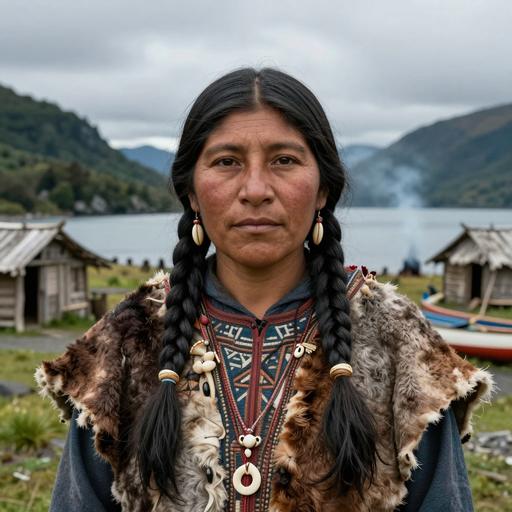
Portrait reconstruction of IPK12
Ancient Individual

A woman buried in Chile in the Pre-Columbian South America era

IPK12
1024 CE - 1155 CE
Female
Western Archipelago Kaweskar Culture, Chile 800 Years Ago
Chile
Scroll to begin
Chapter I

Identity

The biological and cultural markers that define this ancient individual

Sample ID

IPK12

Date Range

1024 CE - 1155 CE

Biological Sex

Female

mtDNA Haplogroup

C1b

Cultural Period

Western Archipelago Kaweskar Culture, Chile 800 Years Ago

Chapter II

Place

Where this individual was discovered

Country Chile
Locality Strait of Magellan. Punta Santa María
Chapter III

Time

When this individual lived in the broader context of human history

IPK12 1024 CE - 1155 CE
Chapter IV

Story

The narrative of this ancient life

The Kaweskar people, also known as the Alacalufe, have been the indigenous inhabitants of the western archipelago of Chile for centuries, including the era approximately 800 years ago. This South American culture developed in the challenging yet bountiful environment of the southern channels and fjords, primarily on the islands between the Gulf of Penas and the Strait of Magellan. At this time, characterized as roughly the 13th century, the Kaweskar's way of life was intricately adapted to their maritime surroundings.

Geography and Environment

The terrain of the western archipelago is dramatic, with numerous islands, inlets, and rugged coastlines defining the region. The climate is cold and wet, with frequent rain and wind, creating a challenging environment but also one richly populated with marine life. The landscape boasts dense forests, glacial streams, and peat bogs, all of which contributed to the resources available to the Kaweskar.

Social Structure and Community

The Kaweskar society was organized into small, kin-based groups rather than large settlements, reflecting the mobility required to survive in their environment. They were nomadic, moving frequently in response to seasonal changes and the availability of food resources. Social structure was likely egalitarian, with decisions made communally and leadership being temporary or situation-specific. This structure supported their flexible lifestyle, necessary for adapting to the constantly shifting conditions of the coastal environment.

Subsistence and Daily Life

The Kaweskar were expert seafarers and fishers, relying heavily on the ocean for sustenance. Their diet predominantly consisted of seafood, such as fish, shellfish, sea lions, and seals. They skillfully crafted canoes from the bark of trees, which were vital for transportation and hunting in the water-rich environment. These canoes were both lightweight and durable, ideal for navigating the complex waterways of the region. On land, they gathered edible plants, fruits, and eggs, supplementing their marine diet.

The Kaweskar utilized harpoons, bone hooks, and nets to capture their prey, demonstrating a deep understanding of the marine ecosystem. Clothing was primarily made from animal hides, providing essential protection against the biting cold and persistent wet conditions. Shelter consisted of temporary structures like tepee-shaped huts covered in animal skins, which could be easily constructed and dismantled as needed.

Spiritual Beliefs and Practices

Spirituality was an integral part of Kaweskar life, with beliefs likely centered around animism and the reverence of natural forces. Their cosmology would have been closely tied to their environment, reflecting the significance of the sea and its creatures. Rituals and storytelling played a crucial role in maintaining the oral history and cultural traditions of the Kaweskar, with elders imparting wisdom and cultural values through myths and legends.

Language and Cultural Expression

The Kaweskar spoke Kawesqar, a language isolated to their group. Being a primarily oral culture, storytelling, songs, and mythic tales were vital for cultural expression and education. Songs and chants might have been used in both daily activities and ritualistic ceremonies, helping to strengthen group cohesion.

Interactions and Trade

Contact with neighboring indigenous groups, such as the Yahgan to the south and the Chono to the north, may have occurred, though likely limited. Such interactions would have been vital for trade, resource sharing, and cultural exchange. Canoe journeys enabled the Kaweskar to engage with others across considerable distances, sharing knowledge and resources that were necessary for survival in the harsh environments.

Changes and Adaptations

By considering the historical context, the Kaweskar culture has experienced various changes over time due to environmental shifts, external contact, and technological advancements. However, 800 years ago, their life was predominantly shaped by the need to adapt to their unique environmental conditions, leading to a lifestyle that harmonized with the rhythms of the land and sea.

In summarizing the culture of the Kaweskar 800 years ago, the picture that emerges is one of a people deeply connected to their maritime world. Mastery of their environment allowed them to thrive in what many would consider a challenging habitat, showcasing a rich cultural legacy that emphasizes adaptability, resourcefulness, and a profound spiritual connection to nature.

Chapter V

Genetics

The genetic ancestry of this ancient individual

Ancient Genetic Admixture

This analysis compares the DNA profile of IPK12 with ancient reference populations, showing the genetic composition in terms of prehistoric ancestral groups.

Ancient Native Americans 78.7%
Ancient Asians 18.7%
Western Steppe Pastoralists 2.5%

Modern Genetic Admixture

This analysis compares the DNA profile with present-day reference populations, showing what percentage of genetic makeup resembles modern populations from different regions.

America 90.9%
America 90.9%
Native American 90.9%
Asia 8.0%
Japanese & Korean 5.0%
Japanese 5.0%
Northern Asian 3.0%
Siberian 3.0%
Africa 0.9%
African Hunter-Gatherer 0.7%

Closest Modern Populations

These are the modern populations showing the closest statistical alignment to A woman buried in Chile in the Pre-Columbian South America era, ranked by genetic distance. Lower distance values indicate closer statistical similarity.

1
Aymara
2.2880
2
Bolivian Lapaz
2.5197
3
Piapoco
2.6747
4
Yukpa
2.8081
5
Colla
2.9968
6
Mixe
3.0831
7
Cachi
3.1400
8
Wichi
3.2370
9
Mayan
3.8495
10
Pima
3.9005
Chapter VI

Context

Other ancient individuals connected to this sample

Sources

References

Scientific publications and genetic data

Scientific Publication

Genomic insights into the origin and diversification of late maritime hunter-gatherers from the Chilean Patagonia

Authors de la Fuente C, Ávila-Arcos MC, Galimany J
Abstract

Patagonia was the last region of the Americas reached by humans who entered the continent from Siberia ∼15,000-20,000 y ago. Despite recent genomic approaches to reconstruct the continental evolutionary history, regional characterization of ancient and modern genomes remains understudied. Exploring the genomic diversity within Patagonia is not just a valuable strategy to gain a better understanding of the history and diversification of human populations in the southernmost tip of the Americas, but it would also improve the representation of Native American diversity in global databases of human variation. Here, we present genome data from four modern populations from Central Southern Chile and Patagonia (n = 61) and four ancient maritime individuals from Patagonia (∼1,000 y old). Both the modern and ancient individuals studied in this work have a greater genetic affinity with other modern Native Americans than to any non-American population, showing within South America a clear structure between major geographical regions. Native Patagonian Kawéskar and Yámana showed the highest genetic affinity with the ancient individuals, indicating genetic continuity in the region during the past 1,000 y before present, together with an important agreement between the ethnic affiliation and historical distribution of both groups. Lastly, the ancient maritime individuals were genetically equidistant to a ∼200-y-old terrestrial hunter-gatherer from Tierra del Fuego, which supports a model with an initial separation of a common ancestral group to both maritime populations from a terrestrial population, with a later diversification of the maritime groups.

G25 Coordinates

The G25 coordinates for sample IPK12 can be used for detailed admixture analysis in our G25 Studio tool.

IPK12,0.05617604,-0.31690202,0.110494,0.09681242,-0.1128233,-0.0111456,-0.2950306,-0.34780042,-0.0145148,-0.01640172,0.00053346,-0.0004109,-0.00098952,0.0246943,-0.00604532,0.00122828,0.0062682,0.0038462,0.0010371,-0.00203568,-0.0014123,0.00747418,-0.00309232,-0.00352884,-0.00455283
Analyze in G25 Studio
Use code for 40% off Expires Feb 27