Menu
Store
Blog
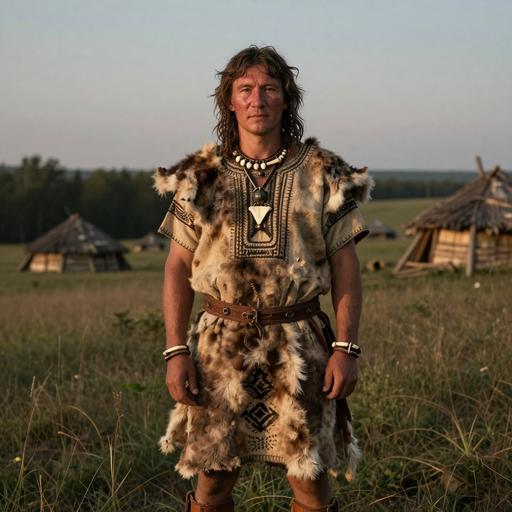
Portrait reconstruction of NEO172
Ancient Individual

A man buried in Russia in the Iron Age era

NEO172
5296 BCE - 4998 BCE
Male
Northern Don Culture
Russia
Scroll to begin
Chapter I

Identity

The biological and cultural markers that define this ancient individual

Sample ID

NEO172

Date Range

5296 BCE - 4998 BCE

Biological Sex

Male

mtDNA Haplogroup

U5a2b2

Y-DNA Haplogroup

R1b

Cultural Period

Northern Don Culture

Chapter II

Place

Where this individual was discovered

Country Russia
Locality Ksizovo-6 (Lipetsk Oblast, Zadonsky District)
Coordinates 52.2780, 38.9550
Chapter III

Time

When this individual lived in the broader context of human history

NEO172 5296 BCE - 4998 BCE
Chapter IV

Story

The narrative of this ancient life

The Northern Don Culture of the Scythian era, typically dated from around the late 7th century BC to the 3rd century BC, is an intriguing cultural manifestation of the broader Scythian world. This culture occupied the vast steppe regions north of the Black Sea, particularly around the Don River, which is situated in what is now modern-day Russia. The Northern Don Culture is notable for its unique adaptations to the nomadic lifestyle, impressive artistry, and strategic interactions with neighboring cultures and civilizations.

Geographic and Environmental Context

The Northern Don region is characterized by expansive steppes, forests, and river valleys, providing an ideal environment for the nomadic pastoralism that defined much of Scythian life. The area's climate, with its cold winters and warm summers, required the Scythians to adapt their lifestyle and economy to the seasonal changes, influencing their migratory patterns and animal husbandry practices.

Economy and Lifestyle

The economy was predominantly based on nomadic pastoralism, relying heavily on horses, cattle, and sheep. The horse, in particular, was central to Scythian life, not only as a resource for meat and hides but as a critical component of their military prowess. The Scythians of the Northern Don region were skilled equestrians, a factor that contributed to their reputation as formidable warriors and allowed them to maintain vast herding territories.

Social Structure

The Scythian society of the Northern Don Culture was typically hierarchical and tribal, led by chieftains or kings who wielded significant military and political power. The social structure was characterized by a warrior elite, and their prowess in battle was often commemorated in intricate gold and metalwork. The presence of kurgans, or burial mounds, highlights the importance of social stratification, with richer burial sites indicating higher status individuals.

Art and Craftsmanship

One of the most remarkable aspects of the Northern Don Culture is its artistry, particularly in metalwork. Scythian craftsmen were adept at creating intricate gold, bronze, and iron artifacts, often depicting animals or mythical creatures in what is known as the \Scythian Animal Style." This art style is recognized for its dynamic and fluid depictions, suggesting both a spiritual and symbolic significance tied to the natural and supernatural worlds.

Military and Warfare

The Scythians of the Northern Don region were renowned for their superior warfare tactics, which were heavily reliant on their skills as mounted archers. Their use of composite bows, effective horseback tactics, and hit-and-run strategies allowed them to dominate large territories and engage effectively with neighboring cultures, whether through trade or conflict.

Cultural and Spiritual Beliefs

Spirituality and religious practices among the Northern Don Scythians were closely tied to their natural environment. Reverence for animal totems and a pantheon of deities reflective of natural forces played a significant role in daily life. Herodotus, the Greek historian, provides accounts of Scythian rituals, including elaborate burial ceremonies and reverence for deities like Papaios and Tabiti.

Interaction with Other Cultures

The Northern Don Culture engaged in extensive interactions with neighboring civilizations, including Greek colonies along the Black Sea coast, as well as with other nomadic tribes. These interactions were marked by both conflict and trade, facilitating a cultural exchange that influenced Scythian art, warfare, and lifestyle. The exchange of goods, ideas, and technologies with the Greeks, for example, is evident in the stylistic elements of Scythian artifacts.

Historical Legacy

The Northern Don Scythians contributed significantly to the cultural and historical landscape of the Eurasian steppes. Their legacy is preserved not only through material culture found in archaeological sites but also in the historical accounts of Greek historians who documented their way of life. As part of the larger Scythian tradition, the Northern Don Culture helps to map the evolution of nomadic societies and their impact on the course of ancient history.

In summary, the Northern Don Culture of the Scythian era presents a complex tapestry of nomadic ingenuity, artistic excellence, and strategic diplomacy that reflects the adaptive and resilient nature of the Scythian peoples. Their legacy continues to captivate scholars and historians alike, illuminating a dynamic chapter in ancient Eurasian history."

Chapter V

Context

Other ancient individuals connected to this sample

Sources

References

Scientific publications and genetic data

Scientific Publication

Population genomics of post-glacial western Eurasia

Authors Allentoft ME, Sikora M, Refoyo-Martínez A
Abstract

Western Eurasia witnessed several large-scale human migrations during the Holocene1-5. Here, to investigate the cross-continental effects of these migrations, we shotgun-sequenced 317 genomes-mainly from the Mesolithic and Neolithic periods-from across northern and western Eurasia. These were imputed alongside published data to obtain diploid genotypes from more than 1,600 ancient humans. Our analyses revealed a 'great divide' genomic boundary extending from the Black Sea to the Baltic. Mesolithic hunter-gatherers were highly genetically differentiated east and west of this zone, and the effect of the neolithization was equally disparate. Large-scale ancestry shifts occurred in the west as farming was introduced, including near-total replacement of hunter-gatherers in many areas, whereas no substantial ancestry shifts happened east of the zone during the same period. Similarly, relatedness decreased in the west from the Neolithic transition onwards, whereas, east of the Urals, relatedness remained high until around 4,000 BP, consistent with the persistence of localized groups of hunter-gatherers. The boundary dissolved when Yamnaya-related ancestry spread across western Eurasia around 5,000 BP, resulting in a second major turnover that reached most parts of Europe within a 1,000-year span. The genetic origin and fate of the Yamnaya have remained elusive, but we show that hunter-gatherers from the Middle Don region contributed ancestry to them. Yamnaya groups later admixed with individuals associated with the Globular Amphora culture before expanding into Europe. Similar turnovers occurred in western Siberia, where we report new genomic data from a 'Neolithic steppe' cline spanning the Siberian forest steppe to Lake Baikal. These prehistoric migrations had profound and lasting effects on the genetic diversity of Eurasian populations.

Use code for 40% off Expires Feb 26