Menu
Store
Blog
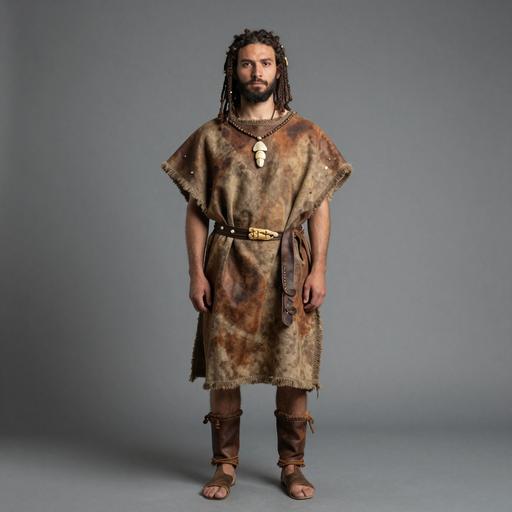
Portrait reconstruction of NEO509
Ancient Individual

A man buried in Ukraine in the Bronze Age era

NEO509
2888 BCE - 2640 BCE
Male
Early Bronze Age Dnieper Culture
Ukraine
Scroll to begin
Chapter I

Identity

The biological and cultural markers that define this ancient individual

Sample ID

NEO509

Date Range

2888 BCE - 2640 BCE

Biological Sex

Male

mtDNA Haplogroup

U5a1j

Y-DNA Haplogroup

R-Z2106

Cultural Period

Early Bronze Age Dnieper Culture

Chapter II

Place

Where this individual was discovered

Country Ukraine
Locality Igren'-8 (Dnipropetrovsk Oblast, Dnipro District, Dnipro municipality)
Coordinates 48.4436, 35.1159
Chapter III

Time

When this individual lived in the broader context of human history

NEO509 2888 BCE - 2640 BCE
Chapter IV

Story

The narrative of this ancient life

The Early Bronze Age Dnieper Culture, often seen as part of the broader Yamnaya or Pit Grave cultural horizon, is an ancient culture that existed in the region surrounding the Dnieper River. This culture is significant in understanding the prehistory of Eastern Europe and offers insights into the early Slavic peoples, although it predates the Slavs and should be seen as one of the many foundational influences on their later development.

Geographic and Temporal Context

The Dnieper Culture occupied a geographical region around the central and lower Dnieper River, encompassing parts of modern-day Ukraine, Russia, and Belarus. This area is characterized by its vast steppes and forest-steppe environments, offering a rich blend of resources for early human societies. The culture emerged during the Early Bronze Age, roughly between 3300 BCE and 2200 BCE, a period characterized by significant advancements in metallurgy, trade, and social organization across Europe and Asia.

Material Culture and Technology

1. Pottery and Craftsmanship: The Dnieper Culture is notable for its ceramic production, which typically featured simple geometric designs and functional forms. Pottery was often handmade, displaying a utilitarian aspect with some varying decorative styles that may suggest local innovations or external influences from neighboring cultures.

2. Metallurgy: Bronze tools and weapons began to appear within this culture, marking an advancement from the preceding Stone Age technologies. The development and use of bronze for tools, such as axes, knives, and chisels, reflect the culture's growing technological capabilities and its role in wider trade networks.

3. Architecture: Settlements were composed mainly of semi-subterranean dwellings or simple wooden structures, indicating a semi-nomadic lifestyle. This architecture was suited to the environmental conditions of the steppe, providing insulation and protection.

Economy and Subsistence

The Dnieper Culture exhibited a mixed economy based on agriculture, animal husbandry, hunting, and gathering. The fertile lands along the Dnieper River supported the cultivation of cereals and other crops, while the expansive grasslands were ideal for pastoral activities. Livestock such as cattle, sheep, and goats played vital roles in subsistence, social structure, and trade.

Social Structure and Organization

The social organization of the Dnieper Culture is less documented compared to some contemporaneous societies, but archaeological findings suggest a community structured around extended family units or clans. The presence of kurgans (burial mounds) indicates a hierarchically organized society with emerging social stratification. These burials often contained grave goods, which varied considerably in wealth and complexity, hinting at the status differences within the society.

Religion and Spiritual Beliefs

The religious or spiritual beliefs of the Dnieper Culture are largely inferred from burial practices. The kurgans, along with associated ritual objects and grave goods, imply a belief in an afterlife where the dead required items for their journey. The orientation and placement of bodies also suggest ritualistic significance, perhaps reflecting proto-Indo-European religious practices.

Interactions and External Relations

The Dnieper Culture was not isolated but participated in a web of interactions with neighboring cultures, such as those in the Carpathian Basin, the early cultures of the Balkans, and the expansive Yamnaya Culture of the Pontic-Caspian steppe. These interactions were facilitated through trade, exchange of ideas, and possible migrations, contributing to the dynamic cultural landscape of the region.

Legacy and Influence

While the Dnieper Culture itself did not directly evolve into the Slavic cultures, it is an essential part of the broader prehistoric context from which the early Slavs emerged. The technological advancements, social structures, and potential linguistic contributions of the Dnieper Culture and its neighbors provided a foundation upon which later European Bronze Age and Iron Age cultures would build.

In conclusion, the Early Bronze Age Dnieper Culture is a fascinating subject of study for those interested in the prehistoric developments that shaped the foundation of Eastern European history. Its contributions to metallurgy, trade, and societal organization laid important groundwork for the eventual rise of the early Slavic peoples and other cultural groups in the region.

Chapter V

Context

Other ancient individuals connected to this sample

Sources

References

Scientific publications and genetic data

Scientific Publication

Population genomics of post-glacial western Eurasia

Authors Allentoft ME, Sikora M, Refoyo-Martínez A
Abstract

Western Eurasia witnessed several large-scale human migrations during the Holocene1-5. Here, to investigate the cross-continental effects of these migrations, we shotgun-sequenced 317 genomes-mainly from the Mesolithic and Neolithic periods-from across northern and western Eurasia. These were imputed alongside published data to obtain diploid genotypes from more than 1,600 ancient humans. Our analyses revealed a 'great divide' genomic boundary extending from the Black Sea to the Baltic. Mesolithic hunter-gatherers were highly genetically differentiated east and west of this zone, and the effect of the neolithization was equally disparate. Large-scale ancestry shifts occurred in the west as farming was introduced, including near-total replacement of hunter-gatherers in many areas, whereas no substantial ancestry shifts happened east of the zone during the same period. Similarly, relatedness decreased in the west from the Neolithic transition onwards, whereas, east of the Urals, relatedness remained high until around 4,000 BP, consistent with the persistence of localized groups of hunter-gatherers. The boundary dissolved when Yamnaya-related ancestry spread across western Eurasia around 5,000 BP, resulting in a second major turnover that reached most parts of Europe within a 1,000-year span. The genetic origin and fate of the Yamnaya have remained elusive, but we show that hunter-gatherers from the Middle Don region contributed ancestry to them. Yamnaya groups later admixed with individuals associated with the Globular Amphora culture before expanding into Europe. Similar turnovers occurred in western Siberia, where we report new genomic data from a 'Neolithic steppe' cline spanning the Siberian forest steppe to Lake Baikal. These prehistoric migrations had profound and lasting effects on the genetic diversity of Eurasian populations.

Use code for 40% off Expires Feb 26