Menu
Store
Blog
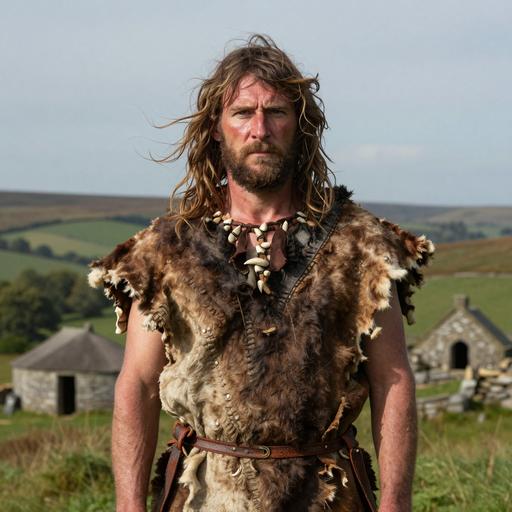
Portrait reconstruction of NEO847
Ancient Individual

A man buried in United Kingdom in the Iron Age era

NEO847
3639 BCE - 3383 BCE
Male
Northern Gloucestershire
United Kingdom
Scroll to begin
Chapter I

Identity

The biological and cultural markers that define this ancient individual

Sample ID

NEO847

Date Range

3639 BCE - 3383 BCE

Biological Sex

Male

mtDNA Haplogroup

X2b4

Y-DNA Haplogroup

I-Y3712

Cultural Period

Northern Gloucestershire

Chapter II

Place

Where this individual was discovered

Country United Kingdom
Locality Hetty Peglers Tump (Gloucestershire)
Coordinates 51.6970, -2.3040
Chapter III

Time

When this individual lived in the broader context of human history

NEO847 3639 BCE - 3383 BCE
Chapter IV

Story

The narrative of this ancient life

The region known as Northern Gloucestershire during the Celtic era was part of the broader cultural landscape of ancient Britain inhabited by Celtic tribes. This area, rich in history and archaeological significance, offers a fascinating glimpse into the lives and societies of the Iron Age Celts. Although the Roman conquest brought significant changes, the Celtic heritage left a lasting imprint on the cultural and historical identity of the region.

Geography and Environment

Northern Gloucestershire is characterized by its diverse terrain, ranging from the rolling hills of the Cotswolds to the fertile valleys of the River Severn. The Cotswold Hills, composed predominantly of rich limestone, provided a strategic vantage point and a natural barrier, while the river valleys offered fertile grounds for agriculture. This diverse landscape supported a mix of farming, hunting, and gathering, sustaining various aspects of Celtic life.

Social Structure and Society

Celtic society in Northern Gloucestershire was tribal, organized into clans led by chieftains or kings, whose power was often based on their ability to lead in war and bring prosperity. The tribes likely included the Dobunni, who were known to inhabit the area before the Roman occupation. The social hierarchy was marked by a distinction between nobles, freemen, and slaves, with warriors holding a revered status.

Druids played a significant role as religious and cultural leaders, overseeing rituals, teaching, and maintaining oral traditions. The Celtic society was also noted for its artisanal craftsmanship, particularly in metalwork, ceramics, and textiles, which were both practical and ornate, reflecting the Celtic appreciation for art and symbolism.

Economy and Trade

The economy of Northern Gloucestershire was predominantly agrarian, with the Celts practicing mixed farming. They cultivated crops such as wheat, barley, and oats and raised livestock, including cattle, sheep, and pigs. The presence of natural resources, like the Forest of Dean with its iron ore and timber, provided materials for building and craft.

Trade was a vital component of the Celtic economy, facilitated by the area's proximity to key trade routes. The Celts engaged in commerce with neighboring tribes and even overseas trading partners, exchanging goods like salt, metals, and crafted items. The Severn was particularly important as a trade artery, connecting Gloucestershire with other parts of Britain and the continent.

Religion and Beliefs

Celtic religion in this region was polytheistic and animistic, involving the worship of numerous deities and nature spirits believed to inhabit the landscape. Sacred sites, including natural features like springs and groves, were integral to their spiritual practices. Rituals were performed to honor deities, ensure bountiful harvests, and seek protection from malevolent forces. Lughnasadh, Samhain, Imbolc, and Beltane were among the festivals celebrated throughout the year.

Druids were more than just religious figures; they were central to Celtic intellectual life, serving as judges, teachers, and keepers of lore. The oral tradition was a cornerstone of their educational system, passing down stories, laws, and histories from one generation to the next.

Art and Craftsmanship

Celtic art is renowned for its intricate designs, characterized by swirling patterns, knotwork, and zoomorphic motifs. In Northern Gloucestershire, Celtic artisans created beautiful objects from gold, silver, bronze, and iron. Jewelry, weapons, and ceremonial items like torcs and shields were crafted not only for practical use but also as symbols of status and power.

Ceramic production flourished as well, with the Celts producing pottery that was both functional and decorative. The region's distinctive styles can be seen in the remnants of pottery unearthed in archaeological digs.

Architecture and Settlements

The Celts of Northern Gloucestershire typically lived in roundhouses constructed from timber and thatch, which were organized into small villages or larger fortified settlements known as hillforts. One notable example is the site believed to be at Uley Bury, showcasing the Celtic expertise in fortification and community organization. The hillforts served as centers of trade, politics, and defense.

Legacy and Influence

Though the Roman conquest brought profound changes, including urbanization and the introduction of new technologies and cultural practices, the Celtic foundation persisted in many aspects of local life. The blending of Roman and Celtic traditions eventually evolved into a distinct Romano-British culture, but elements of the indigenous Celtic past—language, art, and folklore—continued to resonate through the ages.

Modern Northern Gloucestershire bears subtle traces of this Celtic heritage, visible in place names, archaeological sites, and cultural events that celebrate this ancient past. These echoes of the Celts remind us of an era when the area was shaped by its environment, its people, and their enduring spirit.

Chapter V

Context

Other ancient individuals connected to this sample

Sources

References

Scientific publications and genetic data

Scientific Publication

Population genomics of post-glacial western Eurasia

Authors Allentoft ME, Sikora M, Refoyo-Martínez A
Abstract

Western Eurasia witnessed several large-scale human migrations during the Holocene1-5. Here, to investigate the cross-continental effects of these migrations, we shotgun-sequenced 317 genomes-mainly from the Mesolithic and Neolithic periods-from across northern and western Eurasia. These were imputed alongside published data to obtain diploid genotypes from more than 1,600 ancient humans. Our analyses revealed a 'great divide' genomic boundary extending from the Black Sea to the Baltic. Mesolithic hunter-gatherers were highly genetically differentiated east and west of this zone, and the effect of the neolithization was equally disparate. Large-scale ancestry shifts occurred in the west as farming was introduced, including near-total replacement of hunter-gatherers in many areas, whereas no substantial ancestry shifts happened east of the zone during the same period. Similarly, relatedness decreased in the west from the Neolithic transition onwards, whereas, east of the Urals, relatedness remained high until around 4,000 BP, consistent with the persistence of localized groups of hunter-gatherers. The boundary dissolved when Yamnaya-related ancestry spread across western Eurasia around 5,000 BP, resulting in a second major turnover that reached most parts of Europe within a 1,000-year span. The genetic origin and fate of the Yamnaya have remained elusive, but we show that hunter-gatherers from the Middle Don region contributed ancestry to them. Yamnaya groups later admixed with individuals associated with the Globular Amphora culture before expanding into Europe. Similar turnovers occurred in western Siberia, where we report new genomic data from a 'Neolithic steppe' cline spanning the Siberian forest steppe to Lake Baikal. These prehistoric migrations had profound and lasting effects on the genetic diversity of Eurasian populations.

Use code for 40% off Expires Feb 26