Menu
Store
Blog
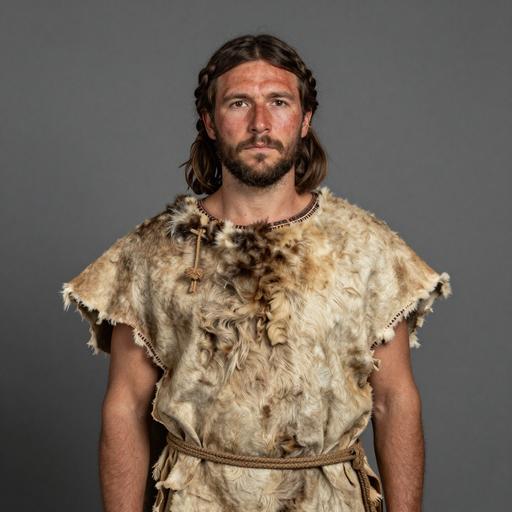
Portrait reconstruction of NEO922
Ancient Individual

A man buried in Russia in the Mesolithic era

NEO922
6218 BCE - 5928 BCE
Male
Ob River Mesolithic Culture
Russia
Scroll to begin
Chapter I

Identity

The biological and cultural markers that define this ancient individual

Sample ID

NEO922

Date Range

6218 BCE - 5928 BCE

Biological Sex

Male

mtDNA Haplogroup

U2e3

Y-DNA Haplogroup

Q-L56

Cultural Period

Ob River Mesolithic Culture

Chapter II

Place

Where this individual was discovered

Country Russia
Locality Vengerovo-2 (Novosibirsk Oblast, Vengerovsky District)
Coordinates 55.7070, 76.7830
Chapter III

Time

When this individual lived in the broader context of human history

NEO922 6218 BCE - 5928 BCE
Chapter IV

Story

The narrative of this ancient life

The Ob River Mesolithic Culture of Proto-Siberian origins refers to the archaeological and anthropological cultures that existed in the region surrounding the Ob River during the Mesolithic era, a period that generally spans from the end of the last Ice Age (around 10,000 BCE) to the advent of agriculture and sedentary societies in the Neolithic period (around 4,000 BCE, though this timing can vary). This culture is characterized by its adaptation to the challenging Siberian environment, which played a crucial role in shaping its social structures, economy, and technological innovations.

Geographic and Environmental Context

The Ob River, one of the major river systems in Russia, flows through Western Siberia, spanning diverse environments including taiga forests, marshlands, and tundra. The Ob River Basin provides a rich variety of resources, which Mesolithic communities would have utilized for sustenance. The post-glacial landscape during this era would have included a mix of newly-formed lakes and expansive forests, creating a habitat rich in flora and fauna.

Subsistence and Economy

The communities along the Ob River during the Mesolithic were primarily hunter-gatherers, relying on a combination of hunting, fishing, and foraging. The Taiga region was home to game like elk, reindeer, and smaller mammals, as well as extensive fish and bird populations, making it a seasonal hub for food resources. The emphasis on fishing is notable; evidence from tool finds suggests that fishing played an essential role in the economy, with tools such as bone fish hooks, harpoons, and net sinkers being commonly discovered.

Foraging would have included gathering berries, nuts, and root vegetables, with the rich Siberian plant life providing seasonal sustenance. The river and its tributaries would also have provided additional resources such as freshwater mussels and other aquatic species.

Technological Innovations

The Ob River Mesolithic culture is marked by distinct tool assemblages that highlight a complex understanding of their environment and resource optimization. Tools often included microlithic components—small, sharp stone pieces—used in composite tools like arrows and spears. The crafting of tools from bone and antler also indicates sophisticated manufacturing techniques, as these materials required heating and precise carving to shape them into effective tools and weapons.

Projectile points, scrapers, and blades were adapted for a variety of tasks, from hunting large game to processing plants and hide preparation. The presence of woodworking tools suggests the construction of simple structures or vessels, possibly including dugout canoes for river navigation.

Social Structure and Lifestyle

Social organization in the Mesolithic era, including that of the Ob River culture, was likely based on small, highly mobile groups or bands. These groups would have followed seasonal cycles of migration to exploit the region's varied resources effectively. Social structures would have been egalitarian, with decisions likely made communally or by consensus among elders.

Evidence of semi-permanent campsites along riverbanks suggests that these communities had periods of sedentism, especially during times of resource abundance. This combination of mobility and temporary settlement would have allowed flexibility and resilience in the face of environmental changes.

Art and Symbolism

While the material evidence is limited, any surviving art or symbolic artifacts found in these regions would reflect the community's cosmology and interaction with their surroundings. Artistic expression may have included carvings, ornamental use of natural resources like stones and shells, and potentially petroglyphs or pictographs.

Cultural Significance and Legacy

The Ob River Mesolithic culture contributes to our understanding of human adaptation to extreme environments and the development of complex societies in prehistoric Siberia. The strategies developed by these people for surviving and thriving in a fluctuating climate laid essential groundwork for the later Neolithic cultures in the region. Their reliance on diverse resources and technological adaptability are marks of their ingenuity and resilience.

Overall, the Ob River Mesolithic culture of Proto-Siberians encapsulates an era of human history characterized by significant environmental challenges and the human capacity for innovation, adaptation, and survival. Their cultural legacy provides insight into the broader patterns of human migration, settlement, and technological evolution.

Chapter V

Context

Other ancient individuals connected to this sample

Sources

References

Scientific publications and genetic data

Scientific Publication

Population genomics of post-glacial western Eurasia

Authors Allentoft ME, Sikora M, Refoyo-Martínez A
Abstract

Western Eurasia witnessed several large-scale human migrations during the Holocene1-5. Here, to investigate the cross-continental effects of these migrations, we shotgun-sequenced 317 genomes-mainly from the Mesolithic and Neolithic periods-from across northern and western Eurasia. These were imputed alongside published data to obtain diploid genotypes from more than 1,600 ancient humans. Our analyses revealed a 'great divide' genomic boundary extending from the Black Sea to the Baltic. Mesolithic hunter-gatherers were highly genetically differentiated east and west of this zone, and the effect of the neolithization was equally disparate. Large-scale ancestry shifts occurred in the west as farming was introduced, including near-total replacement of hunter-gatherers in many areas, whereas no substantial ancestry shifts happened east of the zone during the same period. Similarly, relatedness decreased in the west from the Neolithic transition onwards, whereas, east of the Urals, relatedness remained high until around 4,000 BP, consistent with the persistence of localized groups of hunter-gatherers. The boundary dissolved when Yamnaya-related ancestry spread across western Eurasia around 5,000 BP, resulting in a second major turnover that reached most parts of Europe within a 1,000-year span. The genetic origin and fate of the Yamnaya have remained elusive, but we show that hunter-gatherers from the Middle Don region contributed ancestry to them. Yamnaya groups later admixed with individuals associated with the Globular Amphora culture before expanding into Europe. Similar turnovers occurred in western Siberia, where we report new genomic data from a 'Neolithic steppe' cline spanning the Siberian forest steppe to Lake Baikal. These prehistoric migrations had profound and lasting effects on the genetic diversity of Eurasian populations.

Use code for 40% off Expires Feb 27