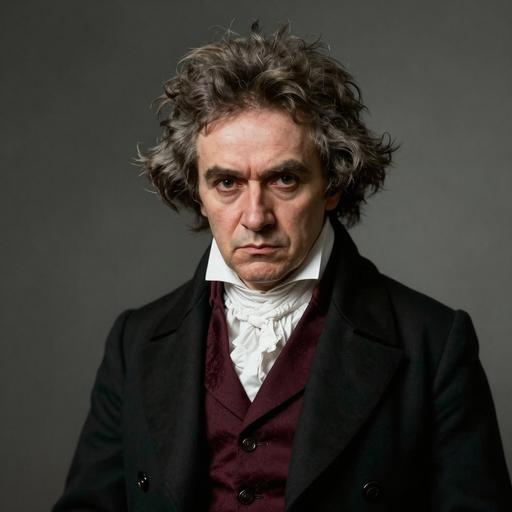
The Classical and Early Romantic era in German culture, roughly spanning the late 18th century through the early 19th century, is a period marked by profound intellectual, artistic, and cultural developments. This era is characterized by dynamic change and creativity as Germany transitioned from the classical ideals of the Enlightenment to the more emotive and individualistic expressions of Romanticism.
Historical Context
This period in German history saw the rise of influential city-states and the gradual unification of the German territories under the Holy Roman Empire, which was a complex political entity comprising numerous semi-autonomous states. This fragmentation facilitated a diversity of thought and culture, but also posed challenges to political unity which were not fully resolved until later in the 19th century. The aftermath of the French Revolution and the Napoleonic Wars significantly impacted Germany, leading to widespread social and political upheaval which fostered both a reactionary classical order in some areas and a surge of Romantic nationalism in others.
Classical German Culture
Philosophy and Literature
The German Enlightenment, or Aufklärung, laid the foundations for the Classical period in which intellectual pursuits flourished. Immanuel Kant's critical philosophy, especially his \Critique of Pure Reason," provided an epistemological groundwork that challenged and inspired numerous thinkers. In literature, figures such as Johann Wolfgang von Goethe and Friedrich Schiller epitomized Weimar Classicism, drawing on ancient Greek ideals and humanism to produce works that emphasized balance, harmony, and beauty. Goethe’s "Faust" and Schiller’s dramas like "Wilhelm Tell" embodied these virtues, addressing moral and existential dilemmas with elevated language and classical form.
Music
Music in this era evolved significantly, dominated by figures such as Ludwig van Beethoven, whose symphonies and sonatas bridged the Classical and Romantic styles. While composers like Franz Joseph Haydn and Wolfgang Amadeus Mozart exemplified the Classical form with structured compositions, Beethoven's work injected personal emotion and expanded the boundaries of musical expression, leading towards Romanticism.
Early Romantic German Culture
Philosophy and Literature
The shift towards Romanticism brought with it a focus on individualism, nature, and emotion. Romanticism in Germany, or Frühromantik, was marked by its critique of reason and the Enlightenment's emphasis on rationality. Philosophers like Friedrich Schlegel and Friedrich Wilhelm Joseph Schelling explored subjectivity and the transcendental, contributing to a richer metaphysical narrative that embraced the mystical and the sublime. Literature under Romanticism saw a turn towards folklore, myth, and the supernatural, with poets such as Novalis and writers like the Grimm Brothers seeking inspiration from Germany’s medieval past and folklore.
Visual Arts
In visual arts, Romanticism found expression through a heightened appreciation for nature and the emotions it inspired. Artists such as Caspar David Friedrich depicted vast, dramatic landscapes that evoked awe and introspection, emphasizing the power of nature and the emotional experience of the individual viewer.
Music
Romantic music further expanded the emotional and structural boundaries established by Beethoven. Composers like Franz Schubert, Robert Schumann, and Felix Mendelssohn composed works rich in lyrical beauty and emotional depth. They sought to convey complex feelings through music, drawing on folklore and national identity as thematic elements.
Social and Cultural Impact
The German Classical and early Romantic period was a time of significant cultural evolution. The rise of universities and a burgeoning public sphere contributed to a vibrant intellectual climate. Romantic nationalism began to take shape, as exemplified by movements aiming to unite the German-speaking peoples based on shared language and culture. This cultural era laid much of the groundwork for the social and political aspirations that would later culminate in the unification of Germany in 1871.
Conclusion
The Classical and Early Romantic era of German culture was a profound period of intellectual and artistic achievement. It witnessed the interplay between reason and emotion, order and passion, which continue to influence German culture and beyond. This era's legacy is evident in the timeless literature, revolutionary music, and philosophical innovations that shaped not only Germany, but also the broader contours of Western thought and art."