انتقل إلى المحتوى الرئيسي
ملفات الحمض النووي

Cenxun Cave: Guangxi in the Sui–Tang Era

Three individuals from Cenxun Cave (440–658 CE) illuminate southern China's past

440 CE - 658 CE
Guangxi, southern China (Pingguo County)

القصة

Human remains from Cenxun Cave, Pingguo County, Guangxi (440–658 CE), offer preliminary genetic and archaeological glimpses into southern China during the Sui–Tang transition. Limited samples (n=3) show maternal haplogroups within mtDNA M lineages, suggesting deep East–Southeast Asian connections.

Time Period

440–658 CE

Region

Guangxi, southern China (Pingguo County)

Common Y-DNA

Not reported (no Y-DNA data)

Common mtDNA

M (2), M10 (1)

الخط الزمني

440 CE

Earliest Cenxun sample date

The oldest radiocarbon or contextual date for human remains at Cenxun Cave, indicating occupation or use beginning by 440 CE.

581 CE

Sui Dynasty unifies China

The Sui reunified much of China (581 CE), a political backdrop influencing southern administrative and economic integration.

618 CE

Tang Dynasty established

Founding of the Tang Dynasty (618 CE) marked increased regional connectivity and cultural exchange affecting southern China.

658 CE

Latest Cenxun sample date

The youngest Cenxun date, 658 CE, falls within early Tang administration and frames the end of the current sample range.

Origins & Emergence

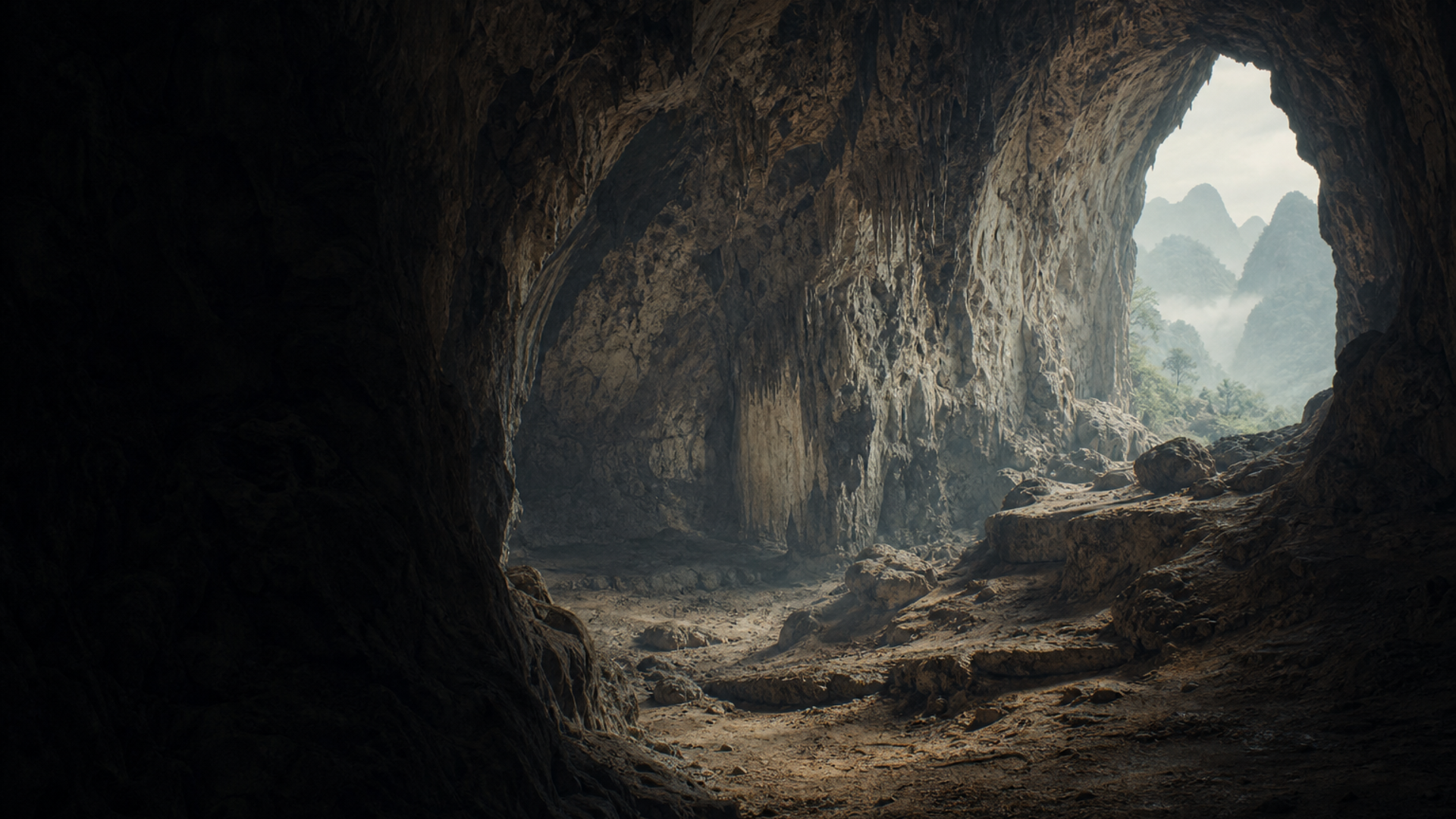
Cenxun Cave sits in Taiping Town, Pingguo County, Baise City, a karst landscape that has sheltered human activity for millennia. The skeletal material dated to 440–658 CE places these individuals at the cusp of late Sui and early Tang dynastic expansion across southern China. Archaeological data indicates human presence in Guangxi long before the Sui–Tang period; however, Cenxun represents a localized window into life along inland trade and agricultural corridors in the mid-first millennium CE.

Geographically, Guangxi is a crossroads between interior China and Southeast Asia; this corridor saw movement of peoples, crops (notably wet-rice agriculture), and ideas during the first millennium CE. Limited evidence from Cenxun Cave suggests inhabitants here were part of that broader regional mosaic rather than isolated enclaves. Given the small sample size (three individuals), assertions about large-scale migrations or population replacement would be premature. Instead, Cenxun should be read as a fragmentary but evocative record: a snapshot of maternal lineages and human presence in a contested and dynamic landscape as imperial structures shifted from Sui to Tang authority.

  • Site: Cenxun Cave, Taiping Town, Pingguo County (Baise, Guangxi)
  • Date range: 440–658 CE, spanning late Sui to early Tang cultural horizons
  • Context: Karst cave shelter within a south China corridor linking interior and Southeast Asia

Daily Life & Society

Archaeological inference for Cenxun is cautious because excavation focus was on human remains rather than extensive settlement layers. Nonetheless, the Sui–Tang era in southern China is characterized in the broader record by intensified wet-rice cultivation, expansion of local markets, and increasing connectivity via riverine and overland routes. In Guangxi, small agrarian communities likely combined rice farming, foraging, and exchange with nearby valleys.

Cave interment or shelter use can reflect a range of behaviors: from episodic burial in karst features to temporary refuge during floods or conflict. Material culture from contemporaneous Guangxi sites often includes utilitarian ceramics, agricultural implements, and textile fragments; however, Cenxun’s archaeological assemblage is limited, so direct inferences about clothing, diet, or craft specialization remain tentative. Osteological indicators (when preserved) can hint at workload, diet, and health stressors typical of agrarian populations, but specific palaeopathological data from Cenxun are sparse. Overall, Cenxun conveys a lived landscape of rural communities embedded in a web of local and regional interactions during a dynamic imperial period.

  • Economy likely centered on wet-rice agriculture and local exchange
  • Cave context may indicate burial, shelter, or ritual use; evidence is currently limited

Genetic Profile

Three individuals from Cenxun Cave produced mitochondrial DNA results dominated by haplogroup M lineages: two assigned to broad M and one to subclade M10. Haplogroup M and its sublineages are widespread across East and Southeast Asia and are commonly observed in ancient and modern populations of the region, reflecting deep maternal continuity that dates to the initial peopling of East Asia. The presence of M10 in this small sample aligns with known distributions of M subclades in southern China and adjacent regions.

No Y-chromosome haplogroups were reported for these individuals, so paternal-lineage inferences are not currently possible. Given the very small sample count (n=3), conclusions must be highly provisional: the Cenxun maternal signatures suggest local or regional continuity with broader East–Southeast Asian maternal pools, but they cannot resolve migration timing, admixture proportions, or links to specific linguistic groups. Future sampling and genome-wide data would be needed to test hypotheses about genetic continuity between Sui–Tang era Guangxi and modern southern Chinese populations, the extent of northern vs. southern ancestry components, and potential gene flow across the Sino–Southeast Asian boundary.

  • mtDNA dominated by haplogroup M (2) and M10 (1), consistent with East–Southeast Asian maternal lineages
  • No Y-DNA reported; small sample size (n=3) limits population-level conclusions

Legacy & Modern Connections

Cenxun Cave’s tiny genetic archive gestures toward a deep maternal substratum in southern China that persists into the present. While three mitochondrial genomes cannot map the genetic landscape of Guangxi, they mirror patterns seen across many ancient and modern populations in East and Southeast Asia where haplogroup M is common. This continuity is one thread among many—archaeological, linguistic, and historical—that together shape modern southern Chinese diversity.

Researchers see Cenxun as a starting point: a local dataset that, when combined with additional ancient genomes, can illuminate how imperial expansions, trade, and local adaptation reshaped southern China’s human tapestry. For museum visitors and descendants alike, Cenxun evokes the textures of daily life—rice fields, market networks, and karst shelters—anchoring genetic signals in lived landscapes.

  • Preliminary evidence for maternal continuity with broader East–Southeast Asian populations
  • Adds a local data point for reconstructing demographic change during Sui–Tang transitions

مساعد الذكاء الاصطناعي

مساعد الذكاء الاصطناعي من DNA Genics

فتح هذه الميزة
اطرح أسئلة عن ثقافة Cenxun Cave: Guangxi in the Sui–Tang Era. يمكن للمساعد شرح النتائج الجينية والسياق التاريخي والأدلة الأثرية والصلات بالعصر الحديث.
مثال على تحليل بالذكاء الاصطناعي

لمحة عن ثقافة Cenxun Cave: Guangxi in the Sui–Tang Era

تساعد عينات الحمض النووي القديم الباحثين على دراسة أنماط الهجرة والعلاقات الجينية بين المجموعات السكانية القديمة.

هذه معاينة للتحليل. يتيح المساعد الكامل استكشاف الموضوعات التالية:

  • التركيب الجيني والأصول
  • أنماط الهجرة والأصول
  • الحياة اليومية والممارسات الثقافية
  • الإرث الجيني المعاصر