انتقل إلى المحتوى الرئيسي
ملفات الحمض النووي

Sumidouro People, Lagoa Santa

Early Holocene hunter-gatherers from Caverna do Sumidouro, Brazil

8612 CE - 7607 BCE
Lagoa Santa, Minas Gerais, Brazil

القصة

Archaeological remains from Caverna do Sumidouro (Lagoa Santa, Brazil) dated 8612–7607 BCE reveal an Early Holocene group whose limited genetic data shows Y-haplogroup Q and mtDNA lineages D1/D. Evidence is scarce but ties ancient lifeways to founding Native American ancestries.

Time Period

8612–7607 BCE

Region

Lagoa Santa, Minas Gerais, Brazil

Common Y-DNA

Q (4 of 5 samples)

Common mtDNA

D1 (3), D (2)

الخط الزمني

8612 BCE

Earliest radiocarbon date at Sumidouro

Radiocarbon-dated human remains in Caverna do Sumidouro mark occupation beginning around 8612 BCE, placing these individuals in the Early Holocene.

Origins & Emergence

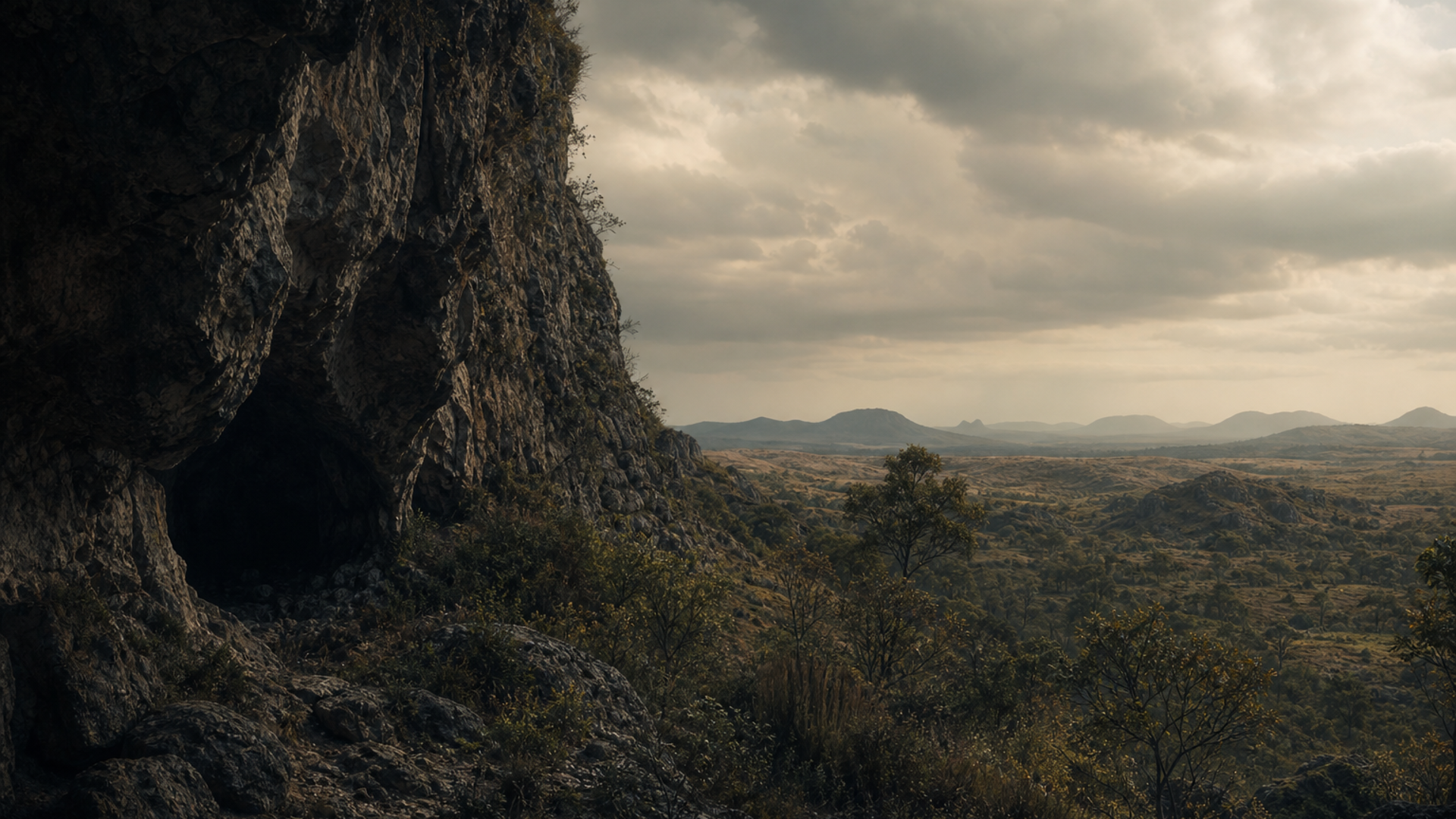
Beneath the limestone vaults of Caverna do Sumidouro, in the Lagoa Santa karst of eastern Brazil, fragments of human history emerge from the dust of the Early Holocene. Radiocarbon dates associated with these remains span roughly 8612–7607 BCE, placing them in a climatic moment of warming after the last glacial interval. Archaeological data indicates these individuals belonged to long-lived hunter-gatherer traditions in central-eastern Brazil often grouped by researchers under the broader "Lagoa Santa" or Sumidouro site complex.

Limited evidence suggests mobility across savanna, gallery forest, and rocky outcrops, where caves and rock shelters preserved bones and artifacts. The material record at Sumidouro Site includes chipped stone tools and faunal remains that hint at a mixed subsistence economy. While the sample from the genetic study is small (5 individuals), the dates and context tie these people to an early phase of human settlement in eastern South America. Environmental change, riverine corridors, and ecological diversity likely shaped their emergence in this landscape.

  • Radiocarbon-dated to 8612–7607 BCE at Caverna do Sumidouro
  • Occupants part of the Lagoa Santa Early Holocene forager traditions
  • Archaeological context: karst caves and rock-shelter deposits preserving osteological material

Daily Life & Society

Archaeological traces evoke a tactile world: flaked stone edges catching light, burnt bone flecking ash lenses, and the echoes of footsteps through gallery forests. Faunal assemblages recovered from Lagoa Santa indicate hunting of medium-sized mammals and exploitation of freshwater resources; botanical remains are sparse but suggest seasonal plant gathering. Cave contexts at Sumidouro often preserve disarticulated and partial skeletons—archaeological data indicates varied mortuary treatments and post-depositional processes that complicate interpretation.

Social life can only be sketched from material shadows. Small group sizes, flexible bands, and kin-based camps are plausible models given ethnographic analogues and the patchy resource environment. Craft specialization seems limited; stone tools are expedient and reparable. Importantly, preservation bias in cave sites means much of daily life—organic structures, textiles, ephemeral camps—leaves no record, so reconstructions remain provisional.

  • Mixed subsistence: hunting medium mammals and freshwater resources
  • Expedient stone tools and likely small, mobile social groups

Genetic Profile

Ancient DNA from five individuals associated with the Sumidouro Site provides a rare genetic window into Early Holocene Brazil. Y-chromosome data show four individuals carrying haplogroup Q, a lineage widely recognized as a primary founding paternal lineage across the Americas. Mitochondrial DNA is dominated by haplogroup D1 (three samples) with two classified more broadly as D—both mtDNA clades that feature among founding maternal lineages in Native American populations.

These patterns are consistent with continental-scale signals of early peopling: haplogroup Q on the Y-chromosome and mtDNA D variants are seen across North and South America and support ancestral connections to the Beringian and circumpolar expansions. However, with only five samples (<10), conclusions are preliminary. Population structure, local continuity versus replacement, and microregional diversity cannot be robustly resolved. Archaeogeneticists therefore interpret these findings cautiously: they corroborate broader models of founding American ancestries but cannot alone reconstruct demographic processes at Lagoa Santa. Ongoing sampling and comparative analysis with other South American Holocene genomes are necessary to refine these links.

  • Y-DNA dominated by haplogroup Q—consistent with Pan-American founding lineages
  • mtDNA shows D1 and D lineages—founding maternal ancestries in the Americas; sample size is small, so interpretations are preliminary

Legacy & Modern Connections

The Sumidouro individuals are part of a deep ancestry that connects to living Indigenous peoples across South America. Genetic affinities—particularly haplogroup Q and mtDNA D variants—mirror lineages carried by many modern Indigenous groups, underscoring continuity at broad genetic levels. Yet continuity is complex: millennia of migrations, local admixture, and cultural transformation have reshaped genomes and societies since the Early Holocene.

For museums and descendant communities, Sumidouro remains are a poignant symbol of antiquity in the Brazilian highlands. Archaeological and genetic studies together help chart long-term human presence, but they must be framed with respect for descendant voices and with the recognition that limited ancient samples offer only a first, tentative map of past diversity.

  • Genetic links to founding Native American lineages suggest long-term regional continuity
  • Small sample sizes and complex later histories mean connections are broad rather than specific

مساعد الذكاء الاصطناعي

مساعد الذكاء الاصطناعي من DNA Genics

فتح هذه الميزة
اطرح أسئلة عن ثقافة Sumidouro People, Lagoa Santa. يمكن للمساعد شرح النتائج الجينية والسياق التاريخي والأدلة الأثرية والصلات بالعصر الحديث.
مثال على تحليل بالذكاء الاصطناعي

لمحة عن ثقافة Sumidouro People, Lagoa Santa

تساعد عينات الحمض النووي القديم الباحثين على دراسة أنماط الهجرة والعلاقات الجينية بين المجموعات السكانية القديمة.

هذه معاينة للتحليل. يتيح المساعد الكامل استكشاف الموضوعات التالية:

  • التركيب الجيني والأصول
  • أنماط الهجرة والأصول
  • الحياة اليومية والممارسات الثقافية
  • الإرث الجيني المعاصر